Wentworth ran for nine seasons and never once apologised for being a prison show
The longest-running Australian drama of the streaming era is a women's prison show that outlasted every prestige competitor by refusing to be anything else.
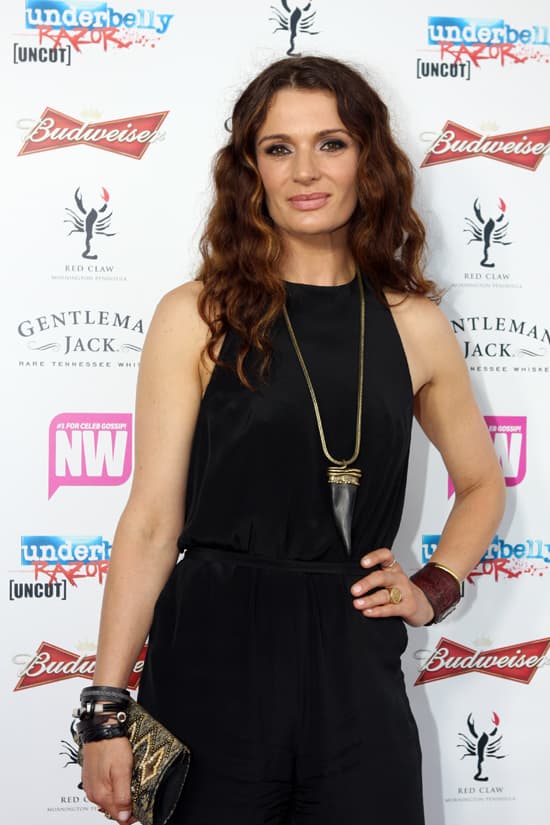
Wentworth ran for nine seasons. Nine. From 2013 to 2021, across a period that included the rise and partial collapse of the prestige television model, the arrival of streaming in Australia, the slow death of Foxtel as anyone’s first choice for anything, and a global pandemic. It started during Breaking Bad’s final season. It ended after Mare of Easttown. And for the entire duration, it was a women’s prison show. Not a show that happened to be set in a women’s prison while it explored larger themes about the human condition. A women’s prison show. Shanks and slot and the protection unit and all of it.
I bring up the timeline because it matters. The landscape of Australian television changed completely during Wentworth’s run, and Wentworth did not change with it. The show premiered on Foxtel’s SoHo channel when Australian drama was still trying to figure out whether it wanted to compete with American cable prestige or do its own thing. By the time it finished, Australian drama had largely given up on the prestige comparison and was making shows like The Tourist and Bump and Fires, none of which look or feel like American television. Wentworth just kept going, in its own lane, at its own pace, about its own business.
The Prisoner question
You cannot write about Wentworth without addressing Prisoner (1979-1986), the original series it was adapted from. But the relationship is stranger than a simple reboot. Prisoner was a genuine cultural phenomenon in Australia and the UK, a soap-adjacent drama that ran for 692 episodes and created characters who became part of the national vocabulary. Bea Smith. The Freak. Top Dog. These terms pre-date Wentworth by thirty years.
What Wentworth did was take those characters and put them in a different register. Danielle Cormack’s Bea Smith is not Val Lehman’s Bea Smith. The tone shifted from soap to serial drama: fewer episodes per season, higher production values, a willingness to kill major characters. The show understood that its audience included people who had watched Prisoner and people who had never heard of it, and it had to work for both groups simultaneously. For the most part, it managed this.
Pamela Rabe’s Joan Ferguson
Here is the thing about Wentworth that even people who have never watched the show seem to know: Pamela Rabe is extraordinary in it. Her Joan Ferguson, the Freak, is the performance that holds the middle seasons together and, depending on your tolerance for soap-adjacent plotting, either justifies or undermines the later ones.
Rabe played Ferguson across seven seasons, and the character arc went from calculating prison governor to psychopathic inmate to something approaching a folk villain. The show kept finding reasons to bring her back, kept escalating her schemes, kept testing the audience’s willingness to accept that one person could cause this much damage in a single correctional facility. It was not always plausible. But Rabe’s performance was so controlled, so physically precise, that she made scenes work that should have collapsed on the page.
The Ferguson storyline is also where Wentworth’s central tension is most visible: the show escalated when it should have deepened. Season after season, the threats got bigger, the conspiracies got more elaborate, the body count climbed. The show sustained itself through escalation rather than through the kind of character work that makes prestige drama feel substantial. Whether that is a flaw or a feature depends entirely on what you think television drama is supposed to do.
Foxtel’s paradox
Wentworth was Foxtel’s most successful original drama. It sold to territories around the world. It had a dedicated international audience. And within Australia, it was treated with a kind of institutional embarrassment. Critics reviewed it politely. It won some AACTA awards. But it was never discussed the way The Slap or Secret City or Total Control were discussed. It was a genre show on a platform that wanted to be seen as a prestige broadcaster, and the genre happened to be one that has never been taken seriously.
This is a pattern in Australian television. The shows that find audiences, that run for years, that sell internationally, are often the ones that the industry treats as slightly beneath it. Neighbours ran for thirty-seven years and was always just a soap. Home and Away is still running and is always just a soap. Wentworth ran for nine seasons and was always just a prison show. The “just” is doing a lot of work in that sentence.
Was nine seasons right?
The honest answer is that Wentworth probably had six great seasons and three that were running on fumes and muscle memory. The departure of Danielle Cormack’s Bea Smith at the end of season four was the show’s biggest structural gamble, and it worked, but the later seasons relied increasingly on returning characters, escalating plotlines, and the audience’s accumulated investment. The final season (split into two parts, because streaming-era release schedules had infected even Foxtel by then) tied off most of the major storylines with a competence that felt like professionalism rather than inspiration.
But I keep coming back to the nine seasons. Nine seasons of Australian drama is rare. Nine seasons of anything on Foxtel is rare. Wentworth lasted because people watched it, and people watched it because the show delivered what it promised. It promised a prison drama about women in a system designed to break them, and it delivered that, week after week, for eight years. No pivot to something more respectable. No “elevation” of the material beyond what the genre required. Just the show, doing the show, being the show.
There is something admirable about that, even when the show itself was not operating at its best. Wentworth knew what it was. It did not apologise for it. And it outlasted almost everything that was supposed to be better.

Rhys watches more television than is healthy and writes about it with a dryness that tips occasionally into cruelty. His favourite ABC drama is the one the ABC just cancelled, whichever that happens to be.
MORE BY RHYS TAVITA →
Rake was never about the cases
Eight years and five seasons of Cleaver Greene taught Australian television that you can keep a man unredeemed, and that audiences will follow him anyway.
Boy Swallows Universe and what Netflix actually paid for
Twenty months after Netflix dropped the Trent Dalton adaptation in January 2024, the show has aged into one of the few streamer-funded Australian dramas that didn't get cancelled out of spite.

Australian television in 2026 has more shows and fewer places to put them
The shows are good, the platforms are crowded, and the audience is splitting into fragments too small for any one show to own.