Stateless crossed the Pacific via Netflix and the conversation changed
The ABC made a show about immigration detention; Netflix put it in front of sixty million subscribers; and suddenly Australian policy was international content.
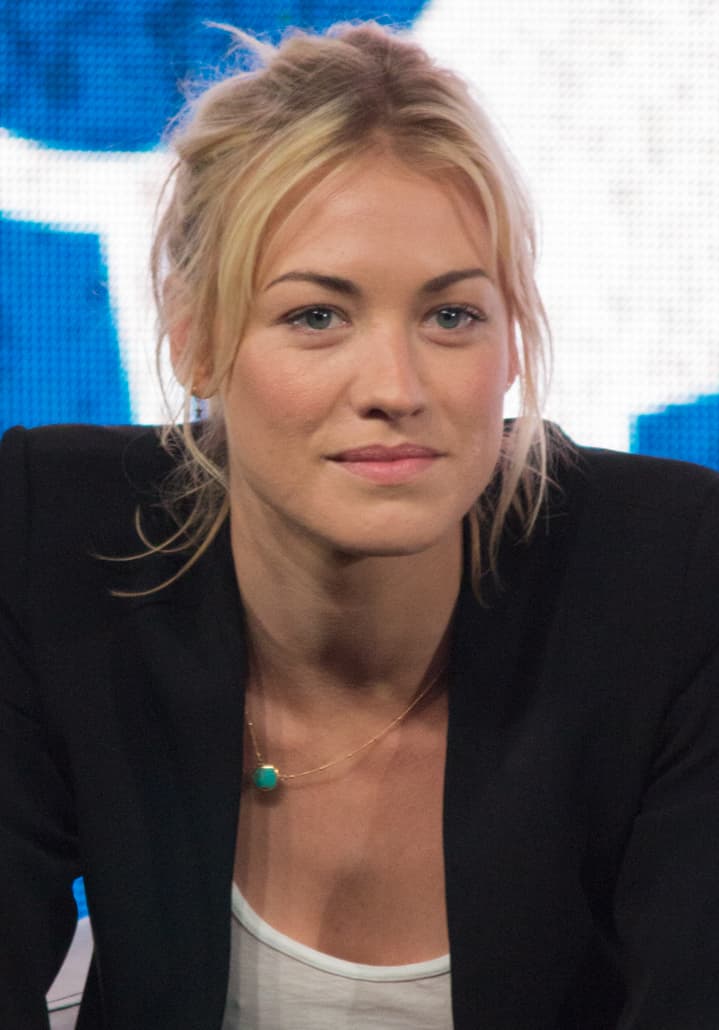
Stateless premiered on the ABC on 1 March 2020, six episodes about four strangers caught up in the Australian immigration detention system. It was watched by approximately 1.2 million viewers on its first night, which is a strong result for a Sunday night ABC drama. Reviews were mostly positive. There was the usual round of commentary about whether the show handled the subject with sufficient sensitivity. And then, in July 2020, Netflix picked it up for international release, and the conversation changed.
Not the show. The show stayed the same. But the audience around it expanded from one country that already knew what immigration detention looked like to dozens of countries that did not. And that expansion turned Stateless from an Australian drama about Australian policy into something else: a piece of international content that happened to describe a real place, doing real things, to real people.
What the show actually is
Let me back up. Stateless was created by Cate Blanchett, Tony Ayres, and Elise McCredie. It is inspired in part by the true story of Cornelia Rau, an Australian resident and German citizen who was unlawfully detained in immigration detention for ten months in 2004-2005. The show fictionalises this story and weaves it together with three other narrative strands: an Afghan refugee family, a bureaucrat managing the detention centre, and a father from a rural town who takes a job as a guard.
The four-strand structure is designed to show the system from every angle: the detainee, the asylum seeker, the administrator, and the enforcer. It is a familiar structural choice for prestige drama, and it works well enough, though the individual stories are uneven. Yvonne Strahovski’s strand (the fictionalised Cornelia Rau) is the most dramatically compelling. Fayssal Bazzi’s strand (the Afghan refugee Ameer) is the most emotionally direct. Jai Courtney’s strand (the guard Cam) is the weakest, partly because the show does not quite know what to do with a sympathetic guard in a system it is clearly criticising.
The Netflix effect
When Netflix released Stateless internationally in July 2020, the show entered the platform’s top-ten lists in several countries, including the United States, the United Kingdom, Canada, and parts of Europe. The exact viewership numbers are, as always with Netflix, opaque. But the signal was clear: people were watching.
What followed was a wave of international commentary that treated the show’s subject matter as news rather than fiction. American and British critics reviewed Stateless with the same mixture of admiration and horror, and the horror was often directed not at the show but at the policy it depicted. “Australia does this?” was the implied or explicit question in several reviews. The Guardian’s US edition ran a piece connecting the show’s depiction of offshore detention to American immigration policy. The New York Times review mentioned the show’s “documentary urgency.” Social media, predictably, was louder and less nuanced, but the overall effect was the same: Australian immigration detention, which had been discussed internationally in policy circles and activist networks for years, was suddenly visible to a mainstream international audience in a way that years of journalism and advocacy had not achieved.
This is what television does that policy papers do not. A six-part drama with recognisable faces and narrative structure can carry information across borders in a way that a Human Rights Watch report cannot. Not because the drama is better or more truthful, but because it arrives in a different format, through a different door, and finds an audience that was not looking for it.
The Cate Blanchett question
We need to talk about the producer credit. Cate Blanchett is credited as co-creator and executive producer of Stateless. She does not appear on screen in any significant capacity. Her involvement was primarily developmental and reputational, and it is the reputational part that matters for the Netflix conversation.
Blanchett’s name on the show did two things. Domestically, it gave the ABC a marketing hook that elevated the show above the typical Sunday night drama slot. Internationally, it gave Netflix a recognisable name to attach to an Australian show that would otherwise have been difficult to market to global subscribers. “From Cate Blanchett” is a different proposition from “From Tony Ayres and Elise McCredie,” even though Ayres and McCredie did the vast majority of the creative work. This is not a criticism of Blanchett, who has been vocal about refugee rights for years and whose involvement appears to be genuine. It is a description of how international distribution works: a show about immigration detention in South Australia needs a famous name to travel, and Blanchett provided one.
Did it change anything
Here is the honest answer: no. Or at least, not in any way that can be directly measured.
Australian immigration detention policy in 2020 was substantially the same as it had been in 2015, 2016, 2017, 2018, and 2019. The offshore processing centres on Nauru and Manus Island (the latter closed in 2017 but replaced by alternative arrangements in Papua New Guinea) continued to operate. The government’s position remained that the policy was necessary to prevent deaths at sea. The opposition’s position remained ambiguous, occasionally critical but unwilling to commit to a clear alternative.
Stateless did not change this. The international attention generated by the Netflix release did not change this. No piece of cultural production, no matter how widely seen, has the capacity to alter a policy that both major parties have, in various configurations, supported for two decades. The show raised awareness. Awareness does not have a direct conversion rate to policy change.
What the show did do, more modestly, is add a cultural reference point to an international conversation. When Australian immigration detention is discussed in American or British media, Stateless is now part of the vocabulary. It sits alongside the journalistic work of organisations like the Refugee Council of Australia and the Asylum Seeker Resource Centre, not replacing their work but supplementing it with a narrative that people actually watched.
The distribution lesson
The broader lesson of Stateless on Netflix is about distribution infrastructure, not content quality. The ABC made a good show. They have been making good shows for decades. What changed was that a global platform with sixty million subscribers picked it up and put it in front of an audience that the ABC could never have reached on its own.
This is the reality of Australian television in 2020 and beyond. A show’s impact is determined as much by its distribution as by its quality. Stateless on the ABC is a well-made Australian drama watched by a million people who already live in the country the show is about. Stateless on Netflix is an international event. The show is the same. The audience is different. And the audience, in the end, is what determines whether a story crosses the line from cultural product to cultural moment.
The ABC cannot compete with Netflix on reach. It was never designed to. But the partnership between a national broadcaster that commissions difficult, specific, locally grounded work and a global platform that distributes it widely is, when it works, the best version of what Australian television can be. Stateless is the proof of concept. Whether the model is repeatable depends on whether Netflix keeps buying, and Netflix’s purchasing decisions are, like everything else about the platform, opaque, algorithmic, and not particularly interested in the policy implications of the content it distributes.

Rhys watches more television than is healthy and writes about it with a dryness that tips occasionally into cruelty. His favourite ABC drama is the one the ABC just cancelled, whichever that happens to be.
MORE BY RHYS TAVITA →
Stateless arrived at exactly the wrong time and that made it necessary
A show about immigration detention centres premiered during a pandemic lockdown, and somehow the timing made it more urgent rather than less.

Apple Cider Vinegar knows exactly what it is
Netflix turned Australia's most notorious wellness fraud into a glossy limited series, and the smartest thing it does is admit it is part of the racket too.
Boy Swallows Universe and what Netflix actually paid for
Twenty months after Netflix dropped the Trent Dalton adaptation in January 2024, the show has aged into one of the few streamer-funded Australian dramas that didn't get cancelled out of spite.