The score for Memoir of a Snail moves at the speed of grief
Elena Kats-Chernin's score for Adam Elliot's claymation opus is patient, fragile, and refuses to tell the audience when to cry.
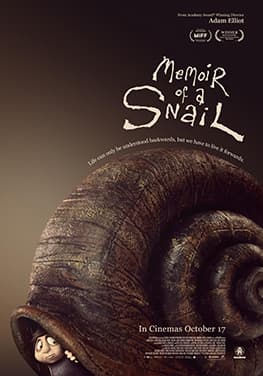
There is a waltz near the middle of Memoir of a Snail that lasts perhaps ninety seconds and does more emotional work than most film scores accomplish in their full duration. It is played by a small ensemble, a piano, a cello, a clarinet, instruments that sound like they are being performed in a room rather than a concert hall, and it accompanies a sequence in which nothing particularly dramatic happens. Grace, the film’s protagonist, is sorting through objects. The waltz is gentle, slightly halting, as though the players are not entirely confident of the tempo, and this uncertainty is the point. The music sounds handmade. It sounds like something a person made, with effort, imperfectly, and in a film where every frame is a handmade object built from clay and wire and paint, this is exactly the register the score needs to occupy.
Elena Kats-Chernin composed the music for Adam Elliot’s Memoir of a Snail (2024), a claymation film about grief, hoarding, loneliness and the slow accumulation of a life that does not go the way it was supposed to. Kats-Chernin is an Uzbekistan-born, Sydney-based composer whose work spans opera, ballet, chamber music and film, and whose sensibility tends toward the miniature: small forms, delicate textures, melodies that arrive with the precision of something placed rather than thrown. She is the right composer for this film the way a particular key fits a particular lock. The match is not obvious until you hear it, and then it is the only thing that could have worked.
Small instruments for small people
Elliot’s characters are clay figures roughly thirty centimetres tall. They have fingerprints on their surfaces, visible seams where limbs join torsos, eyes that are slightly too large for their heads. They are beautiful and imperfect, and the imperfection is constitutive. A digitally rendered character can be smoothed, corrected, made to move with fluid precision. A clay character carries the evidence of the hand that shaped it, and this evidence is what gives the form its emotional weight. You are watching something that a person touched, and the touching is visible.
Kats-Chernin’s scoring matches this scale. The instrumentation is chamber-sized: strings, woodwinds, piano, occasional percussion. There is no orchestra. There are no brass fanfares, no massed strings, no sonic gestures that exceed the physical dimensions of the world they accompany. This is a conscious restraint that goes beyond aesthetic taste. A full orchestral score would overwhelm the image. It would impose a grandeur that the clay figures cannot support, and the disjunction would read as irony or condescension, neither of which the film intends. By keeping the ensemble small, Kats-Chernin ensures that the music and the image occupy the same emotional scale. The instruments sound as though they could fit inside the film’s sets, as though they are being played in the same rooms where the characters live.
The space between funny and sad
Memoir of a Snail is, like all of Elliot’s work, a film that moves between comedy and deep sadness with almost no transitional space. A scene will be funny and then, without warning, it will be devastating, and the shift happens not through a change in tone but through a change in context: the same image or gesture that was comic a moment ago is now unbearable because you know something you did not know before. This tonal instability is the signature of Elliot’s cinema, present in Harvie Krumpet (2003) and Mary and Max (2009), and it poses a specific problem for a composer.
The problem is this: if the score signals comedy, it cannot pivot to grief without drawing attention to the mechanism. If it signals grief, the comedy suffocates. The conventional solution is to score neutrally, to write music that is emotionally non-committal and let the images do the tonal work. Kats-Chernin does something more interesting. She writes music that contains both registers simultaneously. Her melodies are gentle but slightly off-centre, harmonically warm but with an undertow of minor-key instability, rhythmically playful but at a tempo that feels closer to contemplation than celebration. The music does not tell you whether to laugh or cry because it is doing both, quietly, at the same time, and this double register matches the film’s own emotional logic so precisely that the transitions between comedy and sadness feel seamless rather than jarring.
Scoring the hoard
Grace is a hoarder. Her house fills, over the course of the film, with snail figurines, ornaments, books, objects that accumulate the way sediment accumulates, slowly, inexorably, until the spaces she lives in are more object than air. The hoarding is a response to loss: each object is a proxy for something or someone that is gone, and the collection is a physical manifestation of grief that has no other outlet.
Kats-Chernin scores the hoarding sequences with a compositional strategy that mirrors the behaviour. Motifs recur, slightly varied, slightly displaced, accumulating over the course of the film the way the objects accumulate in Grace’s house. A phrase introduced in the first act returns in the second with a different harmonic context. A rhythm established in one scene reappears later at a different tempo. The score itself hoards its own material, returning to it, rearranging it, unable to let it go, and the effect is cumulative in the way that grief is cumulative: not a single event but a slow gathering of weight.
The patience of clay
There is a technical dimension to scoring stop-motion animation that distinguishes it from scoring live action or digital animation. In stop-motion, every movement is deliberate. A character cannot gesture casually; each frame requires the animator to physically reposition the figure, and this produces a quality of movement that is inherently considered, weighted, slightly slower than life. The music must accommodate this tempo. A score that moves too quickly will outpace the image and make the animation look sluggish. A score that moves too slowly will stall the film’s momentum entirely.
Kats-Chernin finds a tempo that sits between the two. Her cues breathe at the speed of the animation, which is to say they breathe at the speed of a hand moving a clay figure millimetre by millimetre. The rhythms are patient without being static. The phrases are shaped with a care that mirrors the animator’s own care, and the result is a score that feels as though it was built frame by frame alongside the images, rather than applied to them after the fact.
What the music refuses to do
The most important quality of Kats-Chernin’s score is its refusal to instruct. The film contains sequences that are, by any measure, emotionally overwhelming: the separation of siblings, the death of a parent, the long, grinding isolation of a life lived alone. A lesser score would lean into these moments, would swell and surge and tell the audience that now is the time to feel. Kats-Chernin does not do this. Her music during the film’s most painful sequences is restrained, sometimes barely present, holding a single sustained note or a simple repeated figure while the images carry the emotional weight. The score trusts the clay. It trusts the story. It trusts the audience to arrive at their own grief without being conducted toward it.
This restraint is the score’s greatest achievement. In a film that is fundamentally about the accumulation of feeling, about a life in which sadness is not a single event but a permanent atmospheric condition, the music must resist the temptation to peak. It must remain at the level of the everyday, at the level of a waltz played slightly too slowly in a room that is slightly too full of objects, and let the weight build on its own schedule. Kats-Chernin does this with a patience that matches Elliot’s own, and the result is a score that moves at the speed of grief: steady, unhurried, accumulating, and unwilling to tell you when it is over.
Kieran writes about what films sound like. Played in a band that nearly got signed in 2012 and has been thinking about attack and decay ever since. Devoted to Warren Ellis, Amanda Brown, and the quiet work of sound editors nobody interviews.
MORE BY KIERAN BOUSTANY →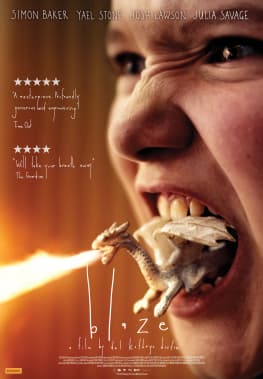
The score for Blaze chases the animation and catches it in a different key
When a film splits between live action and fantasy animation, the score has to bridge two visual languages without flattening either.
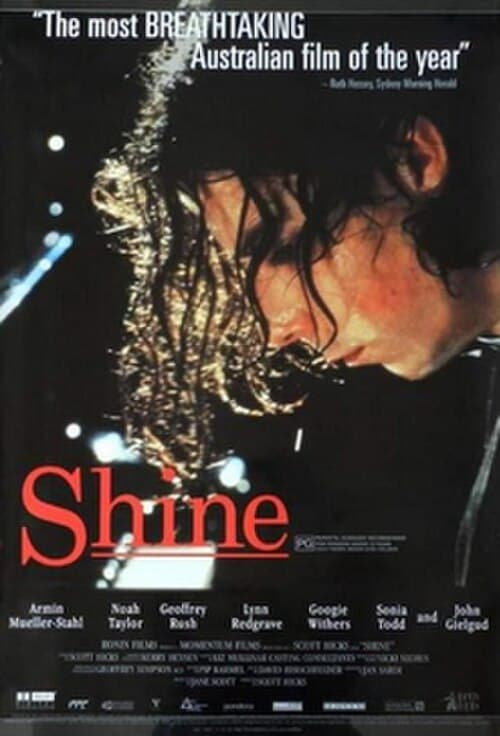
Shine and the score hiding under the Rachmaninoff
David Hirschfelder had to write original music that lives under the loudest warhorse in the piano repertoire, and the quiet writing is what carries the film.
Nigel Westlake smuggled a cathedral into a film about a pig
The score for Babe borrows its grandeur from a French organ symphony, and the trick tells you everything about how Nigel Westlake hears the relationship between small subjects and large feelings.