Every Australian film has a sound and most of them go unheard
This column has spent six years listening to what Australian cinema sounds like, and the answer keeps changing.
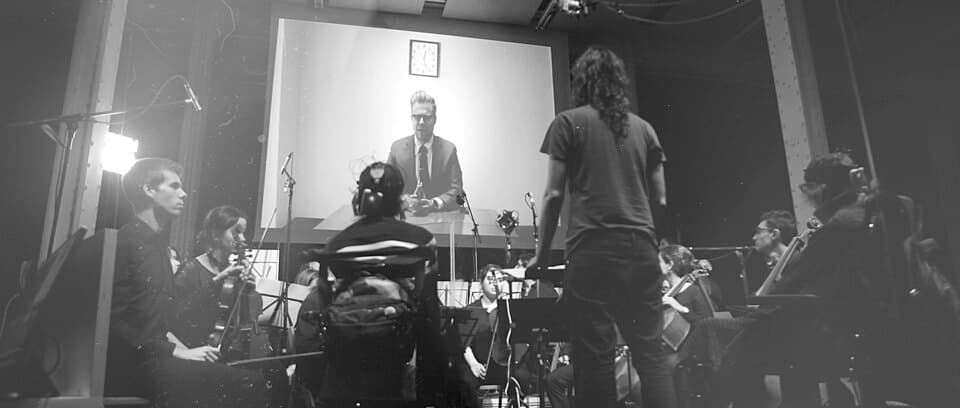
I started writing about Australian film scores for this publication in 2020, in the early months of the pandemic, when cinemas were closed and the only way to encounter a new Australian film was through a laptop speaker or, if you were disciplined about it, a pair of decent headphones. This turned out to be an accidental gift. Without the image, you hear the music differently. You hear what it is doing rather than what it is accompanying, and what I heard, across dozens of scores over the months that followed, was a national cinema that sounded nothing like what I had been told it sounded like.
The received wisdom, to the extent that anyone bothers to articulate one, is that Australian film music occupies a narrow band: ambient landscapes for outback dramas, acoustic guitar for coming-of-age stories, restrained strings for period pieces. This is not wrong, exactly, but it is incomplete in the way that describing the ocean as “blue” is incomplete. The colour is there. It is just not the whole picture. What six years of listening has taught me is that Australian film music is stranger, more varied and more technically accomplished than the critical conversation around it acknowledges, and the reason it goes unacknowledged is not neglect but a structural gap in how we talk about Australian cinema. We have robust traditions of writing about performance, direction, cinematography and, increasingly, production design. We do not have a tradition of writing about what our films sound like. This column has been an attempt to build one.
The composer-directors
The most significant development in Australian film music over the past decade is not a trend in composition but a collapse in the division of labour. Ivan Sen scores his own films. Warwick Thornton, whose background is in cinematography, has taken an increasingly active role in the sonic texture of his work. These are not directors who hand a brief to a composer and wait for a deliverable; they are filmmakers who think in sound, for whom the score is not a post-production addition but a structural element of the filmmaking itself. Sen’s scores for Goldstone (2016) and Limbo (2023) are built from synthesisers and processed guitar, and they occupy a frequency range that sits beneath the dialogue, not behind it. The music does not support the drama. It vibrates at the same pitch.
This blurring of roles produces work that is difficult to evaluate using conventional scoring criteria. You cannot separate the direction from the music because they were conceived as a single gesture. And it raises a question that I find increasingly interesting: what happens to the profession of film composition when directors start doing it themselves? The answer, so far, is that it pushes dedicated composers to become more distinctive, more specialised, more willing to bring something to a film that a director working alone could not produce.
The streamer effect
The other structural shift has been economic. Streaming platforms, principally Stan and Netflix, have commissioned a significant volume of Australian content since 2019, and their scoring budgets operate on a different logic to the feature-film model. A streamer series often has more money for music than a low-budget feature but less time to spend it; the turnaround is compressed, the episode count is high, and the expectation is for consistency across eight or ten hours rather than a single composed arc. This has changed the working conditions for Australian composers in ways that are not always visible from the outside. Some have adapted by building modular scoring systems, banks of textures and motifs that can be deployed across episodes without composing each cue from scratch. Others have pushed back, insisting on bespoke composition even within the compressed timelines, and the tension between these approaches is shaping the sound of Australian screen music right now.
Adelaide, Melbourne and the question of infrastructure
There is a geographic dimension to Australian film music that rarely gets discussed. Melbourne has been the centre of gravity for decades, partly because of the concentration of recording studios and session musicians, partly because of the city’s conservatorium culture. But Adelaide has emerged as a genuine alternative, driven by the Adelaide Studios precinct, the SAFC’s production pipeline, and a cluster of composers who have chosen to base themselves outside the Sydney-Melbourne axis. The cost of studio time is lower. The pool of available musicians is smaller but, in some cases, more flexible; a town with fewer options produces players who work across more genres, and this versatility shows up in the scores.
What I have observed over six years is that the city a composer works in shapes the music in ways that have nothing to do with landscape or local colour and everything to do with the practical conditions of making sound. The size of the room you record in. The availability of a particular instrumentalist on a Thursday afternoon. The distance between the studio and the mixing stage. These are not romantic considerations. They are the material facts of composition, and they leave traces in the finished work even when nobody is listening for them.
What Australian film music sounds like
I have been circling this question for six years and I am no closer to a definitive answer, which is itself a kind of answer. American film music, broadly, sounds like certainty. The Hollywood orchestral tradition, even at its most subtle, tends toward resolution: themes that develop, tensions that release, endings that arrive. European film music, again broadly, sounds like ambiguity: unresolved harmonics, textures that float rather than drive, a willingness to leave the audience in a state of suspension. Australian film music sounds like neither of these things, and it does not sound like a hybrid of them either. What it sounds like, to my ear, is proximity. Australian scores tend to sit close to their subjects. The microphone is near the instrument. The reverb is dry. The dynamic range is narrow, not because the music lacks variety but because the composer is standing in the same room as the story, breathing the same air, and the distance between the sound and the thing the sound describes is shorter than you expect.
This is a generalisation, and it has exceptions, and I have spent six years cataloguing those exceptions. But the tendency persists. Australian film music is intimate even when it is loud, specific even when it is ambient, grounded even when it reaches for something beyond what the image provides. It is the sound of a cinema that has always been slightly too small for its ambitions, and has learned to make that smallness into a kind of precision.
What comes next
I do not know what Australian film music will sound like in 2030. I suspect it will sound different from what it sounds like now, because the conditions of production are changing fast enough that the composers working today are already adapting in real time. AI-assisted composition is arriving. Scoring budgets are fluctuating with the streamers’ uncertain economics. The generation of composers who trained in the early 2000s are entering their mature period while a younger cohort, trained on DAWs and sample libraries rather than conservatorium orchestration, are beginning to make their presence felt. The gap between these two traditions is where the next interesting sounds will come from.
I will keep listening. The column will keep running. And the question I have been asking since 2020, the question that started this whole enterprise, remains open: what does Australian cinema sound like? Six years in, the answer is still changing, and the change itself is the most honest answer I can give.
Kieran writes about what films sound like. Played in a band that nearly got signed in 2012 and has been thinking about attack and decay ever since. Devoted to Warren Ellis, Amanda Brown, and the quiet work of sound editors nobody interviews.
MORE BY KIERAN BOUSTANY →
Nigel Westlake smuggled a cathedral into a film about a pig
The score for Babe borrows its grandeur from a French organ symphony, and the trick tells you everything about how Nigel Westlake hears the relationship between small subjects and large feelings.
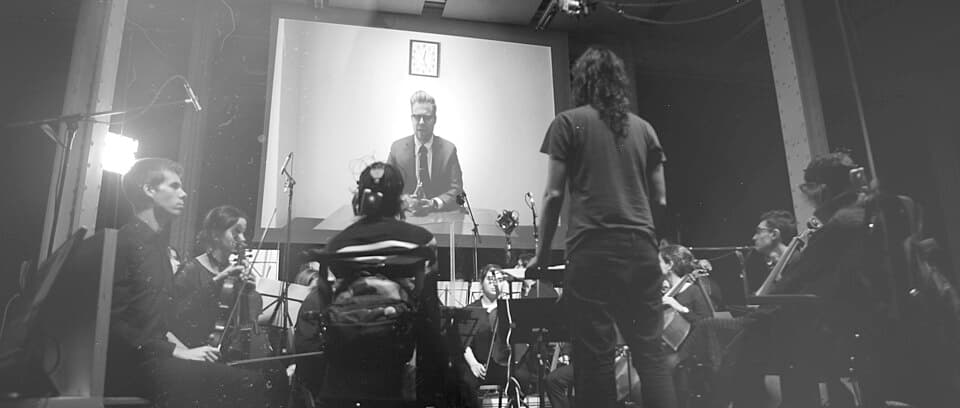
The newest Australian score worth hearing is the one nobody is talking about
The film opened in twelve cinemas, the score opened in none of the conversations about it, and both deserve better.
Streaming killed the film score budget and Australian composers adapted first
When the scoring budget dropped, Australian composers did what they have always done: made do, made less, and made it work.