The newest Australian score worth hearing is the one nobody is talking about
The film opened in twelve cinemas, the score opened in none of the conversations about it, and both deserve better.
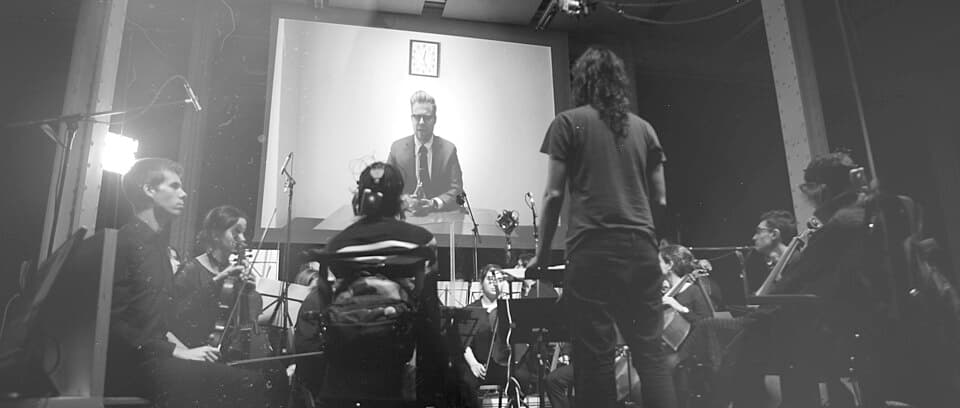
Between Fences opened in twelve cinemas across Australia in late March, played for two weeks, and will be gone from most of them by the time you read this. The film, directed by Ava Chen in her second feature, is a drama about a Chinese-Australian family running a takeaway shop in a coastal town south of Wollongong. The reviews have been respectful. The box office has been modest. The conversation around the film, to the extent that there is one, has focused on the performances and the cultural specificity of the setting, both of which deserve the attention. What nobody has mentioned, in any review I have read, is the score.
The score is by Jess Ciampa, a Melbourne-based composer in her early thirties whose credits include two short films, a web series and a documentary about community gardens that screened at a regional festival in 2024. This is, by any measure, an early-career composer working on the kind of project that early-career composers work on: a low-budget feature with a limited theatrical window and no expectation of wide attention. The film will be on a streaming platform within months. The score will be available on the usual digital services at some point, or it will not, and either way the number of people who hear it will be small.
I want that number to be larger, because the score is excellent.
What Ciampa does
The score is built around a combination of guzheng and prepared piano, two instruments that do not share a natural tonal language but that Ciampa places in conversation with each other across the length of the film. The guzheng, a Chinese plucked string instrument with a bright, cascading tone, appears in scenes centred on the family’s domestic life, on the routines of the kitchen, the arguments at the dinner table, the grandmother’s slow morning walks along the breakwater. The prepared piano, its strings dampened and altered with felt and rubber, appears in scenes set outside the family unit, in the town, at the school, in the spaces where the characters interact with a community that is welcoming in practice and indifferent in structure.
The two instruments never play simultaneously until the final twenty minutes of the film, and when they converge, the effect is not a resolution but a collision. The tonal registers do not harmonise. They coexist, and the dissonance between them is quiet enough that you might not consciously register it, but present enough that the emotional temperature of the scene shifts in a direction that neither instrument could produce alone.
This is sophisticated compositional thinking, and it is happening at a budget level where most scores consist of a laptop, a sample library and a deadline. Ciampa recorded the guzheng live, working with a performer whose name I have not been able to confirm but whose playing has a fluency that suggests serious training. The prepared piano she played herself. The mixing, which is crucial to the score’s effect, places both instruments close and dry, with minimal reverb, so that the textures of the preparation, the felt against the strings, the slight buzz of the dampening material, are audible as physical details rather than smoothed into an ambient wash.
Why visibility matters here
I write about established composers regularly in this column. I write about Jed Kurzel and Cezary Skubiszewski and Cornel Wilczek and the handful of other Australian screen composers whose names are known within the industry if not outside it. Their work is worth the attention, and they do not lack for it, at least not within the professional community that understands what they do. What they have, and what Ciampa does not yet have, is an audience that knows to listen for them. A Jed Kurzel credit on a film tells a certain kind of viewer that the score will be worth paying attention to. A Jess Ciampa credit tells nobody anything, because nobody knows the name yet.
This is the structural problem for early-career composers in Australian cinema. The path from a first feature to a sustainable career runs through visibility, and visibility in screen composition is almost entirely dependent on the visibility of the film. A composer can write the best score of the year, but if the film opens in twelve cinemas and leaves in two weeks, the score disappears with it. The composer’s next opportunity depends on a producer or director hearing the work and remembering it, and the chances of that happening are proportional to the number of people who encountered the film in the first place.
The streaming paradox
The obvious response is that streaming solves this. The film will be available online eventually, and the score will travel with it, and anyone who cares about Australian screen music can seek it out. This is true in the way that it is true to say that a novel is available in a library: technically accurate and practically insufficient. Streaming platforms do not surface Australian film scores. Their recommendation algorithms are built around viewing behaviour, not listening behaviour, and a user who watches Between Fences on a Tuesday evening is not going to be prompted to investigate the compositional choices in the score. The score will play beneath the film, doing its work, and the viewer will feel whatever the score is designed to make them feel, and they will never know the name of the person who made them feel it.
What I am asking for
I am not asking for anything dramatic. I am not proposing a structural reform of how Australian screen music is credited or promoted or compensated, though all of those conversations are worth having. What I am asking for is smaller than that. I am asking for reviewers to mention the score. Not in every review, and not at length, but as a standard practice, the way reviewers mention the cinematographer or the editor or the production designer. A single sentence. The name of the composer and a word or two about what the score contributes to the film. That is enough to begin building the kind of visibility that allows a composer like Ciampa to be recognised the second time around, to arrive at her third feature with a name that means something to the people making hiring decisions.
Jess Ciampa scored Between Fences and the score is built around a guzheng and a prepared piano, and the two instruments do not meet until the final act, and when they do, the film becomes something it could not have become without the music. That is one sentence, more or less. It is not difficult to write. It is not difficult to include. And for a composer at the beginning of a career, working at a budget level where the score is an act of commitment rather than a commercial calculation, it is the difference between being heard and being silent.
Kieran writes about what films sound like. Played in a band that nearly got signed in 2012 and has been thinking about attack and decay ever since. Devoted to Warren Ellis, Amanda Brown, and the quiet work of sound editors nobody interviews.
MORE BY KIERAN BOUSTANY →
Nigel Westlake smuggled a cathedral into a film about a pig
The score for Babe borrows its grandeur from a French organ symphony, and the trick tells you everything about how Nigel Westlake hears the relationship between small subjects and large feelings.
Every Australian film has a sound and most of them go unheard
This column has spent six years listening to what Australian cinema sounds like, and the answer keeps changing.
Streaming killed the film score budget and Australian composers adapted first
When the scoring budget dropped, Australian composers did what they have always done: made do, made less, and made it work.