Looking for Alibrandi was the first Australian story handed to me as mine
It was not my family's story. It was the shape of my family's story, put on a screen in a country that had never once bothered to hold it before.

We were given the novel in Year Ten, the way you are given a lot of things at that age, without being asked whether you wanted them. A class set, spines cracked by the students before us, Looking for Alibrandi stamped inside the front cover with a due date and a threat. I did not expect anything from it. Books handed out that way were homework, and homework was the opposite of a story that could belong to you.
Then Josie Alibrandi spent the first three pages being ashamed of her grandmother, and I stopped reading like it was homework.
Not mine, but the shape of mine
I want to be careful here, because the easy version of this essay is the one where I claim the film as a mirror, and it was not a mirror. Josie is Italian-Australian, third generation, Sydney, Catholic school, tomato sauce made in the backyard in an afternoon that the film turns into its whole emotional argument. My family did not make sauce. My grandmother did not speak the language the Alibrandi women fight in. The specifics were not mine.
But the shape was. The shape was exactly, painfully mine, or rather the shape of every kid whose house ran on one set of rules and whose school ran on another and who spent adolescence translating between the two and pretending, at both ends, that the translation cost nothing.
Melina Marchetta wrote the novel in 1992 and then adapted her own screenplay for Kate Woods’s film in 2000, and the thing she understood, that almost nobody making Australian films then understood, is that the migrant kid is not a problem to be explained to the audience. She is the audience. The film does not pause to define a nonna for the benefit of people who have never had one. It assumes you have one, or it assumes you can imagine wanting one, and it moves.
The scholarship girl and the two Australias
Pia Miranda plays Josie as somebody permanently braced, which is the correct posture and one I recognised in my own school photos before I recognised it in her. Josie is on a scholarship at a wealthy Catholic girls’ school, which means she is admitted and excluded in the same gesture, allowed into the building on the condition that she never forget she was allowed.
The film draws the two Australias without sentimentality. On one side there is John Barton, the private-school boy from the political family, played by Matthew Newton, who has every door open and cannot breathe behind any of them. On the other there is Jacob Coote, working-class, public school, played by Kick Gurry, who has no doors and no patience for Josie’s agonising about hers. Josie is suspended between them, and the film is honest that her being suspended is a kind of privilege too, the privilege of a girl with just enough mobility to be confused about where she belongs.
John Barton dies. He takes his own life, off screen, and the film does not use his death to teach Josie a lesson so much as to strip the glamour off the Australia she had half-wanted to be admitted to. The most-opened door in the film leads nowhere. I did not have the words for that at fifteen. I had the feeling, which is that the people I was being taught to envy were not, it turned out, safe, and that the safety I had assumed on their behalf was a story I had been telling myself about my own exclusion.
Three women and a language
What holds the film, though, is not the boys. It is the three generations of women: Josie, her mother Christina, played by Greta Scacchi, and Nonna Katia, played by Elena Cotta, and the slow revelation of what the women have carried for one another across the shame of an illegitimate birth two generations deep.
The backyard sauce day is where this lands. It is a set piece, tables and hands and a whole extended family turned out to make a year’s passata in an afternoon, and the film films it as ordinary, which is the boldest choice in the whole picture. It does not treat the ritual as ethnographic spectacle. It treats it as a Saturday. And in the middle of the ordinary Saturday, the family’s oldest wound and its deepest tenderness are both handled, passed between women’s hands like the jars.
I keep thinking about how much that scene must have cost to make look cheap. To film a migrant family’s ritual without a single frame of the camera saying to a white audience, look how colourful, look how warm, look how other. Just people. Just work. Just a grandmother and a mother and a daughter who have not forgiven each other and are making sauce anyway.
The afterlife of a set text
I have watched it again since, more than once, and the strange thing is what survives.
The fashion has dated, and the soundtrack has dated, and some of the film’s ideas about being seventeen have the slightly hectic quality of a film made by adults who remember seventeen fondly. That all ages. What does not age is the structure of Josie’s shame and the slow work of its undoing, because that structure is not a period detail. It is still happening, in classrooms, right now, to kids being handed set texts by teachers who do not know which of the students in front of them are living the book.
Melina Marchetta went on to become one of the most important writers this country has produced for young people, and I do not think that is a coincidence. She learned, in Alibrandi, the thing she would spend a career refining: that you do not write the migrant kid, or the outsider kid, or the grieving kid, as a lesson for everyone else. You write them as the centre, and you let the reader who is that kid feel the shock of recognition, and you let the reader who is not do the smaller, useful work of visiting.
I was the first kind of reader. I did not know, at fifteen, that a book could know I was there. This one did.
What it was for
Australian cinema in 2000 was not built to hold a girl like Josie at its centre, and the film’s real achievement is that it did it without asking permission and without apologising. It won Best Film at the AFIs that year, and Miranda won Best Actress, and a generation of us who were being handed the novel in class quietly understood that the story on the syllabus was, for once, about the kind of house we had come from.
It was not my family. I have said that, and I mean it, and I will not pretend the sauce was ours. But Looking for Alibrandi was the first time this country put a story on a screen and, instead of explaining a family like the ones I knew to somebody else, simply handed the story to us and trusted that we were in the room.
We were in the room. We had been the whole time. It just took until then for a film to notice.

Mara writes essays. She came to film writing from a decade of literary criticism and still reaches, sometimes, for a novel before she reaches for a shot list. She lives in the inner north of Melbourne and does not explain which city that is.
MORE BY MARA DENG →
Who is Australian cinema for and does it know
The question is not whether Australian films are good enough; it is whether the industry has decided who it is talking to.
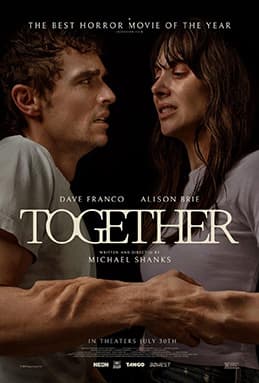
Together is an Australian horror film that learned to say trunk
Michael Shanks made a Melbourne body horror film about two people fusing into one, then sanded the Australian out of it. I keep looking for the seam.
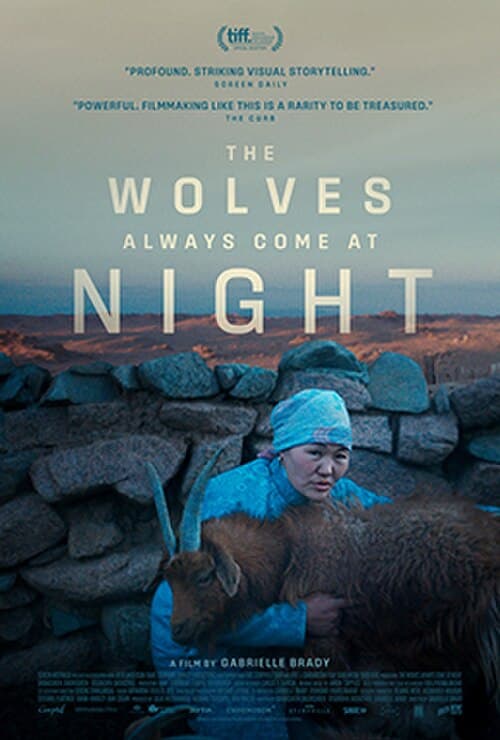
Australia's Oscar entry is in Mongolian and that is the argument
Gabrielle Brady's film has no Australian faces, no Australian landscape and no English in it, and the selection committee was unanimous.