Together is an Australian horror film that learned to say trunk
Michael Shanks made a Melbourne body horror film about two people fusing into one, then sanded the Australian out of it. I keep looking for the seam.
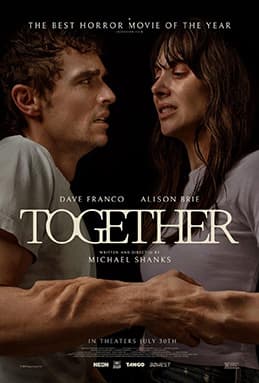
In one of the first meetings about the script for Together, Dave Franco asked Michael Shanks whether Shanks says ‘I reckon’ a lot, and whether that was an Australian thing. Shanks had not realised Americans don’t say it. Franco then worked ‘I reckon’ into nearly every line of their conversation about script changes, and a great many reckons came out of the screenplay afterwards. There was also a discussion, Shanks told Slant, about a character getting into the boot of a car. It became the trunk of a car. The scene was cut anyway.
I think about that boot more than is reasonable.
What the film is
Together is Shanks’ first feature. Franco and Alison Brie play Tim and Millie, a couple who leave the city for the countryside and find their bodies being drawn, physically and then horribly, into each other. It premiered in the Midnight section at Sundance on 26 January 2025, where Neon paid a reported US$17 million for it, the first major sale of that festival. It opened in the United States on 30 July and here on 31 July, took around US$32 million worldwide, and a little over A$1.2 million of that in Australia.
It was shot in Melbourne, in 21 days, about fifteen minutes from Shanks’ home. It is set in Washington state.
Germain McMicking shot it. Sean Lahiff cut it. Cornel Wilczek scored it. Damon Herriman is in it, and Princess Pictures is among its production companies. Screen Australia put development money into it in 2020. At the AACTA Awards in February it had eight nominations, among them Brie for supporting actress and Shanks for screenplay, in a year when Bring Her Back took seven awards, one of them for Wilczek’s score on that other film.
The essay I wrote four years ago
In 2022 I wrote in these pages about Hollywood productions that come to Australia for the crews, the tax breaks and the light, and leave with a film set in Chicago, or Oakland, or a planet that does not exist. That essay had a landlord in it. The studios came, the studios asked Melbourne to pretend, Melbourne pretended beautifully, and I was sad about it in a way I found hard to justify.
Together has no landlord.
Nobody from Los Angeles made Shanks take the reckons out. The instinct was installed long before Sundance. Shanks came up on YouTube, making sketches as TimTimFed on a channel that dates back to 2006, and has spoken about deliberately making those videos travel internationally rather than filling them with Australian accents. That is a sensible thing for a young filmmaker with a camera and an internet connection to learn. It is also, I want to say, a lesson in which the first thing an Australian learns to export is the sound of being Australian, removed.
An Australian film no longer needs a studio to ask it to pretend, because it has learned to ask itself.
What I recognise in it
I grew up in a house where English was the second language and the one we were judged in. My mother spent her first years here learning which words to leave at home, not because anybody told her to, but because she had worked out that the interview went better without them. Nobody has to issue the instruction. You learn the shape of the room and you make yourself fit it.
That is not the same thing as a Melbourne director changing boot to trunk. I know that. The stakes are not remotely comparable, and I am wary of flattening a filmmaker’s practical decision into my own family’s history.
But I recognise the reflex. The anticipatory edit. The removal made before anybody has objected.
The body horror is the argument
The film is about two people who cannot stay separate. Shanks built it out of a relationship of his own; his partner read every draft first, and he has described knocking on the door of their home office mid-draft to ask exactly what each of them had called the other in an argument a couple of years before. ‘It’s scary to share a life with somebody, and hopefully you can push through and find something lovely, or you are brave enough to recognise that splitting apart is an OK thing to do,’ he told the ABC.
I believe it is a film about codependency. I also think a film about two bodies pulled into one another until you cannot find where one ends is, whether it means to be or not, a very good picture of what Together is as an object: an Australian film grown into an American one so completely that the join is hard to locate.
I saw it at the Nova on its opening weekend and spent more of it than I would like to admit looking for Victoria in the frame. I am not going to pretend I found it with any confidence. That is what a good double is for.
Herriman is the most interesting person on screen for this reason, and it has nothing to do with the role. Herriman has spent years passing as American, as Dewey Crowe in Justified and as Charles Manson twice, in Mindhunter and Once Upon a Time in Hollywood, and is so good at it that it no longer registers as a performance of nationality at all. He is our best evidence that the trick works, and our clearest picture of how much craft it takes to make a country disappear.
The country underneath
Australian horror has spent fifty years arguing with the ground it was shot on. Wake in Fright and Picnic at Hanging Rock are, among other things, films about settlers discovering that the country does not consider them residents. That lineage is why an Australian horror film set outside a city is never only a film set outside a city; the ground is carrying a history the script may or may not acknowledge.
Together moves its couple from the city to the country, and the country turns on them, which is the most Australian premise in the whole picture. But because the country is Washington state, the history underneath it belongs to somebody else, and the film never has to decide what it thinks about whose land its horror is happening on. I do not say that as an accusation. I say it because it is the one conversation an Australian genre film usually cannot avoid, and relocation lets it walk straight past.
I envy that a little. I also do not trust it.
What I would like
I am not asking for accents as a tax. Talk to Me and Bring Her Back kept theirs, travelled, and nobody in Ohio needed a glossary. I am not asking Shanks to have made a different film. Together is a clever, nasty, well-made one, and it sold at Sundance because it is good.
What I would like is for us to notice the edit. To notice that one of the biggest sales an Australian genre film has made got there partly by removing the words that would have told an audience where it was made, and that the removal was nobody’s demand. Or rather, it was a demand nobody had to make.
The boot became a trunk, and then the scene was cut. Somewhere there is a draft of Together in which a character climbs into the boot of a car in Washington state, and I suspect nobody in Seattle would have minded.
Mara writes essays. She came to film writing from a decade of literary criticism and still reaches, sometimes, for a novel before she reaches for a shot list. She lives in the inner north of Melbourne and does not explain which city that is.
MORE BY MARA DENG →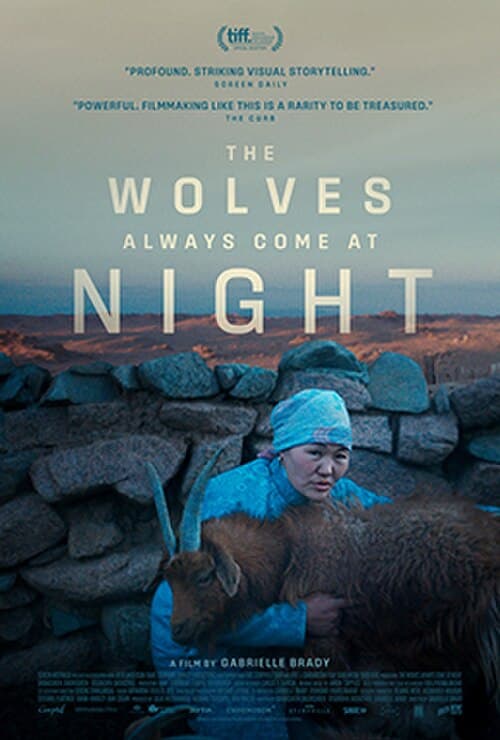
Australia's Oscar entry is in Mongolian and that is the argument
Gabrielle Brady's film has no Australian faces, no Australian landscape and no English in it, and the selection committee was unanimous.
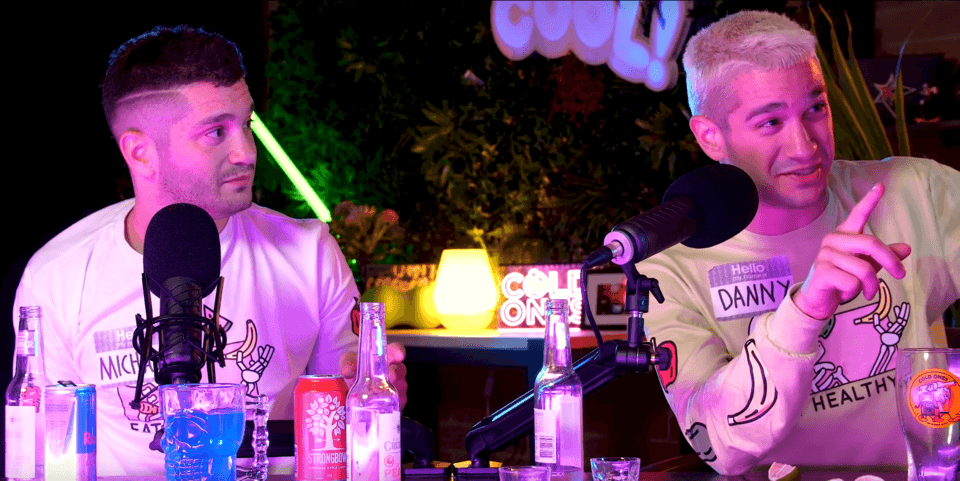
The Philippou brothers came from YouTube and brought the algorithm's pacing with them
Danny and Michael Philippou learned to direct by keeping strangers watching for three more seconds, and that instinct is the engine underneath Talk to Me.
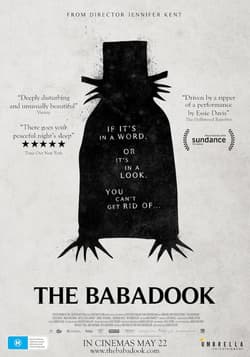
Australian horror found its voice by refusing to be polite
From The Babadook to Relic to Talk to Me, Australian horror keeps returning to the house, the family, and the thing that should not be let in.