Invisible Boys never puts anyone on the bus to Perth
Nicholas Verso's ten-part Stan drama refuses the one ending Australian queer coming-of-age stories always reach for, and is far better for the refusal.
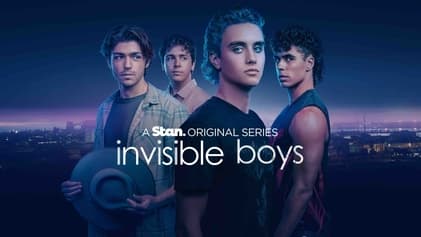
Every Australian coming-of-age story about a queer kid in a country town ends with a bus. Or a train, or a ute, or in the ambitious ones a plane, but the vehicle is not the point. The point is that the town is a problem and the city is a solution and the last shot is somebody leaving. Invisible Boys, which landed on Stan on 13 February 2025 and ran ten episodes, does not do that. Nobody gets on the bus. Geraldton stays, and so do they, and the show is smarter than almost anything else in the genre because of it.
Nicholas Verso created it, adapted it from Holden Sheppard’s novel, and directed all ten episodes himself, which is a workload and also a choice. It means the register never wobbles. You watch a lot of Australian drama where episode seven is directed by somebody who clearly watched episodes one and two and guessed at the rest. Not here.
Four boys, ten hours, no montage
The premise is deceptively plain: four teenagers in a Western Australian coastal city in the shadow of the 2017 postal survey, all of them dealing with the same fact in four incompatible ways. (It gets called a plebiscite constantly, including in places that should know better. It was a voluntary postal survey. The distinction matters because a plebiscite is a vote and a survey is a very expensive way of asking your neighbours to have an opinion about you in writing.)
Joseph Zada, Aydan Calafiore, Joe Klocek and Zach Blampied carry it, and the casting is unusually well judged in that none of them is playing the same kind of closet. One is out and paying for it. One is in and paying more. One has built an entire personality as a decoy. One has religion doing the work that fear would otherwise have to do alone. The show does not rank these. It just runs them alongside each other for ten hours and lets you notice that the boy who looks like he is coping best is doing the most damage.
Ten episodes is a lot for four characters. Honestly, my expectation going in was that six of them would be filler. They are not. The length is doing something specific: it lets consequences arrive late. A thing that happens in episode two does not detonate until episode six, and the gap is the realism. Small towns run on delay. Everyone knows by Thursday and nobody says anything until the following March.
Geraldton is not the villain
Here is the bit I keep coming back to. The show is set in Geraldton and shot in Geraldton and it refuses to treat the place as an antagonist.
That is genuinely rare. The default mode for this story is that the regional town is a hostile organism, the parents are a wall, the church is a weapon, and escape is the only available victory. Invisible Boys has hostility in it, plenty, some of it ugly. But it also has a town: a fish and chip shop, a footy club, a beach that people actually use, an economy, a set of adults with jobs and histories and their own compromises. The boys are not trapped in a symbol. They are living in a place.
Which changes the whole moral shape. If the town is a symbol, leaving is a triumph. If the town is a place, leaving is just a move, and the harder and more interesting question is what you build if you stay. Verso and the writers’ room (Verso, Allan Clarke, Holden Sheppard, Declan Greene, Enoch Mailangi) keep asking the harder question, and to its credit the show does not pretend it has a tidy answer.
Where it strains
It is not flawless. There is a stretch around the middle where the show’s willingness to sit in discomfort tips into repetition, and you can feel the same argument being had a third time with the furniture rearranged. A couple of the adult characters are drawn thin enough that you can see the writing decision through them. And the series occasionally reaches for a needle drop to do work the scene had already done, which is the one place the direction gets nervous.
Look, none of that sinks it. The performances hold. Blampied in particular does something quite hard with a character who is required to be unlikeable for a long stretch before the show explains him, and he never plays the explanation early, which is the discipline that separates a good young actor from a promising one.
What it changed
Stan has been chasing an identity in local drama for years, oscillating between outback crime and prestige-adjacent literary adaptation, and this is the strongest case it has made for itself. Asphodel Films and Feisty Dame Productions made it, Tania Chambers produced alongside Verso, and it looks more expensive than it can possibly have been, mostly because Verso shoots Geraldton light like a person who has actually stood in it.
Eighteen months on, the thing that has aged best is the ending. I am not going to describe it. I will say only that it is not a bus, it is not a wedding, and it does not tell you that the hard part is over. It tells you that the boys are still there, which is both less consoling and considerably more useful than the ending you were braced for.
Rhys watches more television than is healthy and writes about it with a dryness that tips occasionally into cruelty. His favourite ABC drama is the one the ABC just cancelled, whichever that happens to be.
MORE BY RHYS TAVITA →
Stan made a great Australian road comedy and told nobody
Dylan River directed all eight episodes of a stolen-taxi comedy set in the 1980s outback, and it went out on Stan with roughly the fanfare of a software update.
Scrublands sends a journalist to a country town and trusts the silence to do the rest
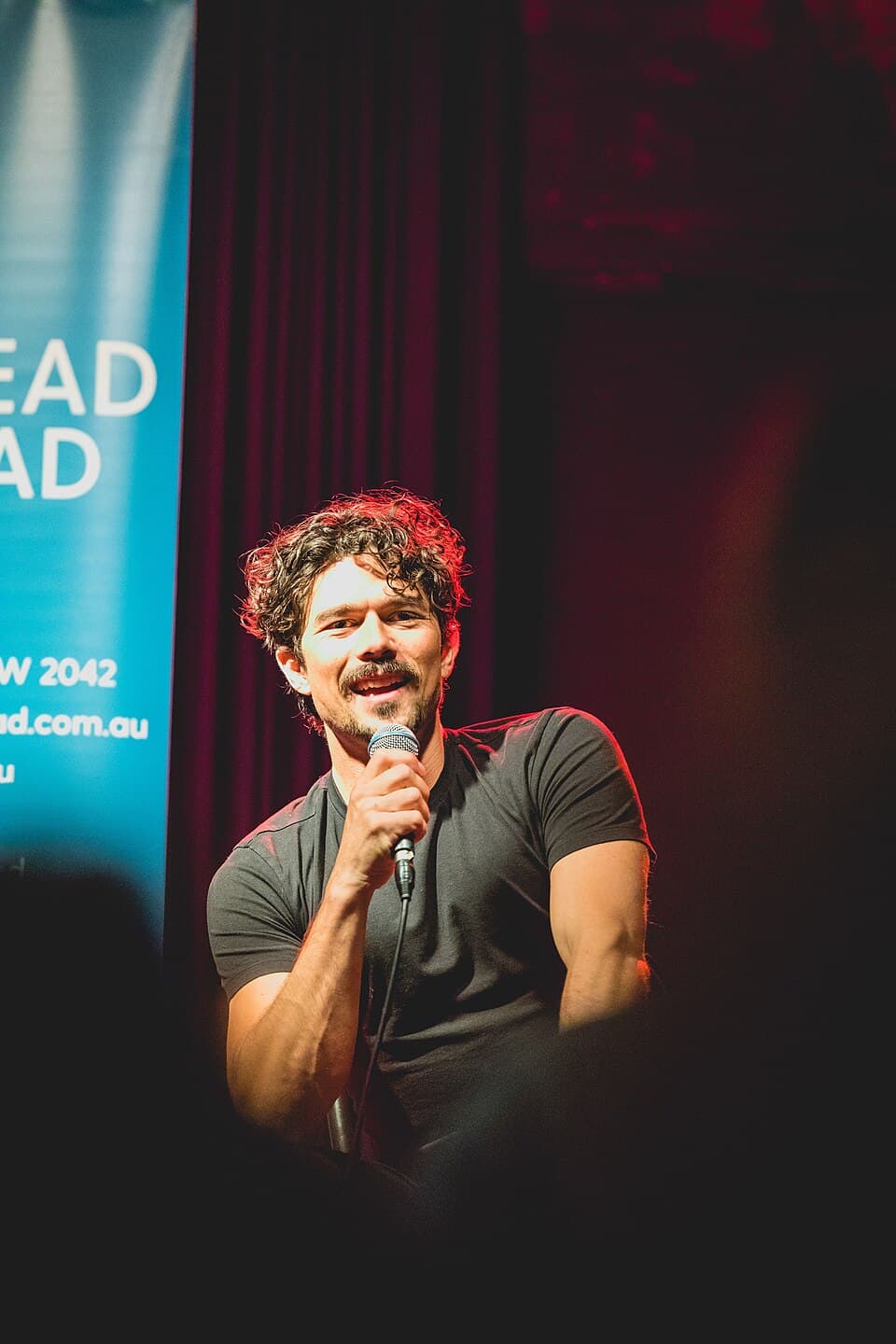
Luke Arnold drives into a drought-stricken town where a priest shot five men, and the show's best quality is that nobody wants to explain why.
Nautilus built Captain Nemo in Queensland and sent him to sea without enough story
The production is gorgeous, the submarine is a set worth living in, and the scripts needed three more drafts.