Nautilus built Captain Nemo in Queensland and sent him to sea without enough story
The production is gorgeous, the submarine is a set worth living in, and the scripts needed three more drafts.
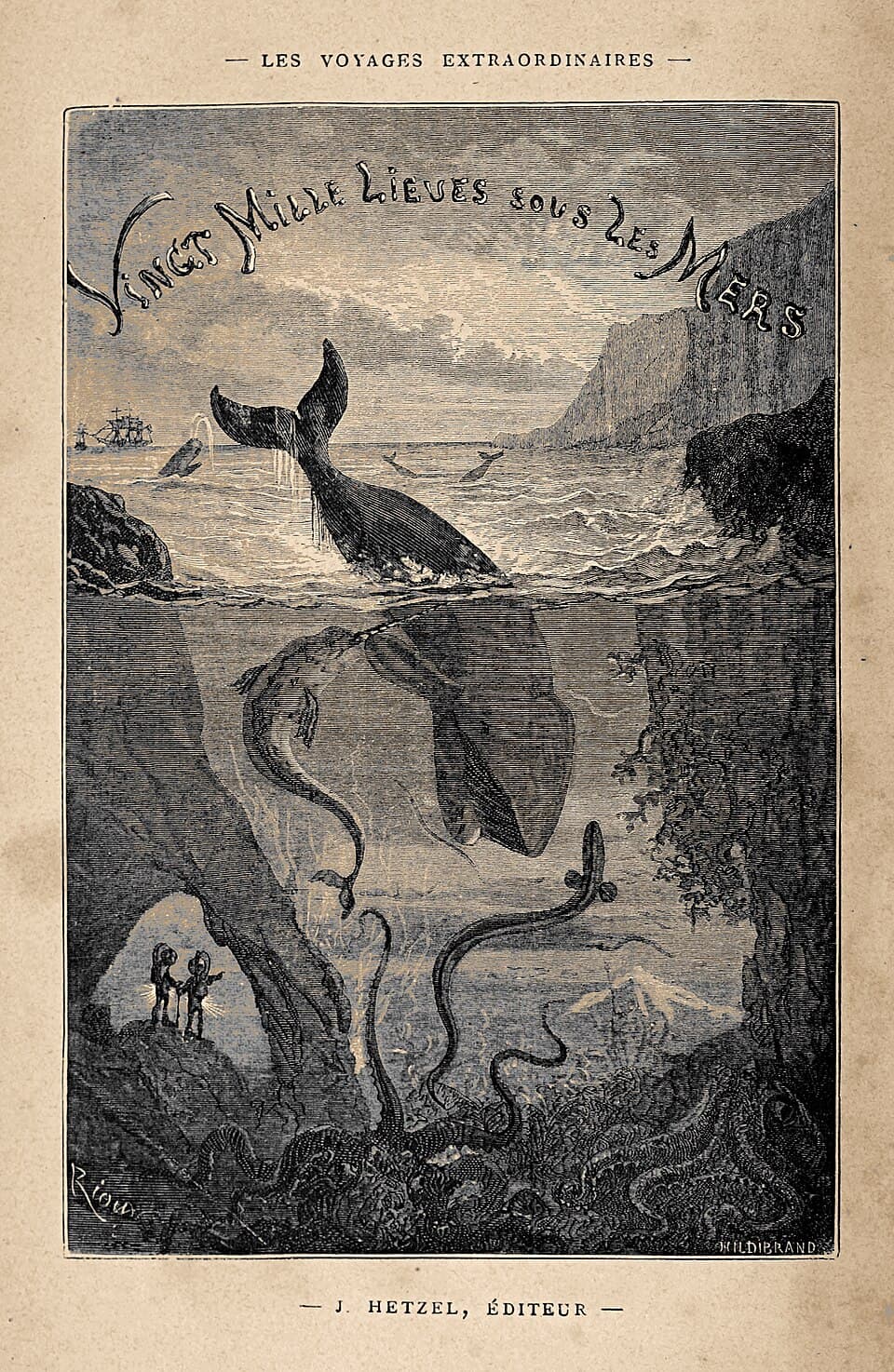
The submarine is extraordinary. I want to start there because the submarine is the thing Nautilus gets right in a way that nothing else in the show quite matches, and it deserves to be discussed on its own terms before I talk about what surrounds it.
The Nautilus itself, as designed by the production team and built on the Gold Coast, is a practical set of genuine ambition. It is wood and brass and glass and iron, a Victorian fever dream of engineering rendered in physical materials that actors can touch, lean against, operate. The control room has depth. The corridors have texture. The viewing chamber, with its curved glass panels looking out into digital ocean, manages to feel both theatrical and functional. You could live in this submarine. You would want to live in this submarine. It is the kind of production design that makes you lean forward in your seat and then lean back again when someone starts talking.
That last part is the problem.
The premise and the casting
Nautilus is an origin story for Captain Nemo, adapted loosely from Jules Verne’s Twenty Thousand Leagues Under the Sea. The show reimagines Nemo as an Indian prince, stripped of his title and family by the East India Company, who escapes imprisonment and steals a prototype submarine to wage a private war against the colonial powers that destroyed his life. It is a revenge story wrapped in a period adventure wrapped in a submarine drama, and the ambition of that structure is both the show’s greatest asset and its most consistent liability.
Shazad Latif plays Nemo, and his casting is one of the show’s stronger decisions. Latif brings a coiled physicality to the role that suits a character defined by controlled rage. He is convincing as both a man of intellect and a man capable of violence, and he moves through the submarine sets with the comfort of someone who has spent enough time on them to know where every surface is. The performance works. The material around it frequently does not.
Writing that cannot keep up
The scripts are the issue. I do not say this lightly because script criticism is easy and production is hard, but Nautilus has a writing problem that becomes visible almost immediately and never resolves. The dialogue is functional where it needs to be sharp. Characters state their motivations rather than revealing them through action. The supporting cast, which includes a crew of misfits recruited by Nemo across the first few episodes, are introduced with clear archetypes (the loyal lieutenant, the sceptic, the young one who believes in the mission) and then left largely undeveloped for the remainder of the season.
The pacing compounds the problem. Nautilus has ten episodes, which is at least two more than the story requires. There are mid-season episodes that consist largely of the crew sailing from one location to another while having conversations that restate information the audience already possesses. A tighter six-episode structure would have forced the writing to be more economical, and economy is what these scripts needed most.
Period-adventure is an unforgiving genre. It demands spectacle, which costs money, and it demands momentum, which costs nothing but is harder to produce. The spectacle in Nautilus is present and accounted for. The momentum is not.
Queensland as production infrastructure
The show was filmed primarily on the Gold Coast, with location work in Port Douglas and Far North Queensland, and the production is a showcase for Queensland’s screen infrastructure. Village Roadshow Studios provided the stage space for the submarine interiors. The water tank facilities handled the maritime sequences. The tropical coastline of Port Douglas stood in for various Pacific and Indian Ocean locations, and it did so convincingly.
This matters beyond the show itself. Queensland has been building its production capacity for over a decade, investing in studio space, crew training, and incentive structures designed to attract international productions. Nautilus is exactly the kind of show that justifies that investment: a large-scale, internationally financed production that employs hundreds of local crew across multiple departments and demonstrates that Queensland can handle period-adventure at a level that would previously have gone to the UK, South Africa, or New Zealand.
The irony is that the infrastructure performs better than the show it is supporting. The sets are world-class. The locations are well-chosen. The visual effects, while uneven in places, are ambitious for a television budget. Everything that can be built, dressed, lit, and photographed is built, dressed, lit, and photographed with skill and care. The weakness is upstream, in the scripts that all of this craft is in service of.
The risk of period-adventure
Australian television does not make a lot of period-adventure. There are good reasons for this. The genre is expensive, it requires audiences to accept a heightened register that sits uncomfortably alongside the naturalism that defines most Australian drama, and the international market for it is dominated by the UK, which has been producing period television with institutional expertise for seventy years.
When an Australian period piece works, it works because the setting provides something the UK cannot. The Artful Dodger succeeded partly because colonial Australia was a strange enough backdrop to make familiar Dickensian elements feel new. Nautilus does not have that advantage. Its setting is the open ocean, which belongs to no country, and its period is the mid-nineteenth century, which the British production system owns. The show is competing on someone else’s territory with someone else’s genre, and it is competing with scripts that are not strong enough to close the gap.
Nautilus is a frustrating show. It is frustrating because everything around the writing is good enough to make you wish the writing were better. The submarine set alone is worth preserving in a museum. Latif’s performance deserves a tighter vehicle. The Queensland production team delivered work that any international crew would respect. What the show needed, and what it did not get, was three more drafts of every script, the kind of patient, structural revision that turns a promising premise into a story that earns its ten-hour running time. Without that, Nautilus is a beautiful ship sailing in circles.
Rhys watches more television than is healthy and writes about it with a dryness that tips occasionally into cruelty. His favourite ABC drama is the one the ABC just cancelled, whichever that happens to be.
MORE BY RHYS TAVITA →
Stan made a great Australian road comedy and told nobody
Dylan River directed all eight episodes of a stolen-taxi comedy set in the 1980s outback, and it went out on Stan with roughly the fanfare of a software update.
Invisible Boys never puts anyone on the bus to Perth
Nicholas Verso's ten-part Stan drama refuses the one ending Australian queer coming-of-age stories always reach for, and is far better for the refusal.
Scrublands sends a journalist to a country town and trusts the silence to do the rest
Luke Arnold drives into a drought-stricken town where a priest shot five men, and the show's best quality is that nobody wants to explain why.