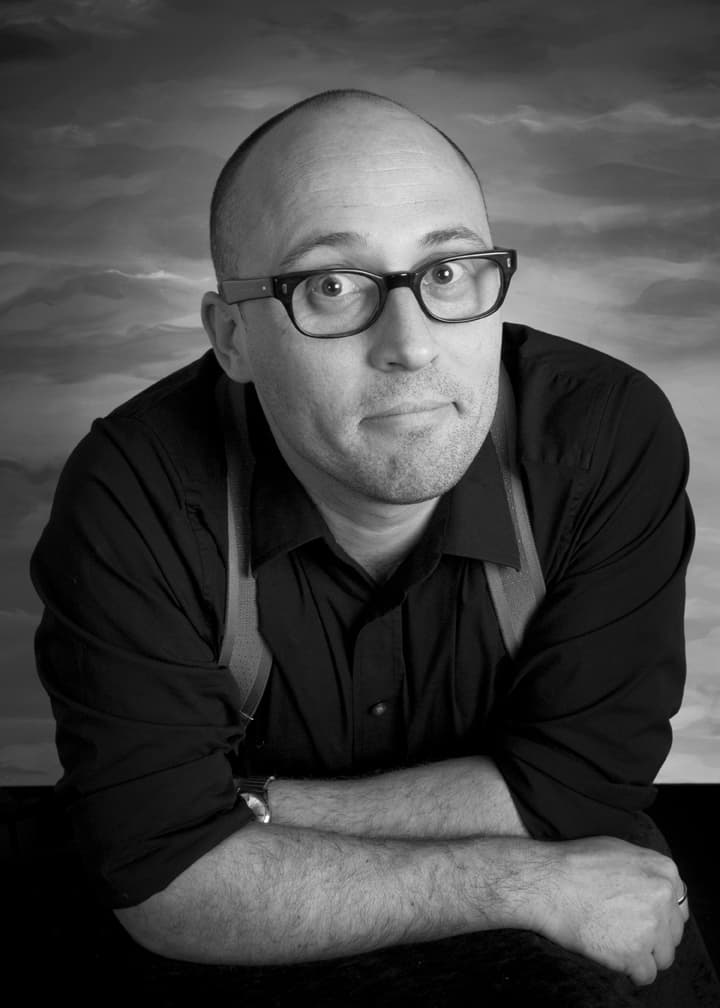
Adam Elliot makes grief out of clay because clay holds its shape when everything else falls apart
Elliot's characters are made of plasticine and painted with fingerprints, and the imperfection is not an aesthetic choice; it is the whole argument.
I saw Memoir of a Snail in a cinema in Sydney on a Tuesday afternoon, a session that was mostly adults, mostly alone, and by the end of it nearly every person in the room was crying. Not the dramatic, cathartic crying of a film that has manipulated you into release, but the quiet, private kind, the kind where your face is wet and you are not entirely sure when it started. The woman next to me was holding a tissue she had not yet used, just holding it, as though preparing for something she knew was coming but could not prevent. I want to write about why Adam Elliot’s films do this to people, and why the fact that they are made of clay is not incidental to the effect but central to it.
Elliot has been making claymation films for over twenty-five years. His short Uncle (1996) established the template: a narrated character study, gentle and devastating, about an ordinary person whose life contains extraordinary quantities of loss. Cousin (1998) continued it. Brother (1999) continued it further. Harvie Krumpet (2003) won the Academy Award for Best Animated Short Film, and it is about a Polish-Australian man who survives communism, emigration, a brain tumour, and the death of everyone he loves, and it is somehow also funny. Mary and Max (2009) was his first feature, and Memoir of a Snail (2024) is his second. In between, fifteen years. Elliot does not rush.
Why clay matters
There is a practical reason why Elliot works in claymation and not in digital animation or live action, and it is worth stating plainly: he has a condition called agenesis of the corpus callosum, which means the two halves of his brain are not connected by the usual nerve fibres. This affects his motor skills. Working with clay, slowly, frame by frame, at a pace that accommodates his body, is not a stylistic preference. It is the method that allows him to make films at all.
But the practical reason does not exhaust the aesthetic one. Claymation does something that no other medium can do in quite the same way. The characters bear fingerprints. Literal, visible fingerprints, pressed into the plasticine by the hands that shaped them. The surfaces are imperfect. The movements are slightly jerky. The faces are handmade and you can see that they are handmade, and this visibility of labour, of touch, of human imprecision, creates a relationship between the viewer and the character that is different in kind from what live action or digital animation can produce.
When you watch a Pixar film, the animation is so seamless that you forget it is animation. The characters move like bodies. The surfaces are smooth. The illusion is complete, and the completeness of the illusion is the point. Elliot’s films do the opposite. They never let you forget that these are objects. They never let you forget that someone made them, with their hands, one frame at a time. And this knowledge, this awareness of the made-ness of the thing, does not create distance. It creates tenderness. You feel protective of the characters because they look fragile, because they look like something a person spent weeks shaping and could destroy in a second by pressing too hard.
The Melbourne of the unloved
Elliot’s films are set in a version of Melbourne that is recognisable but heightened: fibro houses, charity shops, public housing flats, buses that run late, kitchens with linoleum floors and fluorescent lights. His characters are working-class or lower-middle-class. They are lonely. They collect things. They watch television. They eat badly. They have bodies that do not work properly and relationships that have failed or never started and interior lives that are vast and inarticulate.
This is a specific world, and it is one that Australian cinema does not often depict with this level of care. There are Australian films about poverty and there are Australian films about loneliness, but Elliot’s films are about the ordinary, grinding dailiness of both, the texture of a life lived in a small flat with not enough money and too many ornamental figurines and no one to call when something good happens. His characters are not tragic in the grand sense. They are tragic in the way that millions of people are tragic, which is quietly, without an audience, over decades.
In Mary and Max, Mary Daisy Dinkle is a girl in the outer suburbs of Melbourne who writes letters to a stranger in New York, a man named Max Jerry Horovitz who has Asperger’s syndrome and an addiction to chocolate hot dogs. Their correspondence spans twenty years. The film is narrated by Barry Humphries in a tone that is warm and detached simultaneously, the voice of someone who cares about these characters but knows that caring will not save them.
In Memoir of a Snail, Grace Pudel is a woman who hoards. Her flat is filled with snail figurines, thousands of them, and the hoarding is both a symptom and a strategy. Grace collects snails because she has lost everything else: her twin brother, her parents, her sense of belonging. The objects are a substitute for connection, and the film understands this without judging it. Elliot does not pathologise hoarding. He shows it as a form of love that has nowhere else to go.
What animation permits
There is a scene in Memoir of a Snail that I do not think could exist in live action. Grace, as a child, is separated from her twin brother Gilbert after their father dies. She is sent to one foster family and he to another, and the separation is total and bureaucratic and explained to them in language that is kind and inadequate. In live action, this scene would be unwatchable. Two children, played by real child actors, weeping as they are pulled apart. The audience would look away, or the director would cut away, or the scene would cross the line from empathy into exploitation.
In claymation, the scene works because the characters are clay. They are small and still and they do not cry the way real children cry. Their grief is expressed through the animator’s choices: the angle of a head, the position of hands, the slowness of a movement. The abstraction of the medium creates a space between the viewer and the pain, and that space is not distance. It is room. Room to feel what you are feeling without being overwhelmed by it. Room to sit with grief rather than be assaulted by it.
This is, I think, why Elliot’s films can address subjects that live-action cinema struggles with: childhood separation, mental illness, death, loneliness so profound it becomes a way of life. The clay absorbs the shock. It holds the shape of the pain without reproducing it at full intensity, and this partial reproduction, this representation that is always visibly a representation, allows the audience to stay present in a way that photographic realism might not.
The fifteen-year gap
Between Mary and Max and Memoir of a Snail, fifteen years passed. Elliot has spoken about the difficulty of financing claymation features in Australia, about the labour intensity of the process, about the periods of depression that interrupted the work. This gap is itself a kind of argument for the value of what he does. In an industry that measures productivity in output per year, that celebrates filmmakers who can turn around projects quickly and maintain cultural visibility, Elliot simply disappeared for a decade and a half and came back with something that made a cinema full of adults cry on a Tuesday afternoon.
I keep returning to the fingerprints. Every frame of Elliot’s films contains the evidence of human touch, not metaphorical touch but actual, physical touch, fingers on clay, shaping and reshaping, one twenty-fourth of a second at a time. In a period when animation is increasingly algorithmic, when generative AI can produce images that look like they were made by hand but were not, this labour feels like more than a technique. It feels like an ethical position. The imperfection is not charming. It is the point. It says: a person made this. A person sat in a room in Melbourne and moved a piece of plasticine one millimetre and took a photograph and then moved it again. For years.
The woman next to me in the cinema used her tissue eventually. She was crying during the final scene, which I will not describe because you should see it yourself, and the credits rolled over Nick Cave’s score, and nobody moved. That is a rare thing, a cinema where nobody reaches for their bag or checks their phone when the lights come up. People just sat there. I think they were not ready to leave the world that Elliot had built for them, this small, handmade, imperfect world where loss is the weather and tenderness is the only available shelter. They sat there because the clay had held its shape and they needed a moment before the real world, which is less carefully made, required them back.

Mara writes essays. She came to film writing from a decade of literary criticism and still reaches, sometimes, for a novel before she reaches for a shot list. She lives in the inner north of Melbourne and does not explain which city that is.
MORE BY MARA DENG →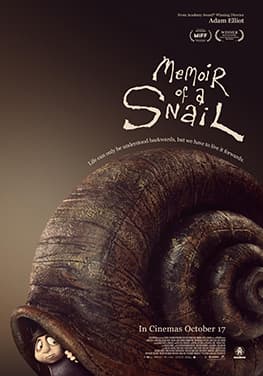
Adam Elliot made grief out of clay and it holds its shape
Elliot's second feature is a hoarder's inventory of loss, rendered in plasticine and voiced by Sarah Snook, and it is the best Australian film of 2024.
The score for Memoir of a Snail moves at the speed of grief
Elena Kats-Chernin's score for Adam Elliot's claymation opus is patient, fragile, and refuses to tell the audience when to cry.
Australian cinema in 2024 was everywhere and nowhere at the same time
The year's biggest Australian film cost half a billion dollars and the year's best cost seven million, and nobody quite knew how to hold both in the same sentence.