Australian cinema in 2024 was everywhere and nowhere at the same time
The year's biggest Australian film cost half a billion dollars and the year's best cost seven million, and nobody quite knew how to hold both in the same sentence.
I want to talk about scale, because that is the word that kept coming back to me every time I tried to describe what Australian cinema did in 2024. Scale as in scope, as in budget, as in the distance between the biggest thing and the smallest thing, and how that distance has become so wide that the two ends of Australian filmmaking can barely see each other across it.
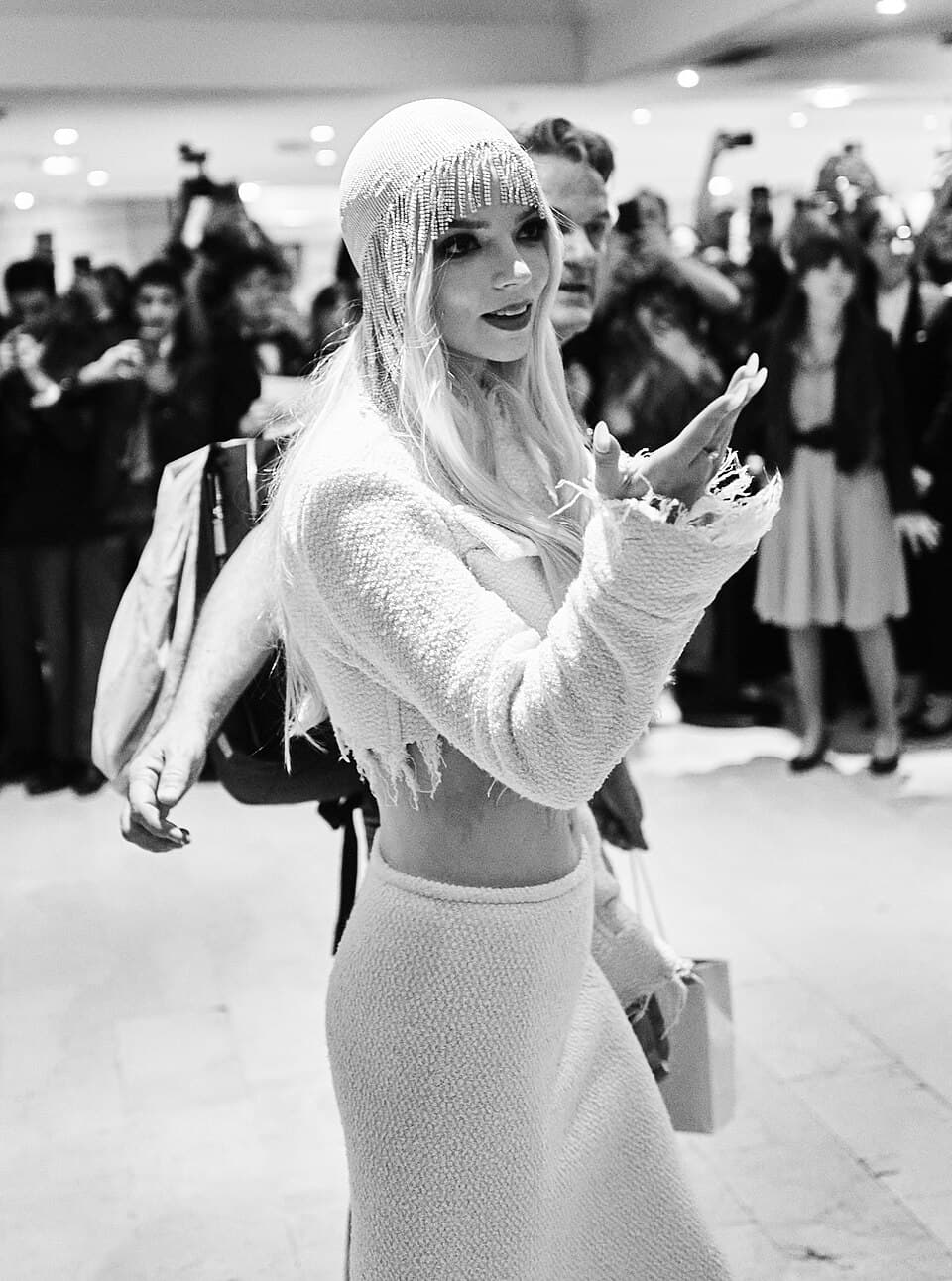
Furiosa: A Mad Max Saga cost somewhere in the region of $250 million US, depending on which number you believe and whether you count the marketing spend that Warner Bros. will never fully disclose. It was shot in New South Wales with Australian crew, directed by George Miller, and starred Anya Taylor-Joy and Chris Hemsworth. By every reasonable measure it is an Australian film. It is also, by every reasonable measure, a Hollywood blockbuster that happened to be made here because Miller lives here and the infrastructure exists and the tax offsets are generous enough to keep the accounting plausible. I think Furiosa is magnificent. I think Miller at eighty is operating at a level of formal ambition that would exhaust most directors half his age. The film’s middle act, the pursuit across the Wasteland, is some of the best action filmmaking I have seen in a decade. But I also think that when we talk about Furiosa as an Australian film, we are performing a kind of category work that flatters us more than it describes reality. The film’s Australianness is real but it is also incidental. It could have been made in Morocco or Namibia or on the backlot at Leavesden and it would have been the same film, because the film belongs to Miller and to Warner Bros. and to the global audience that buys tickets to see cars explode in the desert. Australia provided the labour and the landscape. That is not nothing. It is also not everything.
Seven million and a snail
At the other end, Memoir of a Snail. Adam Elliot’s second feature, made in Melbourne over years, animated in stop-motion by a team that numbered in the dozens rather than the hundreds, budgeted at somewhere around seven million Australian dollars. The film is about Grace, a hoarder and collector of snail figurines, whose life unfolds in a series of losses and dislocations narrated to her pet snail. It is tender and crude and funny and devastating in roughly equal measure, and it is so specifically Australian, so specifically Melburnian, that it could not have been made anywhere else. The accents, the suburbs, the particular quality of light in the interiors, the sense of a life lived in small rooms among accumulated objects. Elliot has always made films about people the world overlooks, and Memoir of a Snail is his most fully realised version of that project.
I saw Memoir of a Snail at a screening in Sydney where the audience laughed and cried and sat through the credits in the way people sit through credits when they need a moment before they re-enter the world. I saw Furiosa at a preview screening where the audience cheered at the explosions and left during the credits to beat the parking queue. Both responses were correct. Both films earned them. What struck me was how impossible it would be to write a single sentence about “the state of Australian cinema” that could hold both of these experiences. The industry that produced Furiosa and the industry that produced Memoir of a Snail are not the same industry. They share a continent and a funding body and a national cinema brand and almost nothing else.
The genre middle ground
Somewhere between these poles, the middle ground that Australian cinema has been trying to build for the past decade. Late Night with the Devil, the Cairnes brothers’ horror film, was the year’s clearest proof that Australian genre filmmaking can find an international audience without spending international money. The film’s conceit, a 1970s late-night television show that goes supernaturally wrong, captured on period-appropriate video, is the kind of high-concept idea that used to belong exclusively to American indie horror. The Cairnes brothers shot it in Melbourne, cast David Dastmalchian in the lead, and sold it worldwide for multiples of its modest budget. The film works because it commits completely to its formal premise, never breaking the television frame, never letting you forget that you are watching a broadcast that is spiralling out of control in real time.
Shayda, Noora Niasari’s debut feature, occupied yet another register entirely. Based on Niasari’s own family history, the film follows an Iranian-Australian woman (Zar Amir Ebrahimi) who flees domestic violence with her young daughter and takes refuge in a women’s shelter. The film is small and precise and refuses to perform its drama at a volume louder than a conversation. Ebrahimi’s performance has the quality of someone holding themselves together through sheer discipline, and the film matches her, keeping its camera close, its colours muted, its emotional register tuned to the frequency of survival rather than catharsis. Shayda cost a fraction of what Late Night with the Devil cost, and a fraction of a fraction of what Furiosa cost, and it is the film from 2024 that I think about most often, the one that returns to me in quiet moments, the one whose images have settled into my memory the way only the best films do.
The sustainability question
What I keep circling back to is whether the industry can sustain all of this at once. Miller is eighty. There is no second George Miller. The infrastructure that Furiosa built and employed, the stages at Fox Studios, the digital effects pipelines, the stunt teams, exists in a state of dependency on international productions choosing to come here, and those productions choose based on exchange rates and tax incentives and the availability of studio space, factors that shift with political and economic weather. When Furiosa underperformed at the global box office, the conversation in the Australian industry was not about what it meant for action cinema or for Miller’s legacy. It was about what it meant for the next international production considering Australia as a location. The anxiety was infrastructural, not artistic.
At the other end, the funding environment for films like Memoir of a Snail and Shayda remains precarious in ways that have not changed in decades. Screen Australia’s budget is finite. State agencies compete for the same pool of projects. The gap between development funding and production funding swallows careers whole. Elliot spent years making Memoir of a Snail and the years were not a creative choice. They were a consequence of the time it takes to finance an animated film in a country that does not have an animation industry so much as a collection of determined individuals who refuse to stop.
What the year felt like
I want to end with something less structural and more personal, because that is what year-end essays are for, or what I think they should be for. What 2024 felt like, as someone who watches Australian films for a living, was exciting and contradictory and unresolved. It felt like a year in which Australian cinema proved it could do almost anything, action spectacle and stop-motion intimacy and genre invention and quiet drama, and simultaneously proved that the system supporting all of this is held together with grant applications and goodwill and the particular stubbornness of people who refuse to make their films anywhere else.
I do not know what 2025 will bring. I hope it brings another Adam Elliot film, though I know it will not, because Elliot works at the pace of someone who moulds every frame by hand. I hope it brings more debuts as confident as Shayda, more genre films as formally committed as Late Night with the Devil, more evidence that the middle ground between the blockbuster and the micro-budget is habitable. I hope somebody makes a film I have not imagined yet, something that does not fit into any of the categories I have spent this essay constructing, something that makes the whole taxonomy irrelevant.
What I do not hope for is consensus. The most interesting thing about Australian cinema in 2024 was its refusal to cohere, its insistence on being multiple things at once, on containing Furiosa and Memoir of a Snail in the same national cinema without pretending they belong to the same conversation. That tension is not a problem to be solved. It is the condition of a cinema that is still figuring out what it is, and the figuring out is the interesting part.
Mara writes essays. She came to film writing from a decade of literary criticism and still reaches, sometimes, for a novel before she reaches for a shot list. She lives in the inner north of Melbourne and does not explain which city that is.
MORE BY MARA DENG →
Australian cinema does not know what it wants to be next and that might be the whole point
Six years of writing about Australian film has taught me that the industry's identity crisis is not a bug; it is the condition under which the best work gets made.
This year I watched forty Australian films and the best ones made me nervous
The comfortable films were fine, the difficult ones were better, and the gap between the two is where Australian cinema lives.
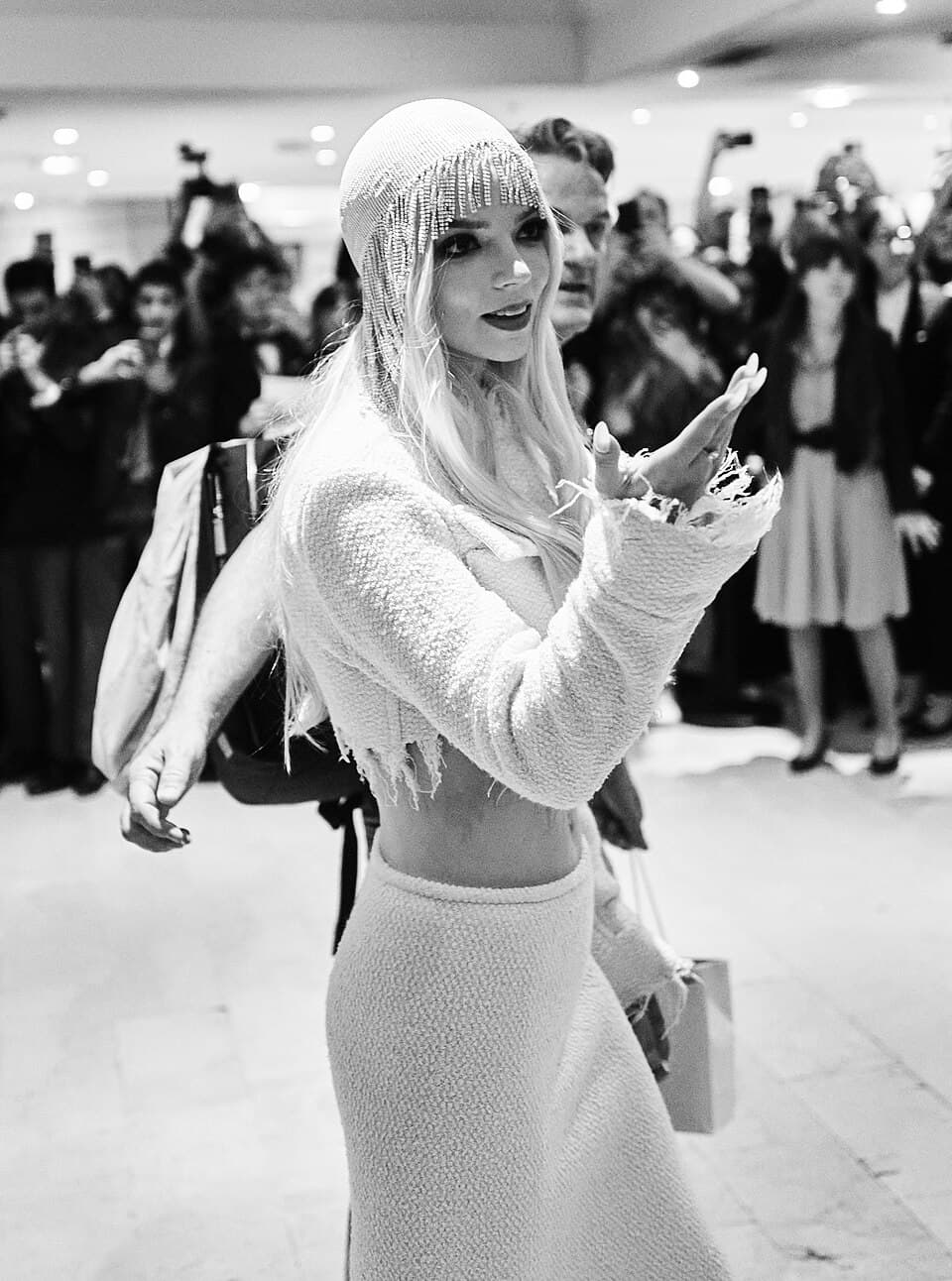
Furiosa and the question of what Australian cinema is allowed to be
George Miller spent half a billion dollars in the desert and the result is the most expensive Australian film ever made, which is also the most Australian.