Furiosa and the question of what Australian cinema is allowed to be
George Miller spent half a billion dollars in the desert and the result is the most expensive Australian film ever made, which is also the most Australian.
I saw Mad Max for the first time when I was fourteen, on a VHS that belonged to my uncle, in a fibro house in Cabramatta. The tracking was bad. The colour had shifted toward orange. Mel Gibson was young and thin and had not yet become the thing he became, and the cars were real, and when they crashed they stayed crashed, and I remember thinking: this is what movies are supposed to feel like. Not good, exactly. Not polished. Something more like inevitable. The vehicles moved across the screen the way weather moves across a plain.
I bring this up because Furiosa: A Mad Max Saga cost approximately $168 million to produce and was shot largely at Fox Studios in Sydney and on location in outback New South Wales, and it is the most expensive Australian film ever made, and it is one of the most Australian films ever made, and the fact that those two claims feel contradictory tells you everything about how this country talks about its own cinema.
The category problem
There is a version of Australian cinema that the industry promotes, funds, and sends to festivals. You know what it looks like. It is quiet. It is small. It is about families in crisis, or addiction, or the aftermath of colonial violence, or queer adolescence in a regional town. It is often very good. It is almost always under $10 million. It stars actors you recognise from television. It screens at MIFF and Sydney and sometimes makes it to Toronto or Berlin, where international programmers slot it into categories like “World Cinema” or “Discovery.”
This is not a complaint. Some of the best films I have seen fit this description. The Nightingale, Babyteeth, Sweet Country, Samson and Delilah. But there is a narrowness to the model that becomes visible when you set it next to George Miller, who has been making films in this country for nearly fifty years and has never once made anything that fits inside it.
Miller does not make quiet films. He does not make small films. He does not make films about families in crisis, unless you count the Citadel as a family and the crisis as civilisational collapse. He makes spectacle, enormous and deliberate and rigorously constructed, and he does it from Sydney, with Australian crews, using the Australian desert as his primary visual material, and the Australian film industry has never quite known what to do with him.
The desert is not a location
Here is something I think about: in Furiosa, the desert is not a backdrop. It is the logic of the entire world. The economy of the Wasteland is a resource economy. Water, fuel, food, ammunition. The geography determines the power structure. The Citadel controls the aquifer. Gastown controls the refinery. The Bullet Farm controls the munitions. Every chase, every war rig, every act of violence or resistance happens because of distance, scarcity, and terrain.
This is, if you tilt your head, a film about Australia. Not metaphorically. Literally. This country’s political economy has always been organised around distance, resource extraction, and the question of who controls what comes out of the ground. Miller did not set his films in the desert because it looks cinematic (though it does). He set them there because the desert is where the logic of the country becomes legible.
The stunt crews on Furiosa were largely Australian. The VFX work was split between several Sydney houses and international vendors, but the physical production, the rigs, the explosions, the vehicles, the coordinated carnage, was built by people who have been doing this work since Mad Max 2. There is a lineage. The stunt coordinator on Fury Road, Guy Norris, has been working with Miller since the 1980s. The knowledge lives in bodies, in workshops in western Sydney, in the muscle memory of people who know how to roll a truck at speed and walk away.
What the industry funds and what it claims
Screen Australia’s annual report will tell you about the agency’s commitment to Australian stories. The rhetoric is consistent: diverse voices, local narratives, cultural identity. The funding guidelines favour projects with strong Australian cultural content, which in practice means projects that look like the quiet, small, festival-track films described above.
Furiosa did not receive Screen Australia funding. It did not need to. It was financed by Warner Bros. and shot under the Location Offset, the tax rebate designed to attract foreign productions to Australian soil. In the industry’s own accounting, Furiosa is classified as a foreign film that happened to be made here. An American studio picture that used Australian facilities and labour.
This is technically correct and culturally absurd. Furiosa was written by George Miller, who was born in Brisbane. It was produced by his company, Kennedy Miller Mitchell, which has been based in Sydney since the 1970s. Its creative DNA is entirely Australian. But because the financing came from a Hollywood studio, the film does not count, in the bureaucratic sense, as Australian content.
The category system is doing something strange here. It is telling us that a $168 million film made in Australia, by Australians, about a world that is transparently derived from the Australian landscape and resource economy, is not Australian. Meanwhile, a $3 million film financed by Screen Australia and shot in Melbourne with a cast of local actors is Australian, even if its story and sensibility could be transposed to any English-speaking country without changing a word.
What Australian cinema is allowed to be
I keep returning to that VHS in Cabramatta. The tracking lines across Mel Gibson’s face. The sound of the Interceptor’s engine, which I later learned was a real Ford Falcon with a supercharged Cleveland V8. The cars were Australian. The road was Australian. The dust was Australian. The film’s entire aesthetic vocabulary, speed, collision, endurance, the body pushed to its mechanical limit, was born out of a specific Australian tradition of car culture, open-road mythology, and industrial improvisation.
Miller took that vocabulary and scaled it. First to Mad Max 2, then to Thunderdome, then to the baroque miracle of Fury Road, and finally to Furiosa, which might be his most controlled and patient film despite its scale. Each iteration got bigger, more expensive, more international in its financing and cast. But the core material never changed. It was always the desert. It was always the machines. It was always the question of what people do when the systems that were supposed to protect them collapse.
The Australian film industry talks a great deal about what Australian cinema should be. It should be diverse. It should be culturally specific. It should reflect the complexity of contemporary Australia. All of this is true. But it should also, sometimes, be allowed to be enormous. It should be allowed to cost $168 million and fill a screen with fire and noise and bodies in motion. It should be allowed to look like the most expensive action film in the world and still be, in its bones, a film about a country that was built on distance and extraction and the stubborn refusal to stop moving.
George Miller has been making that film for fifty years. The industry might consider noticing.

Mara writes essays. She came to film writing from a decade of literary criticism and still reaches, sometimes, for a novel before she reaches for a shot list. She lives in the inner north of Melbourne and does not explain which city that is.
MORE BY MARA DENG →
Furiosa and the country George Miller will not leave
Two years after Furiosa underperformed in May 2024, the picture has clarified into the most patiently photographed film of George Miller's career, and possibly the last one he will shoot in the Hay plains.
Australian cinema in 2024 was everywhere and nowhere at the same time
The year's biggest Australian film cost half a billion dollars and the year's best cost seven million, and nobody quite knew how to hold both in the same sentence.
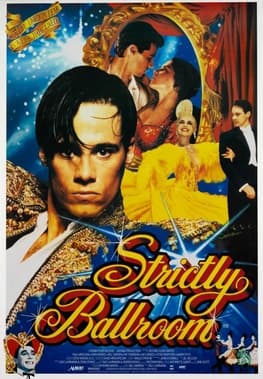
Strictly Ballroom is a film about who is allowed to teach the steps
Baz Luhrmann's 1992 comedy is sold as a story about dance. It is also a story about an Australian champion who has to be taught his own steps by a Spanish-Australian family in their own house.