Wake in Fright and the negative that almost burned
A film about a man who cannot leave a town nearly became a film that could not leave a shipping container, and the rescue is now part of what the picture means.

The most frightening thing about Wake in Fright is that the country it shows you did not want it shown, and very nearly got its wish. Ted Kotcheff’s 1971 picture, adapted by Evan Jones from Kenneth Cook’s 1961 novel, was a commercial failure on release and an object of something close to civic offence; audiences in the towns it depicted are said to have walked out, and one of the more famous responses, shouted at a screening, was a man telling the screen that it was not like that, mate. It was like that. The film knew it, and the discomfort of being known is the engine of the whole thing.
John Grant, played by Gary Bond with a beautiful, brittle hauteur, is a bonded schoolteacher who stops in the mining town of Bundanyabba, the Yabba, on his way to a Sydney holiday, and never makes it out. He loses his money on two-up in a single night, and the town absorbs him; the heat, the beer pressed on him as a kind of menace dressed as hospitality, the men who will not let him refuse anything. Donald Pleasence plays the struck-off alcoholic doctor who presides over Grant’s descent with a terrible, watchful glee. Chips Rafferty, in his last screen role before his death the same year, plays the local policeman, and the casting is its own argument: the most reassuring face in Australian pictures, the genial bushman, here a soft instrument of the trap.
What Brian West photographed
The cinematographer was Brian West, and the achievement of the photography is that it refuses the consolations the landscape usually offers. There is no romance of the outback here, no widescreen reverence for the red earth; the Yabba, shot largely in and around Broken Hill, is flat, glaring, the light a punishment rather than a glory. West holds the heat in the frame until you can feel it on the back of your neck. The interiors are worse than the exteriors, all sweat and fluorescent tubes and the close press of bodies, and the cutting tightens as Grant’s control loosens, so the film’s form enacts the dissolution of the man inside it.
The kangaroo hunt is the sequence everyone remembers and the one that has kept the picture controversial for half a century. Kotcheff intercut his drama with footage of a real, licensed night cull, and the result is unwatchable in the precise way the film intends; the men of the Yabba at their sport, the camera neither flinching nor gloating, simply present. You cannot un-see it. The film attaches a card explaining the provenance of the footage, and even so it sits in the body like a stone. It is the moment where the picture stops being about Grant and becomes about a whole national appetite for cruelty disguised as a good time.
The shipping container
Here is where the film’s second life begins, and it is a story almost too neat to be true except that it is documented. Wake in Fright fell out of circulation. Prints degraded, rights tangled, and for years the film existed mainly as a rumour among the people who had seen it, a lost landmark of what we now call the Australian New Wave. The editor, Anthony Buckley, spent the better part of a decade trying to find usable materials, chasing the negative across continents, and the search kept dead-ending.
He found it, finally, in Pittsburgh, in a shipping container marked for destruction. The original negative of one of the essential Australian films of the century, a crate away from the incinerator. From that recovered material a full digital restoration was assembled, and the restored print premiered at Cannes in 2009, where the picture became one of only two films ever to screen twice in the festival’s history, having shown there first in 1971. The symmetry is almost unbearable. A film that nobody at home wanted to look at was twice honoured by the festival that takes cinema most seriously, thirty-eight years apart, with a near-cremation in between.
Why the rescue belongs to the film now
I want to argue that you cannot now watch Wake in Fright without the restoration being part of its meaning, and that this is not a sentimental claim but a structural one. The film is about a country’s wish not to see itself; about a man trapped in a place that will not let him leave and will not let him look away. That the physical object of the film was itself nearly destroyed, nearly disappeared into the same indifference it depicts, folds the story back on itself. The negative in the container is the Yabba’s revenge: get rid of the evidence, mate, it was never like that.
The lineage is clear enough in retrospect. Everything in the Australian cinema that looks hard at the interior and refuses the postcard, the dread in Wolf Creek, the moral heat of the outback crime drama, the whole register of the country as a place that can swallow you, descends in some part from this picture. But descent understates it. Wake in Fright is not an ancestor the New Wave politely acknowledges; it is the film that proved you could make the landscape an accusation rather than a backdrop.
We came very close to losing it, and the closeness is now legible in every restored frame. Watch the recovered print and the long glaring shots of the Yabba carry a second charge, the knowledge that this footage was preserved against a wish, somebody’s wish, that it be gone. It is the rare case where the survival of a film is continuous with its subject. The picture is about what we would rather not see. We almost did not have to.
Bronte writes long-form criticism of Australian cinema and the international art films that feed into it. She was on the ground at Cannes in 2019 and has not entirely forgiven the festival for 2020. Patient with slow films; impatient with tidy ones.
MORE BY BRONTE HAUGHEY →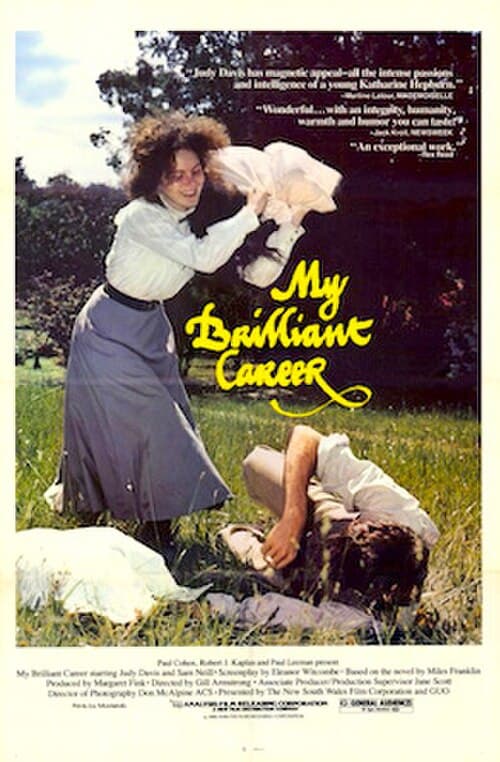
My Brilliant Career and the woman who would not marry the plot
Gillian Armstrong's 1979 debut took a heroine who refuses the marriage plot and made the refusal the whole shape of the picture.
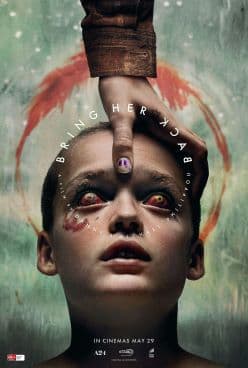
Bring Her Back builds its horror around what Piper cannot see
The Philippou brothers made a $15 million grief picture in the Adelaide suburbs and organised its entire visual scheme around a fourteen-year-old who can only see shapes.
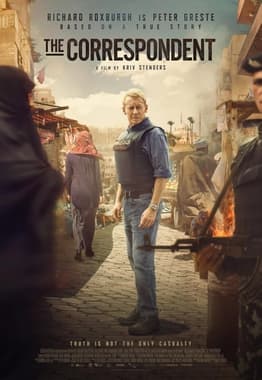
The Correspondent is a grief film wearing a prison film
Kriv Stenders built an Egyptian prison on a Sydney soundstage in six weeks, and the picture he made inside it is not about Egypt at all.