Geoff Burton's light and the truth of Sunday Too Far Away
The NFSA's restoration returns Ken Hannam's shearing drama to full clarity, and what comes back is a film that honours the work without ever romanticising the men who do it.
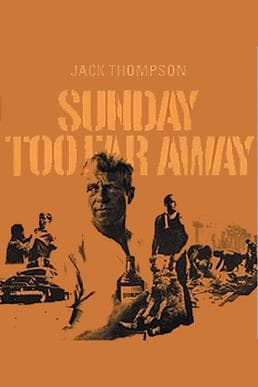
There is a moment early in Sunday Too Far Away, before the strike, before the brawl, before the film becomes the thing it is remembered as, when Geoff Burton’s camera simply watches men shear; and the restoration that the National Film and Sound Archive completed in 2018 has done its most important work on exactly this kind of shot, the unremarkable one, the one that carries the picture’s whole argument in its light. Ken Hannam’s film has always been described as a film about a strike. Seen again in the restored print, scanned in 4K from the original picture negative by the archive’s restoration partner Vandal, it reveals itself as something more specific and harder to hold: a film about labour that declines, at every turn, to make the labour beautiful.
That distinction is the film, and it is worth being precise about it, because the easy version of Sunday Too Far Away is a national myth about mateship and sweat, and the actual picture is cannier and colder than the myth it seeded.
The first feature of a new corporation
The production history matters here more than usual. Sunday Too Far Away was the first feature backed by the South Australian Film Corporation, established in 1972, and it arrived in 1975 as a statement of intent for an industry that was, at that moment, deciding whether it existed. It premiered in the Directors’ Fortnight at Cannes in May of that year, ran ninety-four minutes, and swept the lead and supporting acting prizes and Best Film at the Australian Film Institute awards for 1974 to 1975. John Dingwall wrote it; Rod Adamson cut it; Patrick Flynn scored it with a restraint the era did not always encourage.
Jack Thompson plays Foley, a gun shearer, the fastest blade in the shed, and the performance is the one that made him a star and deserved to. What Thompson understands, and what the restoration lets us see in his face without the veil of a worn print, is that Foley’s pride is also his trap. He is the best at a thing that is killing him by degrees, and he knows it, and he cannot stop, because the being-best is the only wage the work pays that he actually values.
The saying that named the film
The title comes from a shearers’ lament about a wife’s complaint, that her man is too tired on Friday, too drunk on Saturday, and that Sunday is too far away. It is a joke, and like the best working-class jokes it is also a diagnosis: the work takes the week, and the little that is left is spent recovering from it. Hannam builds the whole register of the film on that understanding. The shed is not photographed as heroic. It is photographed as heat, repetition, backs that will not straighten, and Burton lights it the way you would light a factory floor, because that is what it is.
When the strike comes, over the removal of a prosperity bonus and the arrival of non-union labour, the film does not swell. There is no rousing music, no speech that resolves the men into a movement. There is a picket, a long grind of waiting, and a brawl that settles nothing and costs plenty. Hannam refuses the shape of the inspirational labour film even as he tells a labour story, and that refusal is why the picture has aged into something sturdier than nostalgia. It believes in the men without flattering them.
The cut that shadows the print
No account of the film is honest without the wound at its centre. Roughly thirty minutes were removed by the producers before release, including a romance between Foley and a grazier’s daughter and a car crash that was shifted from the film’s end to its beginning, and the fuller version that Hannam intended has never been shown to the public. There is a bitter symmetry in it that the film’s admirers have always felt: a picture about workers whose bonus is stripped and whose labour is cut back was itself cut back by the people who paid for it.
The restoration cannot undo that. It works from the released version, the ninety-four-minute cut, because that is the film that exists; a director’s cut cannot be reassembled from material that was not kept. What the archive has done instead is give the released version its full clarity, so that the compression the producers imposed on the story is no longer compounded by the degradation of the print. We are watching the compromise, but we are watching it clean, and clean is not a small gift for a film this dependent on faces and light.
What the second look returns
Seen now, in the restored print, Sunday Too Far Away sits at the head of a lineage that runs through much of the best Australian screen work about labour and land, the sense that character is revealed by work rather than by talk, that a man is what he does with his hands between meals. Foley’s tragedy is not that he loses the strike. It is that winning or losing the strike changes nothing about the deal the shed offers him, which is dignity now, ruin later, and no version where he gets to keep both.
That is a hard thing for a national cinema to say about its own founding myth of the bush worker, and it is to the film’s lasting credit that it says it plainly and then trusts Thompson’s face to carry the rest. The restoration’s real achievement is to make that face legible again. Look at Foley in the final shed, the work done, the bonus gone, the body spent, and you are looking at the most honest portrait of Australian labour the cinema of the seventies produced. It never once tells you the work is noble. It only shows you the man who does it, and lets you decide what you owe him.
Bronte writes long-form criticism of Australian cinema and the international art films that feed into it. She was on the ground at Cannes in 2019 and has not entirely forgiven the festival for 2020. Patient with slow films; impatient with tidy ones.
MORE BY BRONTE HAUGHEY →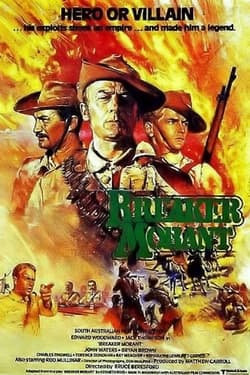
Breaker Morant and the country that adopted its scapegoat
Bruce Beresford's 1980 courtroom drama made an English-born soldier into an Australian martyr, and the picture's argument about empire has outlived its historical certainties.
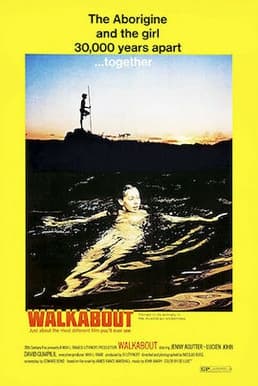
Walkabout is a British film about a country it never claims
Nicolas Roeg's 1971 picture is claimed as an Australian classic, though it was made by a Londoner, financed by two Americans and sold by 20th Century Fox. Its best argument is how little it pretends otherwise.
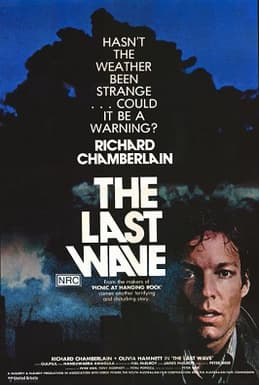
The Last Wave and the rain Sydney could not explain
Peter Weir's 1977 film puts a corporate lawyer in a drowned city and asks what a settler place owes to the ground and weather beneath it.