My Brilliant Career and the woman who would not marry the plot
Gillian Armstrong's 1979 debut took a heroine who refuses the marriage plot and made the refusal the whole shape of the picture.
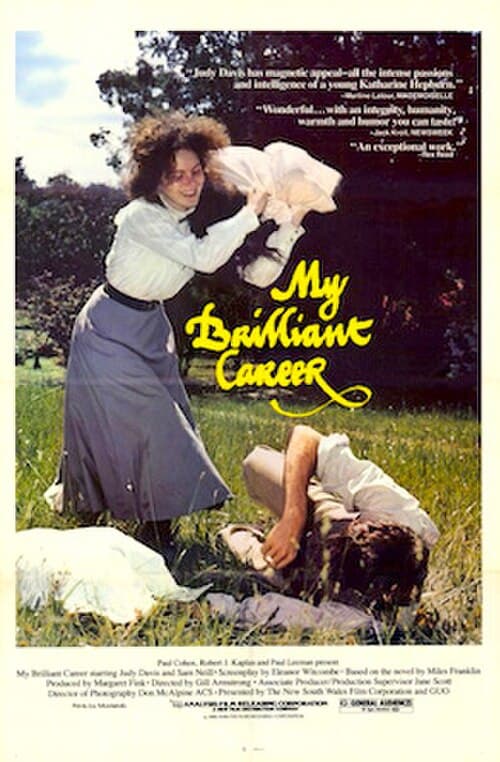
The most quoted gesture in My Brilliant Career is a refusal, and it is worth remembering that the refusal belonged to a teenager before it belonged to anybody else. Miles Franklin wrote the novel before she was twenty, published it in Edinburgh in 1901 with a preface by Henry Lawson, and then spent much of the rest of her life trying to call it back, embarrassed that readers had taken its high-spirited self-portrait for autobiography; the book went out of print at her own insistence and did not return until after her death. Gillian Armstrong’s 1979 picture inherits all of that, the brilliance and the recoil, and does something the New Wave around it rarely managed. It keeps the refusal intact. It does not soften the girl who says no.
The picture was Armstrong’s feature debut, and the fact attached to it has hardened into a plaque: she was the first woman to direct an Australian feature in some forty-six years. The plaque is true and it flattens the more interesting thing, which is how completely the film understands its own subject. A story about a young woman who declines the life the world has drawn for her, made by a director taking a job the industry had effectively reserved for men since the silent era, is not an irony to be noted in passing. It is the engine. Armstrong is filming her own position without once mentioning it.
Possum Gully and the light Donald McAlpine found there
Sybylla Melvyn, played by Judy Davis in the performance that announced her, begins in drought and dust at Possum Gully, the family’s failing selection, where her mother’s exhaustion is the warning the film holds up early. Davis plays her as conspicuously unbeautiful in the manner the period demanded of its heroines, which is to say she refuses to perform charm; the frizz of red hair, the jut of the chin, the flat declarative way she announces that she intends to be a writer. She is sent to her grandmother’s property, Caddagat, a softer green world, and the picture changes register with the landscape.
Donald McAlpine shot it, and his photography is the quiet argument of the film. Caddagat is all warm interiors and verandah light, the genteel station idyll, and McAlpine lets it be lovely without ever letting it be safe; there is always a sense that the prettiness is a kind of pressure, that the beautifully appointed drawing room is where a young woman is meant to be finished and filed away. When the film moves to Five-Bob Downs, the Beecham estate, the compositions open out into pastoral wealth, and the wealth is rendered as temptation rather than reward. Sybylla does not reject Harry because she fails to love him; she rejects him because the alternative is a sentence with her name on it, written by someone else.
The courtship that the film will not let win
Harry Beecham is Sam Neill, four years before A Cry in the Dark and a decade before he became the Australian cinema’s most reliable study in decent men, and the casting is shrewd because Harry is genuinely good. The film does not stack the deck. He is rich, he is kind, he is patient with Sybylla’s contrariness, and he loves her in a way that asks for very little; the pillow-fight courtship at Five-Bob Downs is as charming as anything in the period revival. A lesser version of this story uses all that to make her eventual no look like a tragedy, or a phase, or a lesson she has not yet learned.
Armstrong and her screenwriter Eleanor Witcombe decline the lesson. Sybylla’s refusal is not pique and it is not fear of intimacy; it is a clear-eyed account of what marriage in 1900 would cost a woman who wants to make things. She tells Harry she cannot come to him until she knows herself, which sounds like a deferral and is in fact a verdict. The film honours the verdict by ending on it. She does not weaken in the last reel; she posts her manuscript to a publisher in Scotland, the same path Franklin’s own book travelled, and the loop closes with a kind of severe joy.
A debut that announced two careers and one lineage
It is easy, at this distance, to read the picture only as a feminist landmark and stop there, and the film is plainly that. But its place in the Australian New Wave is more specific. The revival of the 1970s was, for all its achievements, a largely male enterprise preoccupied with male landscapes and male failure, the lost boys of Picnic at Hanging Rock, the diggers, the drifters. My Brilliant Career arrives in 1979 and quietly insists that the costume-drama prestige the industry had learned to make could carry a woman’s interior life as its primary subject, not its decoration. The AFI Awards that year went to the film for Best Film, to Armstrong for direction, to Witcombe for the adaptation; Davis took a BAFTA for the most promising newcomer, and a career that has never since been promising so much as formidable was underway.
Margaret Fink produced it, and produced it against the usual resistance, and Nicholas Beauman cut it with a patience that lets scenes breathe to the edge of stillness; Nathan Waks’s score knows when to withdraw. These are the names a restoration print, the one the National Film and Sound Archive struck from the original negative, returns to legibility, and they are worth saying aloud, because the film’s reputation tends to collapse into two names and the work was done by more than two people.
Why the no still lands
What keeps the picture from being a museum piece is that the refusal has not dated, and the courtship has not dated either. Watch it now and the tension is exactly where it was: a woman is offered a good and loving life, and she can see, with a clarity that frightens the people around her, that accepting it would mean ceasing to be the author of her own days. The film does not pretend this is painless. Davis plays the cost in her face in the final scenes, the loneliness of having chosen correctly. That is the lineage My Brilliant Career really founds in Australian cinema, the line of films that trust a woman to want the difficult thing and do not punish her for it. Armstrong made that trust the shape of her first picture. It is still, conspicuously, the rarer kind of film.
Bronte writes long-form criticism of Australian cinema and the international art films that feed into it. She was on the ground at Cannes in 2019 and has not entirely forgiven the festival for 2020. Patient with slow films; impatient with tidy ones.
MORE BY BRONTE HAUGHEY →
Breaker Morant and the country that adopted its scapegoat
Bruce Beresford's 1980 courtroom drama made an English-born soldier into an Australian martyr, and the picture's argument about empire has outlived its historical certainties.
Walkabout is a British film about a country it never claims
Nicolas Roeg's 1971 picture is claimed as an Australian classic, though it was made by a Londoner, financed by two Americans and sold by 20th Century Fox. Its best argument is how little it pretends otherwise.
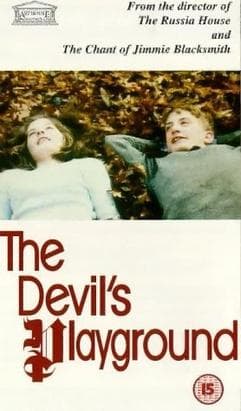
The Devil's Playground split its prize between a boy and a Brother
Fred Schepisi's juniorate drama opened fifty years ago last month, and the most accurate verdict it ever received was an acting award shared between a thirteen-year-old and a Brother.