Man of Flowers and the patience Paul Cox demanded
Paul Cox made European chamber films in suburban Melbourne while the rest of the New Wave chased the outback, and Man of Flowers is the purest case for him.

Paul Cox is the most European filmmaker Australia ever produced, and the country has never quite settled on whether that was a compliment. He arrived from Venlo in the Netherlands in the mid-1960s, a photographer who fell into cinema sideways; while Weir, Schepisi and Beresford were busy inventing an Australian picture out of the bush, the boarding school and the period frock, Cox was making small, talky, interior films about lonely middle-aged people in Melbourne flats, films that owed more to Bergman and to the Czech New Wave than to anything happening at the Australian Film Commission. Man of Flowers (1983) is the one to start with, because it is the picture where his method stops apologising for itself.
The premise reads like a provocation and plays like a hymn. Charles Bremer, a wealthy and solitary man of late middle age, pays a young artist’s model named Lisa to come to his house once a week and undress to a record of opera, after which he leaves, mid-aria, to play the organ at the local church. That is the ritual, and Cox shoots it as ritual: the same chair, the same light through the same window, the same aria, the camera holding on Norman Kaye’s face with a patience that the contemporary viewer has to be retrained to tolerate. Nothing about the scene is hurried, because the film’s whole subject is a man who has organised his life to keep feeling at the precise distance where it cannot hurt him.
What Norman Kaye understood
Kaye was Cox’s great collaborator, the lead in Lonely Hearts and My First Wife as well, and his performance here is the reason the film is not merely an idea. He plays Charles as courtly, fastidious, faintly absurd, and underneath all of it frightened, and he lets you see the fear without ever underlining it. There is a register Kaye finds, somewhere between comedy and grief, that almost no other Australian actor of the period could have held; he is funny in the way that very repressed people are funny, and the comedy keeps curdling into something you do not want to laugh at.
Around Kaye, Cox assembles a cast that keeps the film from tipping into reverence. Alyson Best gives Lisa more interior life than the script strictly requires, so that she is never just the object of Charles’s gaze; Chris Haywood plays her boyfriend David, a brutish, coke-addled painter, as the film’s only genuinely modern figure and therefore its only genuinely ugly one. Cox is not subtle about the contrast. The man who looks but does not touch is gentle; the man who consumes is a monster. The film knows this is a self-serving fantasy and stages it anyway, which is part of why it remains unsettling rather than merely tasteful.
The cinematographer and the lineage
Yuri Sokol shot it, and Sokol is conspicuously the other half of Cox’s authorship across this period. He was an émigré too, trained in the Soviet system, and he photographs suburban Melbourne as though it were a series of Vermeer interiors, deep stillness, light treated as a moral substance, faces emerging from shadow with a weight that the flat Australian sun does not naturally provide. The framing is frontal and composed; Cox and Sokol cut far less than their contemporaries and trust the held shot to do the work. This is the lineage the film is claiming. Not Lawson and the bush ballad, but the European art film, the chamber drama, the cinema of rooms.
The casting of Werner Herzog seals the argument. Herzog appears in flashback as Charles’s father, a painter who instils in the boy a terror of the body and its appetites, and the choice is a kind of signature; Cox is announcing his family tree in the credits. To put Herzog in your film in 1983 was to say, without saying it, that you understood yourself to be working in a tradition that Australia was not yet comfortable owning. The picture went to Un Certain Regard at Cannes in 1984 and won Cox the Golden Spike at Valladolid, and Kaye took the AFI for best actor, and then the film did what most Cox films did, which is recede from the national memory while the genre pictures and the prestige adaptations were canonised in its place.
The case for a second look
What you notice on a second look, ideally from a clean restoration print rather than the murky transfers that have circulated for years, is how unfrightened the film is of being still. Cox arrives, late and quietly, at an image of preservation in the garden, a human form fixed in bronze among the flowers, and leaves you to decide whether you have been watching a romance or a horror. He does not resolve it. The film’s patience, the thing that can read as slowness on a first viewing, turns out to be its argument: that there is a kind of looking that loves and a kind that devours, and that the distance between them is smaller and more disturbing than we would like.
Australian cinema has spent forty years deciding it prefers its auteurs loud, landscape-sized, legible. Cox was none of those things. He made roughly thirty features and documentaries on small money and his own terms, and Man of Flowers is the one that best survives the argument about whether interior, European, unfashionable cinema counts as ours. It does. We should claim it before the prints fade any further.
Bronte writes long-form criticism of Australian cinema and the international art films that feed into it. She was on the ground at Cannes in 2019 and has not entirely forgiven the festival for 2020. Patient with slow films; impatient with tidy ones.
MORE BY BRONTE HAUGHEY →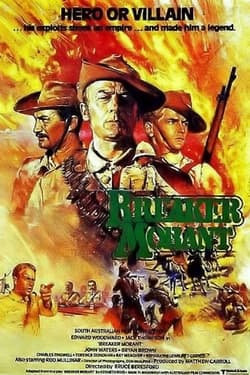
Breaker Morant and the country that adopted its scapegoat
Bruce Beresford's 1980 courtroom drama made an English-born soldier into an Australian martyr, and the picture's argument about empire has outlived its historical certainties.
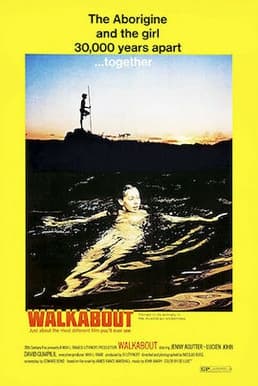
Walkabout is a British film about a country it never claims
Nicolas Roeg's 1971 picture is claimed as an Australian classic, though it was made by a Londoner, financed by two Americans and sold by 20th Century Fox. Its best argument is how little it pretends otherwise.
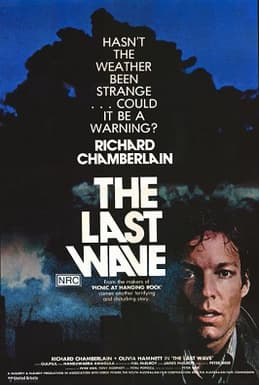
The Last Wave and the rain Sydney could not explain
Peter Weir's 1977 film puts a corporate lawyer in a drowned city and asks what a settler place owes to the ground and weather beneath it.