What The Moogai asks you to believe about a mother
Jon Bell's horror film splits its audience along a single question, and the split at Sundance and at Sydney tells you exactly what the film is doing.
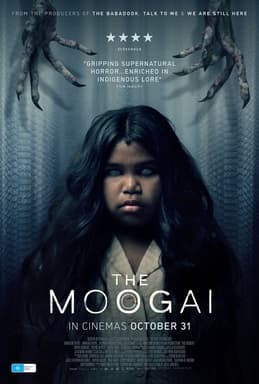
The Moogai premiered in the Midnight section at Sundance on 21 January 2024 and the reviews were mixed. It had its Australian premiere at the Sydney Film Festival that June and won the Audience Award for Best Australian Feature. I keep thinking about that gap. Not because one audience was right, though I have a view, but because the gap is not an accident of taste. It is the film working exactly as designed, and telling you where you are standing.
Jon Bell wrote and directed it, expanding his own 2020 short. Bell is a Wiradjuri, Bundjalung and Yaegl man, and the title is a Bundjalung word for a bad spirit, roughly the bogeyman, a thing that comes for children. Shari Sebbens plays Sarah, a young Aboriginal mother who becomes convinced that something is trying to take her newborn. Meyne Wyatt is her husband Fergus. Tessa Rose is Ruth. Sean Ryan shot it, Simon Njoo cut it, Steve Francis wrote the score, and Kristina Ceyton and Samantha Jennings produced with Mitchell Stanley, which puts it in a direct production lineage with The Babadook and Talk to Me.
The question the film is actually asking
Here is the structure, stripped down. A woman says a thing is taking her child. Everyone around her offers a reason she might say that which does not require the thing to be real. Post-natal depression. Exhaustion. Grief. Family history. A doctor is patient with her. A social worker is professional. Her husband loves her and is frightened.
Every one of those responses is reasonable. That is the trap.
Because the film is not, or not only, about whether a spirit is real. It is about a state that removed Aboriginal children from Aboriginal mothers for the better part of a century, and did it using precisely this vocabulary: concern, assessment, the mother’s fitness, the mother’s stability, the mother’s account of events. Sarah is asked to prove she is not imagining things by a system that has an established history of deciding Aboriginal women imagine things, and the film hands the audience that same assessment form and watches what we do with it.
Or rather, it hands us the form and then declines to fill it in for us. That is the part I find brave, and it is also, I think, the part that cost it at Sundance.
The genre machinery, and its cost
I want to be honest about the film’s weaknesses, because pretending otherwise would be a kind of condescension. Some of the effects work does not hold up under the amount of light the film gives it. The creature is more effective as a suggestion than as a presence, and the film reveals it more than it needs to. Sandra Hall in the Herald wrote that it does not give its actors enough room, and there is something in that: the pace is tight, the running time is eighty-six minutes, and there are relationships in it that would repay another ten.
But the criticism I saw most often out of Park City was that the film is not scary enough, and I think that criticism mistakes the delivery vehicle for the cargo. Bell has said that horror gave him a way into material about the removals, and that he was repurposing the genre’s tropes rather than serving them. A repurposed trope is not going to function as well as an intact one. That is what repurposing means.
What I mean is: if you watch The Moogai as a creature feature, you will note that the creature is uneven, and you will be correct, and you will have watched the wrong film. The frightening material is not the thing in the corridor. It is the clipboard.
Two audiences, one film
I grew up on Australian films where the frontier was a landscape and the violence was in the past tense. What Bell does is put the machinery in the present tense and in a hospital, and give it a soft voice.
For an audience without that history in the room, the horror has to come from the spirit, because the spirit is the only element that reads as threat. For an audience that has a grandmother, an aunt, a cousin who was taken, or who grew up next to somebody who was, the threat is distributed across every polite scene in the film, and the spirit is almost a relief, because at least a spirit can be fought.
That is why Sydney gave it an audience award and why Park City shrugged. Both rooms watched the same eighty-six minutes. Only one of them was being asked something.
What stays
Sebbens is the reason the film holds together, and her performance is built on a difficult calibration: she has to be credible as a woman under enormous strain and never once play it as unreliable, because the moment she plays unreliability the film becomes a story about a woman losing her mind and the whole argument collapses. She never does. She plays a woman who is correct and is not believed, which is a much lonelier thing to act.
Bell has said the film came out of the Aboriginal women in his own family, the ones who held families together through policies designed to break them. You can feel that in what the film chooses to protect. It is hard on the institutions. It is not hard on Sarah, not for a second, even when the plot could have extracted a cheap twist from her doubt.
The film went to Samuel Goldwyn Films for North America in March 2025, and it won the CinefestOZ prize, and it will keep circulating, and the split will keep happening. I have stopped thinking of that as a flaw in the film. A work that lands differently depending on what you carried into the cinema is not failing to communicate. It is telling you something about the room.
Mara writes essays. She came to film writing from a decade of literary criticism and still reaches, sometimes, for a novel before she reaches for a shot list. She lives in the inner north of Melbourne and does not explain which city that is.
MORE BY MARA DENG →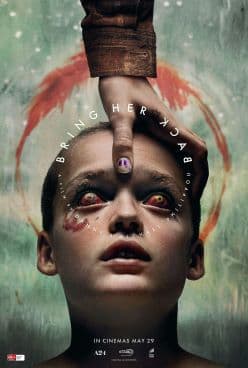
Bring Her Back builds its horror around what Piper cannot see
The Philippou brothers made a $15 million grief picture in the Adelaide suburbs and organised its entire visual scheme around a fourteen-year-old who can only see shapes.
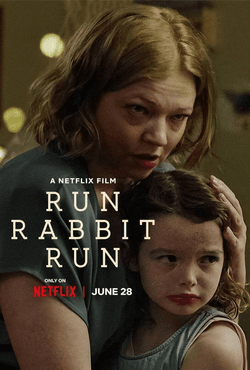
Run Rabbit Run gives Sarah Snook a haunted house and not enough script to fill it
Snook carries the film on performance alone, and the film knows this, which is both its strength and the reason it never finds a second gear.
Australian horror found an audience and now it has to decide what to do with it
Talk to Me proved Australian horror could sell globally, and the pipeline behind it is filling with directors who watched that and took notes.