Jed Kurzel turned the Kelly Gang into a punk song
The score for Justin Kurzel's Ned Kelly film sounds like a garage band locked inside a colonial jail, and that is exactly right.
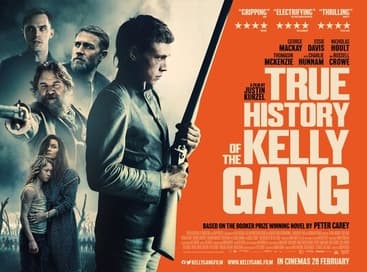
The guitars arrive before anything else makes sense. Before you have settled into the period, before the costumes have registered as nineteenth century, before the voiceover has established its tone, Jed Kurzel’s score hits you with a wall of distortion so raw it could have been tracked in a shed in Collingwood last Tuesday. It is not what you expect from a film set in colonial Victoria. It is not what any previous Ned Kelly adaptation has offered. And it is, note for note, the only honest musical response to what Justin Kurzel’s True History of the Kelly Gang is trying to do.
The film, adapted from Peter Carey’s Booker-winning novel, is not a historical drama. It announces this early and with zero apology. George MacKay plays Kelly as a figure somewhere between Billy the Kid and Johnny Rotten: feral, wounded, performatively masculine in a way that the film understands as armour against colonial brutality. The Kelly Gang wear dresses into battle. The bush at night looks like a Caravaggio lit by firelight and fury. Nothing about the picture is interested in heritage-film respectability, and Kurzel’s score matches that refusal with a sonic palette drawn entirely from punk, post-punk and noise rock.
Distortion as period detail
There is a long tradition of anachronistic scores in period cinema. Sofia Coppola filled Marie Antoinette with new wave. Quentin Tarantino dropped Ennio Morricone cues into Django’s antebellum South alongside Rick Ross tracks. But in most cases the anachronism functions as ironic commentary, a wink from the present to the past. Kurzel’s score does something different. The distortion does not comment on the colonial period from a distance. It inhabits the period, claims it, rewrites it from the inside. The noise is not clever. It is angry.
This works because the film’s central thesis is that the Kelly myth was always punk: an underclass rebellion against institutional power, dressed in improvised armour, fuelled by loyalty and rage and a refusal to accept the terms offered. The orchestral score that Peter Weir might have used, the stately strings that accompanied Mick Jagger’s turn in Tony Richardson’s 1970 Ned Kelly, those sounds belong to the version of history written by the victors. Kurzel gives us the version written on a wall in a holding cell.
What the guitars carry
The technical vocabulary is worth naming. Kurzel uses drop-tuned electric guitars run through layers of fuzz and overdrive, producing a tone that is thick, mid-heavy and deliberately ugly. The low end rumbles rather than punches; the high frequencies are shaved off, leaving a sound that feels enclosed, airless, like music made in a room with no windows. He layers these guitars with industrial percussion (metal struck against metal, rhythms that stagger rather than swing) and occasional stretches of feedback that sit in the mix like weather. There are no clean tones anywhere in the score. Cleanliness would imply control, order, the kind of sonic hygiene that belongs to the world the Kellys are fighting against.
The cues are short and blunt. Many last under a minute. They arrive with the force of a shove and cut out abruptly, leaving the ambient sound of the bush (wind, insects, the creak of timber) to fill the space. This start-stop energy mirrors punk song structure, where brevity is a value and overstaying your welcome is the one unforgivable sin. Kurzel understands this. He gets in, does the damage, gets out.
The Kurzel frequency
Jed Kurzel has scored every one of his brother Justin’s features. Snowtown (2011) used industrial textures and drone to evoke suburban claustrophobia. Macbeth (2015) went operatic, matching the scale of Shakespeare and the Scottish Highlands with massed strings and choral writing. Nitram (2021) would later strip everything back to near-silence. Each score finds its register by listening to the film’s own frequency, and what distinguishes the partnership is that the frequency is established before production begins, not after.
Justin has spoken about sending Jed reference images, location photographs, pages of the script marked with emotional coordinates rather than narrative ones. Jed responds with textures, sketches, fragments of sound that are not yet music but are already the score’s DNA. By the time the cameras roll, the director is cutting to rhythms the composer has already laid down. This is not the industry-standard model, where a composer receives a locked picture and writes to it in six weeks. It is closer to a band dynamic, two people playing in the same room, listening to each other, adjusting in real time.
Heritage film, face down in the dirt
The heritage film has been Australian cinema’s prestige export for decades. Picnic at Hanging Rock, Gallipoli, Breaker Morant, even The Dressmaker in its own camp register: these films treat the colonial and early-modern past with a visual seriousness that tends toward the painterly. The scores follow suit, favouring orchestral palettes that convey gravity, beauty, the weight of history. There is nothing wrong with this tradition, but it has become a reflex, and reflexes stop telling you anything useful about the thing they are responding to.
True History of the Kelly Gang puts the heritage film face down in the dirt and kneels on its back. The score is the boot. Kurzel’s distorted guitars refuse every convention the genre offers: no sweeping strings over landscape shots, no elegiac piano over moments of loss, no percussive build toward battle sequences that would let the audience settle into the comfortable rhythms of action cinema. Instead, the battle sequences get the same ugly, compressed guitar tone as the domestic scenes, the prison scenes, the scenes of humiliation and defiance. The music does not distinguish between these registers because the film argues that they are all the same register. Violence, poverty, resistance and performance are not separate chapters in the Kelly story. They are one continuous noise.
The score ends the way it begins: abruptly, without resolution, mid-phrase. There is no coda, no final statement, no moment where the music steps back and tells you what to feel about what you have just witnessed. It simply stops. That is the punk gesture reduced to its essence. You do not get closure. You get silence, and then you are back in the world, and the noise is still ringing in your ears.
Kieran writes about what films sound like. Played in a band that nearly got signed in 2012 and has been thinking about attack and decay ever since. Devoted to Warren Ellis, Amanda Brown, and the quiet work of sound editors nobody interviews.
MORE BY KIERAN BOUSTANY →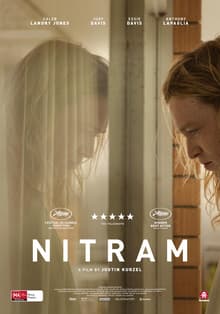
Jed Kurzel scores the silence inside Nitram
The score does almost nothing, and that nothing is the hardest thing a composer can be asked to hold.
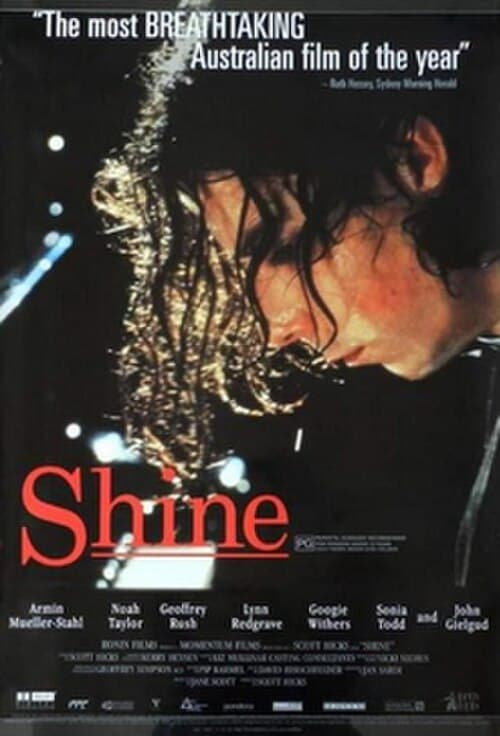
Shine and the score hiding under the Rachmaninoff
David Hirschfelder had to write original music that lives under the loudest warhorse in the piano repertoire, and the quiet writing is what carries the film.
Nigel Westlake smuggled a cathedral into a film about a pig
The score for Babe borrows its grandeur from a French organ symphony, and the trick tells you everything about how Nigel Westlake hears the relationship between small subjects and large feelings.