Jed Kurzel scores the silence inside Nitram
The score does almost nothing, and that nothing is the hardest thing a composer can be asked to hold.
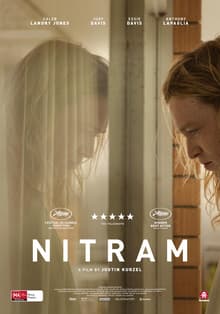
The first thing you hear in Nitram is not music. It is the crackle of a home video, the small domestic hum of a camcorder’s built-in microphone picking up room tone, breath, the friction of a child’s hand against fabric. When Jed Kurzel’s score does arrive, minutes later, it enters so quietly that you might not register it as music at all. A low drone, barely above the threshold of perception. A sustained tone with no attack, no melody, no harmonic movement. It sits beneath the image like something geological: not an event but a condition. This is the palette Kurzel works with for the rest of the film, and it is, by any measure, one of the bravest pieces of scoring in recent Australian cinema.
Nitram (2021), directed by Justin Kurzel, tells the story of the man who committed the 1996 Port Arthur massacre. The film does not name the event directly until its final moments. It does not depict the violence. What it depicts, with a patience that borders on the unbearable, is the long accumulation of neglect, isolation and institutional failure that preceded it. Caleb Landry Jones plays the title character with a commitment so total it erases the boundary between performance and inhabitation: his body language is wrong in a way that feels organic rather than performed, his vocal register drifts between childlike petulance and something harder, flatter, more opaque. The score’s job, in this context, is almost impossible. It must support the performance without interpreting it. It must create atmosphere without editorialising. It must acknowledge the dread the audience brings into the cinema without exploiting it.
The room the mic is in
Jed Kurzel has been scoring his brother’s films since Snowtown (2011), and the collaboration has developed its own grammar over the past decade. In Snowtown, the score was abrasive, industrial, full of textures that felt like rust and concrete. In Macbeth (2015), it was vast, operatic, saturated with strings and choral voices that matched the film’s blood-soaked grandeur. In True History of the Kelly Gang (2019), it was punk-inflected, anarchic, all distortion and defiance. Each score found its register by listening to the film’s own frequency, and in Nitram that frequency is silence.
Not literal silence; the film has ambient sound throughout, and several scenes feature source music (a surf rock track playing from a car stereo, a television bleeding its noise into an empty room). What Kurzel scores is the silence inside the character: the void where empathy, connection and self-awareness should be. His cues are sparse. Many run under ninety seconds. They tend to appear at transitions, the space between one scene and the next, as though the score exists in the gaps rather than the substance of the narrative. The instrumentation is reduced to its barest elements: sustained synthesiser tones, occasional piano notes struck and left to decay, faint string harmonics that hover at the upper edge of audibility. There is no percussion. There is no rhythmic pulse. The music refuses to move forward, and this refusal is the score’s defining gesture.
Attack and decay
Composers talk about “attack” and “decay” as properties of individual notes, but in Kurzel’s Nitram score these terms apply to the work as a whole. There is almost no attack anywhere. Sounds appear without onset, as if they have always been present and you have only just noticed them. The decay is long, glacial; tones fade so slowly that you cannot identify the moment they disappear. This creates a sonic environment in which nothing quite begins and nothing quite ends, a liminal space that mirrors the film’s depiction of a life lived without trajectory or purpose.
The technical discipline required to achieve this is worth noting. Working with this little material, every decision carries weight. The choice to place a single piano note at a particular moment in a scene is, in a conventional score, almost invisible; here it is the loudest gesture the composer makes. Kurzel must judge not only what to play but how long to let the silence hold before playing it. Too early and the cue feels like commentary. Too late and the scene has already closed. The timing is exact, and it speaks to a composer who has spent years learning to hear the rhythms of his brother’s editing.
Scoring real violence
The ethical difficulty of scoring a film about real violence is something few critics discuss in detail, but it is worth sitting with. Music is, by its nature, an emotional technology. It tells the audience what to feel, or at least what register of feeling is available to them. In a film about a mass killing, every musical choice carries a moral charge. A swelling string passage at the wrong moment transforms grief into sentiment. A dissonant chord risks aestheticising horror. Even silence, deployed too strategically, can feel like a manipulation, a withholding of comfort that draws attention to its own severity.
Kurzel navigates this by refusing to let the score occupy a position of knowledge. The music does not know what is coming. It does not foreshadow, it does not build toward a climax, and it does not comment on the events it accompanies. It simply holds a space, steady and low, and lets the images and the performance do their work. This is not the same as absence; it is an active, considered restraint, the sonic equivalent of keeping your hands visible and your voice level when everything in the room is about to break.
Two brothers, one frequency
The Kurzel brothers have built something unusual in Australian film: a director-composer partnership in which the music is not added to the picture but grown from the same root. Justin has said in interviews that Jed is often working on material before a frame is shot, responding to scripts, conversations, location photographs, the texture of the research. By the time production begins, the score’s palette is already established, and the director can shape performances and compositions around it. This is closer to the way David Lynch worked with Angelo Badalamenti, or the way the Coens worked with Carter Burwell, than to the conventional model in which a composer receives a locked cut and writes to picture.
In Nitram, that closeness produces something remarkable. The score does not feel applied. It feels constitutional, as though the film could not exist without it and yet you could remove it entirely and the film would still hold. That paradox is the mark of great film scoring: music so deeply integrated that it becomes invisible, so essential that its absence would collapse the architecture. Jed Kurzel, working with almost nothing, builds a structure that holds the full weight of the film’s grief and horror without ever calling attention to itself. The cues are small, furious in their precision. The silence between them is vast. Together they make the room the film needs to exist in, and then they hold very, very still.
Kieran writes about what films sound like. Played in a band that nearly got signed in 2012 and has been thinking about attack and decay ever since. Devoted to Warren Ellis, Amanda Brown, and the quiet work of sound editors nobody interviews.
MORE BY KIERAN BOUSTANY →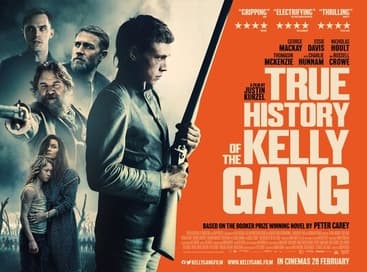
Jed Kurzel turned the Kelly Gang into a punk song
The score for Justin Kurzel's Ned Kelly film sounds like a garage band locked inside a colonial jail, and that is exactly right.
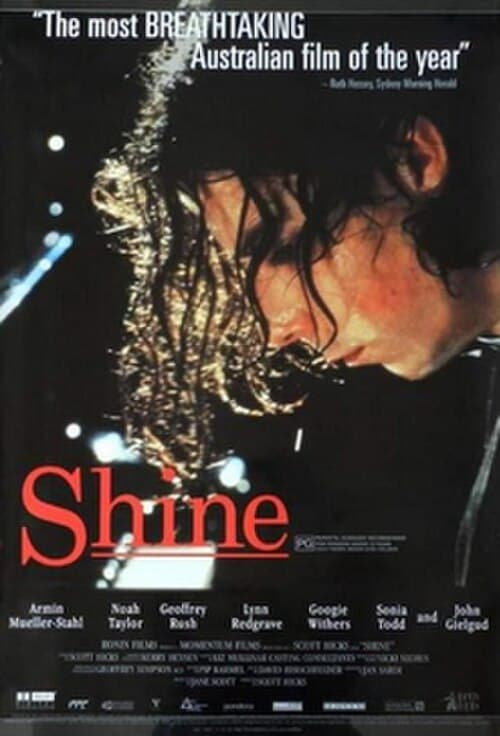
Shine and the score hiding under the Rachmaninoff
David Hirschfelder had to write original music that lives under the loudest warhorse in the piano repertoire, and the quiet writing is what carries the film.
Nigel Westlake smuggled a cathedral into a film about a pig
The score for Babe borrows its grandeur from a French organ symphony, and the trick tells you everything about how Nigel Westlake hears the relationship between small subjects and large feelings.