The Clearing gives Guy Pearce a cult and Teresa Palmer a conscience and watches what happens
Guy Pearce plays a cult leader in rural Victoria, and the show is smart enough to let him be charming rather than monstrous, which is worse.
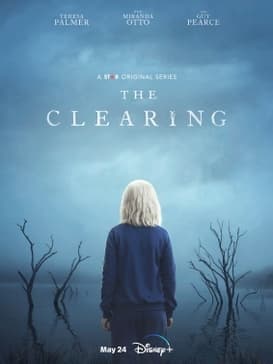
The temptation with cult stories is to begin with the horror. Show the compound. Show the blank-eyed followers. Show the charismatic man doing something unspeakable in episode one so that the audience understands, immediately, that this is a story about evil. The problem with that approach is that it explains nothing. Cults do not recruit people by being obviously terrible. They recruit people by being warm, by offering answers, by making the world feel manageable in a way that the world outside the compound does not. The Clearing understands this, and it is a better show for it.
The series, which landed on Disney+ in 2023, is loosely based on the real Australian cult The Family, led by Anne Hamilton-Byrne in rural Victoria from the 1960s through the 1980s. Hamilton-Byrne collected children, bleached their hair blonde, dosed them with LSD, and told them she was their mother. The real story is grotesque. The show takes the bones of it and builds something more interested in psychology than shock.
Pearce plays the charm, not the menace
Guy Pearce plays Dr Adrienne Beaumont (look, the character is a woman in the source material, and the show genders the role male, and Pearce makes it work so completely that you stop noticing within ten minutes). Beaumont runs a commune in the bush outside Melbourne, surrounded by devoted followers who believe he has access to spiritual truths that the rest of the world has lost.
What Pearce does with the role is precise and, honestly, a bit unnerving. He does not play Beaumont as a predator. He plays him as a man who believes his own mythology, or who has believed it for so long that the distinction between belief and performance has dissolved. The charm is real. The warmth is real. The intelligence is real. And the control is so deeply embedded in the structure of the community that it does not need to announce itself. Pearce has always been good at playing men whose surfaces are immaculate and whose interiors are rotten, but here he does something harder: he plays a man whose interior might not be rotten at all, which makes the external consequences of his behaviour more disturbing, not less.
There is a scene in the third episode where Beaumont comforts a distressed follower, and the comfort is genuine. He means it. He cares. And the scene is terrifying, because you realise that sincerity and harm are not mutually exclusive, and that the most dangerous person in a cult is not the one who knows he is lying but the one who has stopped being able to tell.
Palmer carries the weight
Teresa Palmer plays Freya, a young mother in the present day whose connection to the cult becomes apparent gradually. Palmer’s performance is the structural spine of the show. She is in nearly every scene, and the role requires her to move between timelines, between emotional registers, between a woman who is coping and a woman who is not, and to make the transitions feel organic rather than mechanical.
Palmer has been underused in international productions for years. Hollywood kept casting her in films that did not know what to do with her (Warm Bodies, Hacksaw Ridge in a limited role, various horror films that traded on her face rather than her ability). The Clearing gives her a role that matches her range, and she meets it. The scenes where Freya’s carefully maintained normality begins to crack are played with a physical specificity that is hard to fake: the way she holds her jaw, the way her hands move when she is lying to herself about being fine.
The bush as enclosure
The Victorian rural setting is doing real work here. The commune is isolated but not remote in the dramatic sense. It is an hour from Melbourne. The bush around it is not wilderness; it is the managed, semi-rural landscape of the Yarra Ranges, where hobby farms and wineries sit alongside state forest. The show uses this specific geography to make a point about cults that the more dramatic “compound in the desert” framing misses: these places exist in proximity to normal life. The followers drive to town. They have bank accounts. The separation is psychological, not physical, and the landscape reflects that. The trees are close. The light is filtered. The sky is rarely visible.
Matt Saville directs the first block with a palette that leans into greens and greys, muting the Victorian bush into something that feels enclosed without being claustrophobic. It is a smart choice. The commune should feel like a place you could imagine staying, not a place you would immediately want to leave.
Why Disney+ made this
The commissioning of The Clearing tells you something about Disney+‘s Australian strategy in 2023. The platform was spending heavily on local content across the Asia-Pacific region, trying to build a library of originals that would justify subscriptions in markets where the Disney brand alone was not enough. In Australia, that meant prestige drama. Not franchise content, not family programming, but the kind of adult-oriented series that would sit alongside The Old Man and Dopesick in the platform’s growing collection of shows for people who do not have children.
The bet was that Australian audiences would subscribe for Australian stories told at an international standard, and that international audiences might discover them through the platform’s recommendation algorithm. Whether the bet paid off is harder to say. Disney+ does not release viewership numbers with the granularity that would let you assess whether The Clearing found its audience or disappeared into the catalogue.
What it gets right
The show is not perfect. The dual-timeline structure creates pacing issues in episodes four and five, where the present-day investigation (Palmer’s storyline) and the historical commune (Pearce’s storyline) compete for screen time rather than complementing each other. Some of the supporting performances in the commune sequences are uneven. The final episode resolves things slightly too neatly for a story that has spent seven episodes arguing that the effects of this kind of trauma are never neat.
But the central performances are exceptional, and the show’s refusal to treat the cult as a spectacle is its greatest strength. The Clearing is interested in the ordinary mechanisms of control: how a community polices itself, how loyalty becomes coercion by degrees, how the people inside the system cannot see the system because they are the system. Pearce and Palmer, working from opposite ends of that dynamic, make the mechanics visible without making them didactic.
Honestly, it is one of the better Australian dramas of recent years, and the fact that it arrived on a platform where it had to compete with Marvel content for attention is both its opportunity and its limitation. It deserved a bigger audience. Whether it got one is a question that Disney+‘s algorithm will never answer publicly.

Rhys watches more television than is healthy and writes about it with a dryness that tips occasionally into cruelty. His favourite ABC drama is the one the ABC just cancelled, whichever that happens to be.
MORE BY RHYS TAVITA →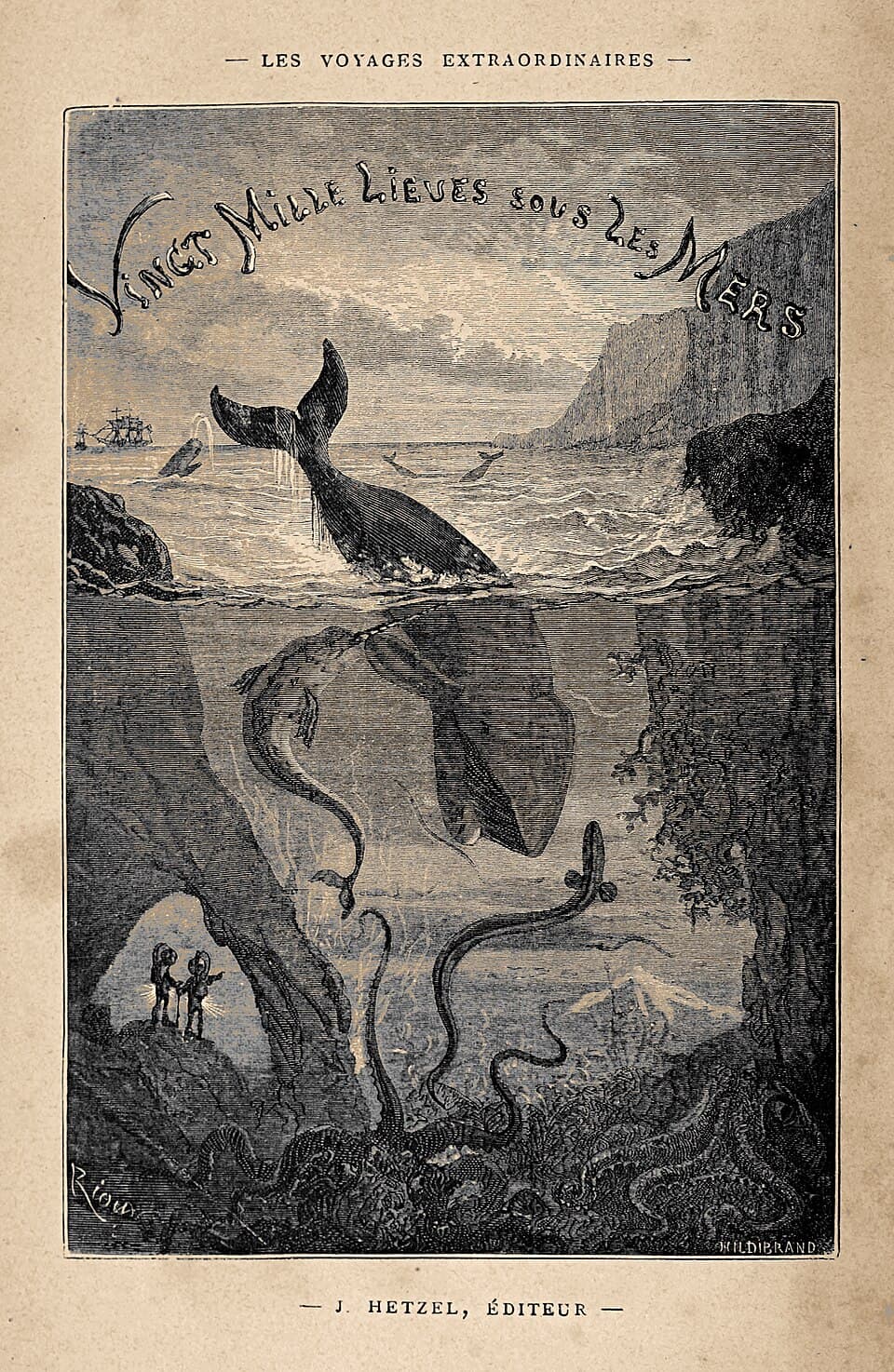
Nautilus built Captain Nemo in Queensland and sent him to sea without enough story
The production is gorgeous, the submarine is a set worth living in, and the scripts needed three more drafts.

Rake was never about the cases
Eight years and five seasons of Cleaver Greene taught Australian television that you can keep a man unredeemed, and that audiences will follow him anyway.
Kath & Kim mocked the suburbs, then sat down in the back yard
The ABC's great suburban satire has a tell. Almost every episode ends with its two leads sitting in a back yard, and that is where the show admits it likes them.