The score for Territory sounds like the land itself is deciding who inherits
The cattle-station saga runs on dust and family betrayal, and the score sits underneath both like heat rising off a dirt road.

The first thing you hear in Territory is not dialogue. It is a low drone, somewhere between a didgeridoo’s resonance and a bowed double bass, sustained just long enough for the landscape to register as a presence before anyone speaks. The camera is wide on the Northern Territory, red earth to the horizon, and the sound underneath it is not illustrating the image so much as providing its temperature. This is country that radiates heat, and the score knows it. The attack is slow. The decay is infinite. Nothing resolves quickly out here, and the music is built on that principle.
Territory is Netflix’s first major Australian drama series, a cattle-station saga set on the fictional Lawson property, one of the largest pastoral holdings in the world. The series runs on inheritance, betrayal, and the particular kind of violence that families perform on each other when the stakes are measured in hundreds of thousands of square kilometres. It invites comparisons to Yellowstone, and the comparisons are not unfair, but the scoring tells a different story. Where Yellowstone’s music leans toward Americana, toward guitars and fiddles and the mythologised sound of the American West, Territory’s score sits lower, wider, and more patient. It does not romanticise the land. It endures it.
Landscape as instrument
The compositional approach treats the environment as a sonic source rather than a scenic backdrop. Field recordings of wind moving across spinifex, of cattle lowing at distance, of the particular silence that desert country produces at midday when even the insects stop, are woven into the orchestral textures so seamlessly that the boundary between score and sound design becomes porous. This is a technique that has precedent in Australian screen music. Peter Raeburn used it in Force of Nature: The Dry 2, folding bushland ambience into his string writing. Warren Ellis and Nick Cave did something adjacent in The Proposition, letting the landscape bleed into the instrumentation until the guitars sounded sun-warped and the strings sounded like heat haze.
What Territory adds to this tradition is scale. The series is six episodes long, and the score has room to develop motifs across hours of screen time in a way that a feature film cannot. The Lawson family theme, a sparse piano figure that descends in intervals of a third, recurs throughout the series in different orchestrations: full strings in the early episodes when the family’s power seems absolute, stripped to solo piano by the midpoint when the cracks are showing, and finally submerged beneath the drone textures in the finale, as though the land is reclaiming the melody the family thought belonged to them.
The Mystery Road comparison
The closest local precedent for what Territory does with its sound is Mystery Road, both the films and the series. Mystery Road scored the outback as a place of watchfulness, of slow accumulation, of tension that does not announce itself but sits in the ground like heat. The instrumentation was sparse: guitar, synth pads, occasional percussion that sounded like stones clicking. The effect was of a landscape that was paying attention, that knew more than the characters and was not inclined to share.
Territory operates in a similar register but at a higher temperature. Where Mystery Road is cool and observational, Territory runs hotter, closer to the surface. The percussion is more prominent, built from processed recordings of stockyard sounds, metal on metal, hooves on packed earth, the mechanical rhythms of station work. These sounds are treated and layered until they function as a pulse, a heartbeat for the property itself, and the effect is of a place that is not merely watching but actively exerting pressure on the people who claim to own it.
Grandeur without nostalgia
The orchestral writing is the score’s biggest gamble, and it mostly pays off. Large-scale string arrangements in an outback drama risk tipping into the pastoral, into a kind of colonial nostalgia where the sweeping landscape is scored as something to be admired and possessed. Territory avoids this by keeping the harmonic language ambiguous. The strings do not resolve cleanly. The chord progressions sit in minor keys and modal scales that refuse to settle, and the effect is of grandeur without comfort, of something vast that is also unstable.
This is the right sound for a series about an empire in decline. The Lawson family’s hold on their land is presented as both magnificent and untenable, a legacy built on violence and sustained by stubbornness, and the score holds both qualities without choosing between them. The music is big because the country is big, but it is not triumphant. It is geological. It moves the way rock formations move: slowly, inevitably, indifferent to the human dramas unfolding on its surface.
What the land decides
The most striking musical choice in the series arrives in the final episode, when the score drops away almost entirely for a sequence set at dawn on the station. No strings, no drone, no processed percussion. Just the ambient sound of the land at first light: wind, birdsong, the distant complaint of cattle. It lasts nearly two minutes, and in that silence, the absence of music becomes the loudest statement the score makes. Everything the music has been doing across six episodes, sustaining, pressuring, accompanying, falls away, and what remains is the country itself, unscored, uninterpreted, existing on its own terms.
It is a bold choice, and it works because the score has earned it. You cannot make silence land unless you have first established what presence sounds like, and Territory’s score has been present, insistently and texturally present, for hours before it withdraws. The effect is of the land having the final word, after all the inheritance disputes and betrayals and acts of violence, the country remains, indifferent and immense, and the silence is not empty but full, full of everything the music has carried and now sets down. Attack and sustain and, finally, release.
Kieran writes about what films sound like. Played in a band that nearly got signed in 2012 and has been thinking about attack and decay ever since. Devoted to Warren Ellis, Amanda Brown, and the quiet work of sound editors nobody interviews.
MORE BY KIERAN BOUSTANY →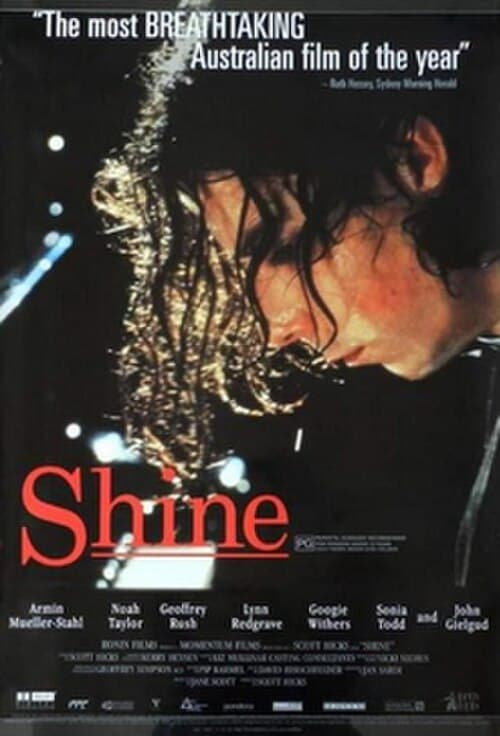
Shine and the score hiding under the Rachmaninoff
David Hirschfelder had to write original music that lives under the loudest warhorse in the piano repertoire, and the quiet writing is what carries the film.
Nigel Westlake smuggled a cathedral into a film about a pig
The score for Babe borrows its grandeur from a French organ symphony, and the trick tells you everything about how Nigel Westlake hears the relationship between small subjects and large feelings.
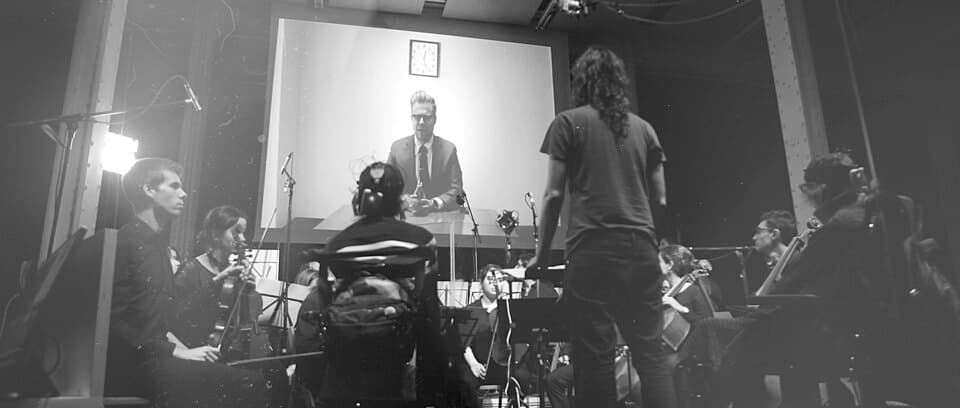
Every Australian film has a sound and most of them go unheard
This column has spent six years listening to what Australian cinema sounds like, and the answer keeps changing.