The score for Shayda sounds like a lullaby sung through a locked door
The score carries two musical traditions at once and lets neither one win, which is exactly the position its protagonist occupies.
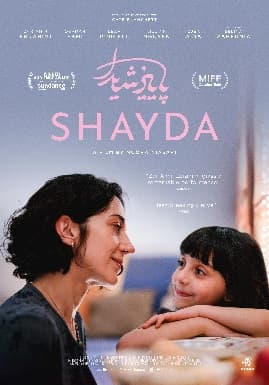
There is a moment early in Shayda where the music does something that the dialogue cannot. Shayda (Zar Amir Ebrahimi) is inside the women’s refuge, settling her daughter Mona into a new room, and the score enters with a phrase that sits between two tonal systems. It is not quite Western, not quite Persian. It occupies a middle register, a space where neither tradition resolves fully, and if you are listening for it, you can hear the whole emotional architecture of the film in that single phrase.
Noora Niasari’s debut feature, drawn from her mother’s experience of fleeing domestic violence in 1990s Australia, is a film about displacement in the most literal sense. Shayda has left her husband. She has left her home. She is living in a shelter with women whose stories overlap with hers in the broad strokes but diverge in every particular detail. The score, composed by Ásgeir Birkisson and Hossein Alizadeh, holds these displacements in its texture. It does not resolve them. It lets them sit, unfinished, the way a held breath is unfinished.
Two sound worlds
The score operates in two registers that never fully merge. The first is Western, chamber-scaled, built on strings and piano. The attack is soft. The decay is long. These cues accompany the refuge scenes, the moments of fragile domestic routine: meals, bedtimes, the careful negotiations between women sharing a small space. The music here is warm but guarded, the warmth of a place that is safe but temporary, and the instrumentation knows it. The strings sustain but they do not soar. The piano phrases end before they quite want to.
The second register is Persian. The tar and the setar enter the score in cues that are associated with memory, with Shayda’s interior life, with the cultural fabric she carried with her out of Iran. These phrases have a different attack: quicker, more ornamental, built on intervals that sit outside the Western tempered scale. They do not arrive as exoticism. They arrive as a second language, spoken fluently but in a context where few people around the speaker understand it, and the score’s refusal to blend the two idioms into a comfortable fusion is its most honest gesture.
The lullaby cues
The film’s recurring musical motif is built around lullaby. Shayda sings to Mona in Farsi. The melody is simple, repetitive, structured around the falling intervals that lullabies in most traditions use to signal safety. But the score does something careful with this material. It quotes the lullaby melody in the orchestral cues, displacing it from the voice into the strings, and the effect is to separate the comfort of the melody from the body that sings it. The lullaby becomes ambient. It floats in the air of the refuge like a memory of a room that no longer exists.
This is the function of the title metaphor. A lullaby sung through a locked door is still a lullaby. The melody reaches the child. The comfort is real. But the door is also real, and the score never lets you forget it. The warmth is bounded. The safety has a perimeter. Every tender cue carries in its arrangement the awareness that outside the refuge, outside the frame, the threat is still present, still waiting, still Hossein (Mojean Aria), whose footsteps the film and the score both anticipate with a shared unease.
Silence as instrument
The score’s most effective passages are the ones where it withdraws. There are scenes in which Niasari strips the soundtrack to ambient sound only: the hum of a fluorescent light, traffic through a window, the particular acoustic signature of a house full of women trying to be quiet. These silences function as negative space within the musical design. They mark the moments where Shayda is most exposed, most visible to the world outside the refuge, and the absence of music in these scenes is itself a compositional choice. The score has taught us what safety sounds like. When it disappears, we feel the exposure in our bodies before we understand it in the narrative.
The bilingual ear
What the score accomplishes, and what the dialogue can only partially achieve, is the rendering of a bilingual interior life. Shayda thinks in Farsi. She speaks in English. She lives in a country that accommodates both but is native to neither, and the score mirrors this condition by maintaining two musical vocabularies that coexist without synthesis. This is not the sound of fusion. This is the sound of carrying two complete worlds inside a single body and finding no rest in either one.
The effect, accumulated across the film’s runtime, is a kind of exhaustion that is also a kind of richness. The score does not ask you to choose between its two registers. It asks you to hold both, the way Shayda holds both, the way any person living between cultures holds both, and the weight of that holding is the film’s truest subject. The lullaby plays. The door stays locked. The melody passes through anyway, diminished but intact, and what survives the passage is enough to keep a child asleep, which is enough, which has to be enough.
Kieran writes about what films sound like. Played in a band that nearly got signed in 2012 and has been thinking about attack and decay ever since. Devoted to Warren Ellis, Amanda Brown, and the quiet work of sound editors nobody interviews.
MORE BY KIERAN BOUSTANY →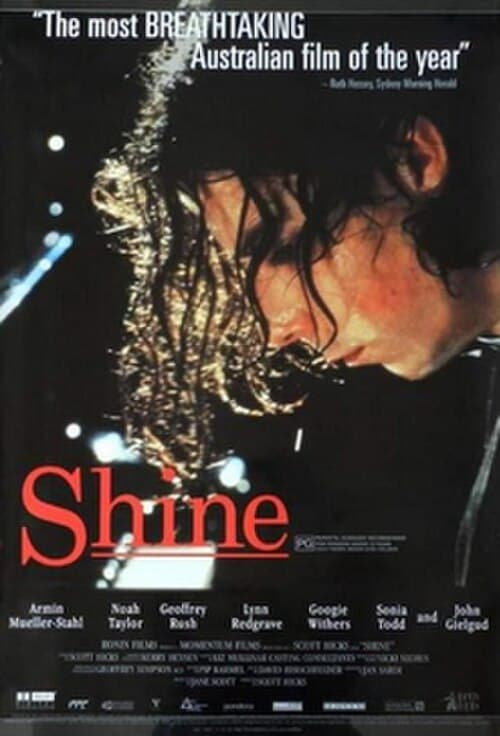
Shine and the score hiding under the Rachmaninoff
David Hirschfelder had to write original music that lives under the loudest warhorse in the piano repertoire, and the quiet writing is what carries the film.
Nigel Westlake smuggled a cathedral into a film about a pig
The score for Babe borrows its grandeur from a French organ symphony, and the trick tells you everything about how Nigel Westlake hears the relationship between small subjects and large feelings.
Every Australian film has a sound and most of them go unheard
This column has spent six years listening to what Australian cinema sounds like, and the answer keeps changing.