Penguin Bloom brings Naomi Watts home and does not know what to do with her
Watts returns to Australian cinema for a true story about a magpie and a spinal injury, and the film is better when it trusts the bird.
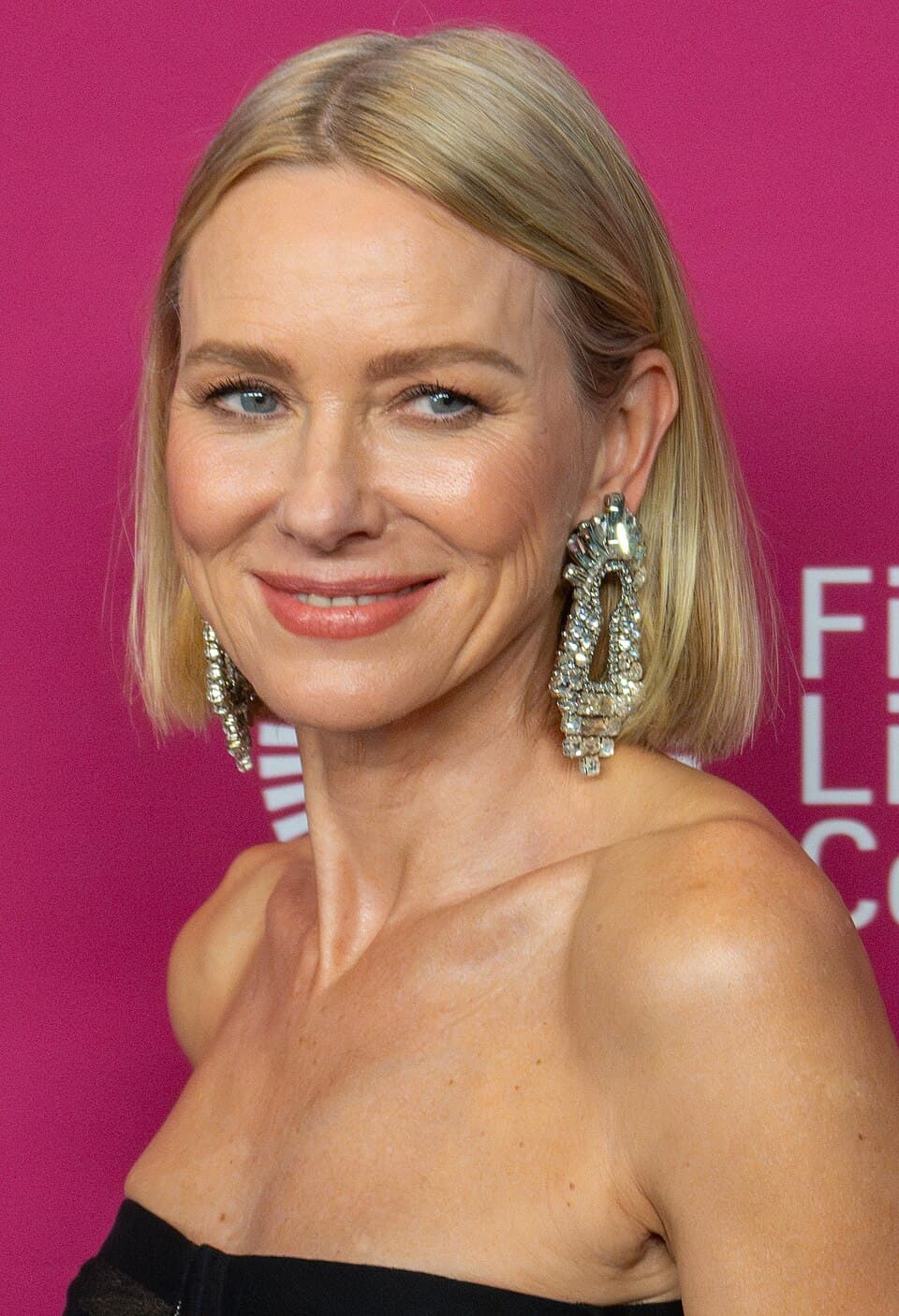
There is a moment early in Penguin Bloom where Naomi Watts sits in a wheelchair on the back deck of a house in northern Sydney, the harbour visible behind her in that particular shade of blue-green that only exists in Australian tourism campaigns and films that want you to know they were shot in Australia. The camera holds on her face. She is acting grief, or exhaustion, or frustration; the picture is not specific enough to tell you which, and that imprecision is the whole problem. Watts is one of the finest screen actors of her generation, and she has been given a role that asks her to perform disability and recovery in the most general possible terms, and she is doing it, and it is not enough, because the role itself is a sketch where a character should be.
Penguin Bloom (2021) is based on the true story of Sam Bloom, a former competitive kayaker who was paralysed from the chest down after a fall in Thailand, and the injured magpie her family nursed back to health during her recovery. The film was directed by Glendyn Ivin, whose earlier work in short film and television (he made the extraordinary Crackerjack segment for the ABC and directed much of Safe Harbour) suggested a filmmaker with a real sensitivity to domestic texture, to the way grief and love coexist inside ordinary Australian houses. The screenplay, by Shaun Grant and Harry Cripps, works from Cameron Bloom and Bradley Trevor Greive’s book of the same name. The bones are solid. The casting is, on paper, inspired. And yet the film keeps sliding off its own surfaces, unable to commit to either the human story or the animal story, and never quite finding the register where the two might meet.
The magpie problem
The best sequences in the film belong to the bird. The magpie, called Penguin by the Bloom children, is rendered with a mixture of live animal footage and visual effects, and Ivin shoots these scenes with a looseness and warmth that the rest of the picture struggles to achieve. When the camera follows Penguin hopping across the kitchen bench, pecking at cereal, riding on a child’s shoulder down to the beach, the film relaxes into something genuinely charming. The bird is not a metaphor in these moments; it is an animal, doing animal things, and the family’s delight in it is unforced and specific. You believe the children love this creature because the film shows you the texture of that love: the mess, the noise, the small negotiations of living with a wild thing inside a domestic space.
The difficulty arises when the film insists on making Penguin a metaphor anyway. The magpie’s broken wing mirrors Sam’s broken spine. The bird’s recovery mirrors her recovery. The bird learns to fly; Sam learns to surf again. The parallels are drawn with such determination that they stop being resonant and become mechanical, a screenwriting exercise in thematic tidiness. Every time the picture starts to breathe, to find something unexpected in the relationship between this woman and this animal, the structure pulls it back toward the predetermined arc. Sam must be angry, then she must be softened by the bird, then she must try again, then she must succeed. The template is so visible it begins to feel like a constraint the film cannot escape.
Watts in the wrong country
Naomi Watts left Australian cinema after Gross Misconduct in 1993 and did not return for a leading role until this film. In the intervening decades she became one of the defining screen presences of the 2000s, primarily through her work with David Lynch in Mulholland Drive (2001, American, but the performance that changed everything) and Gore Verbinski in The Ring (2002). Her early Australian work is largely forgotten now, which is a shame, because films like Flirting (1991) show a young actor already working with a precision and intelligence that the industry around her was not always equipped to use.
Her return in Penguin Bloom should feel like an event. Instead it feels like a miscalculation, not on Watts’ part but on the film’s. She brings to Sam Bloom the same interior density she has brought to every role since Lynch first recognised what she could do: the sense that there is a complex emotional life running beneath the surface of every scene, accessible only in glimpses, never fully legible. But Penguin Bloom does not want glimpses. It wants clarity. It wants the audience to understand, at every moment, exactly what Sam is feeling and why, and this legibility strips away the very quality that makes Watts interesting. She is an actor whose best work lives in ambiguity, in the space between what a character shows and what she withholds; this film has no interest in withholding. It wants you to feel for Sam, and it constructs every scene to ensure that you do, and the construction is so visible that the feeling never quite arrives.
Ivin’s eye, Grant’s structure
Ivin is a better director than this film suggests. His framing of the Bloom house, with its timber and glass and the bush pressing in at the edges, has a specificity that grounds the picture in a real place even when the story drifts toward the generic. He understands the northern beaches light, the way it falls across interior spaces in the late afternoon, and he uses it to create a domestic world that feels lived-in rather than art-directed. The scenes between Watts and Andrew Lincoln (who plays her husband Cameron with a kind of stoic English decency that is both endearing and slightly baffling given the film’s Australian setting) have a quietness that suggests Ivin was reaching for something more intimate than the final cut delivers.
The problem is structural rather than visual. Shaun Grant, who wrote the brilliant Snowtown screenplay and the equally sharp Berlin Syndrome, is working here in a register that does not suit his strengths. Grant is at his best with characters who are opaque, whose motivations resist easy access, whose damage expresses itself in oblique and unsettling ways. The true-story framework of Penguin Bloom demands the opposite: legibility, emotional progression, the clear arc from suffering to healing. Grant and Cripps deliver this competently, but competence is not what you want from a Shaun Grant screenplay. You want discomfort. You want the scene that makes you look away.
What the bird knew
The film ends the way you know it will end. Sam surfs again. Penguin is released into the wild, or perhaps into the garden; the distinction is blurred. The family stands together on the beach. The real Sam Bloom’s photographs appear over the credits, reminding you that this was a true story and that the real version was probably more interesting than the film’s version, because real life does not have to resolve its contradictions into a ninety-minute shape.
I keep thinking about the magpie. About the scenes where the bird is simply present, existing inside the family’s space without symbolising anything, being wild and domestic simultaneously, neither healed nor broken but just alive. Those scenes have a quality the rest of the picture lacks: they are surprised by their own subject. The film is at its best when it does not know what Penguin means, when it just watches. The human story, by contrast, always knows what it means, and that knowledge is a kind of death. Watts deserved a homecoming that trusted her the way the camera trusts the bird: without explanation, without resolution, without the anxious need to tell the audience exactly what they are seeing. She is an actor who can hold ambiguity like few others. This film gave her certainty instead, and certainty, in this case, was the less interesting gift.
Bronte writes long-form criticism of Australian cinema and the international art films that feed into it. She was on the ground at Cannes in 2019 and has not entirely forgiven the festival for 2020. Patient with slow films; impatient with tidy ones.
MORE BY BRONTE HAUGHEY →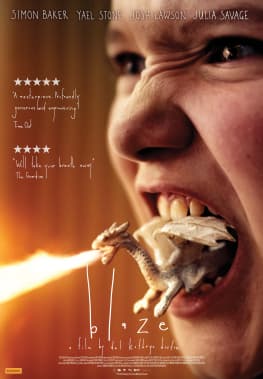
Blaze paints its trauma in colours that refuse to behave
Del Kathryn Barton's debut feature looks nothing like any other Australian film this decade, and that is both its weapon and its problem.
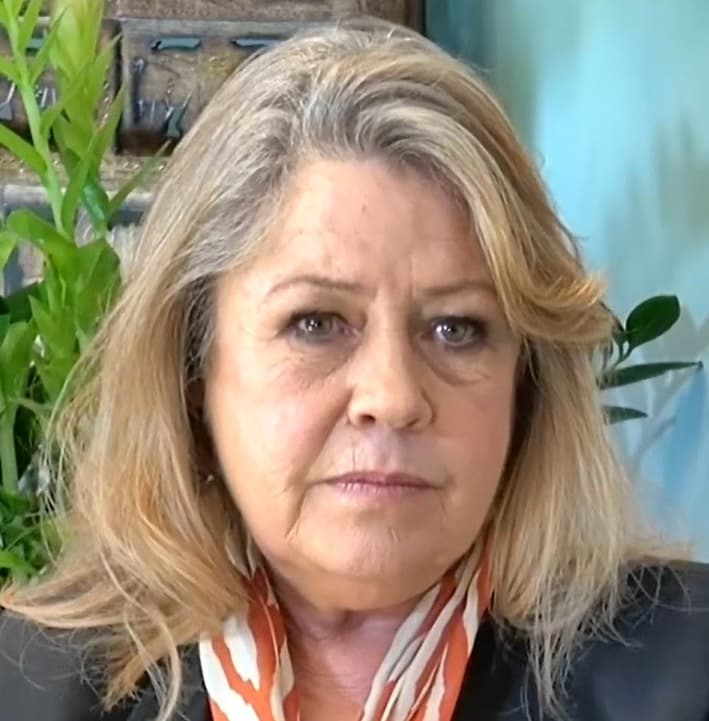
June Again gives Noni Hazlehurst a second chance and does not waste it on sentiment
Hazlehurst plays a woman with dementia who gets one lucid day, and the film is wise enough to spend it on repair rather than nostalgia.
Here Out West built Western Sydney from eight directors and one shared street
Eight directors filmed eight stories on a single Western Sydney street, and the accumulation is more than any one of them could have managed alone.