June Again gives Noni Hazlehurst a second chance and does not waste it on sentiment
Hazlehurst plays a woman with dementia who gets one lucid day, and the film is wise enough to spend it on repair rather than nostalgia.
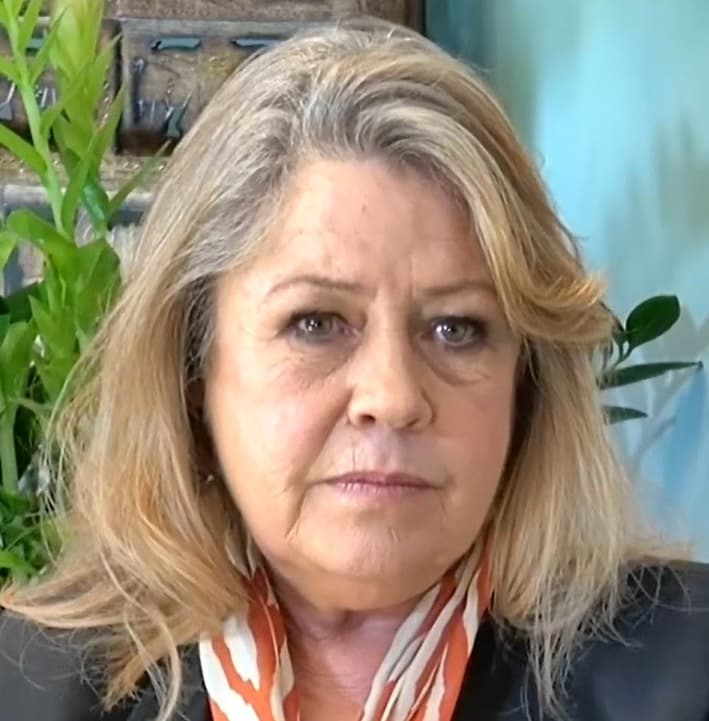
The premise is a trap. A woman with dementia wakes up one morning lucid, fully herself, and has a single day before the fog returns. You can see the version of this that would play at every suburban cinema in the country and leave the audience weeping into their popcorn: the reconciliations, the sunlit montage, the grandchild who runs into her arms, the string section climbing toward its inevitable crescendo. JJ Winlove’s June Again (2021) knows exactly what that version looks like. It is not interested. What it does instead is harder, less comfortable, and considerably more honest. It gives June a day and lets her spend it the way a real person would: not sentimentally but practically, attending to the wreckage.
Noni Hazlehurst plays June, and what she does with the role constitutes, I think, the finest screen performance of her career. This is not a small claim. Hazlehurst has been a fixture of Australian screen acting for five decades; she is one of the few performers in this country whose body of work spans children’s television, prestige drama, independent film and commercial cinema without any of those registers feeling like slumming or stretching. She has always been good. In June Again she is something more specific than good. She is precise.
The lucid day and what the picture does with it
The film’s central conceit could be played as fantasy, or as metaphor, or as the kind of magical realism that allows a story to access emotions too large for naturalism. Winlove, writing and directing her debut feature, treats it instead as a practical problem. June wakes up. She is herself. She does not know how long this will last. She has a daughter, Ginny (Claudia Karvan), whose marriage is failing; a son, Devon (Stephen Curry), who has made catastrophic decisions with the family wallpaper business; and a former lover, Ken (John Bell), whom she has not seen in years. The day does not belong to sentiment. It belongs to triage.
What makes this work is Hazlehurst’s refusal to play the lucid day as a blessing. She plays it as an emergency. June wakes up and she is terrified, not grateful. She has been absent from her own life for long enough that the life has rearranged itself around her absence, the way water closes over a stone, and now she can see the shape of what was lost but has no time to grieve it. The clarity is not peaceful. It is sharp, and it hurts. Hazlehurst communicates this through a physicality that is extraordinarily controlled: the way June holds herself when she first stands, testing her own body the way you test a step that might be rotten; the quick, evaluative glances she gives her children, reading the damage.
Karvan and the daughter who has been carrying everything
Claudia Karvan’s performance as Ginny operates in a register that is quieter than Hazlehurst’s but no less accomplished. Ginny is the child who stayed. She is the one who visits the facility, who manages the paperwork, who absorbed the emotional labour of her mother’s decline while Devon drifted. When June reappears, lucid and determined, Ginny’s response is not joy. It is something closer to fury, the specific anger of a person who has been holding everything together and is now being asked to accommodate one more impossible thing.
Karvan plays this without ever tipping into the histrionic. There is a scene in a car where Ginny begins to say something to June about the years, about the weight of it, and stops. Not because she is interrupted but because she decides, mid-sentence, that the complaint is not worth the cost of voicing it. She has so little time with her mother. She will not spend it on recrimination. Karvan communicates this calculation entirely through hesitation and the adjustment of her jaw, and it is one of the most devastating moments in any Australian film released that year.
The lineage of Australian family drama
June Again belongs to a tradition of Australian films about families in which the emotional action happens in the silences between conversations. Lantana (2001), Japanese Story (2003), Look Both Ways (2005): these are pictures built around characters who feel deeply and express poorly, where the drama emerges from the gap between interior life and visible behaviour. Winlove’s film inherits this tradition without slavishly replicating it. Her screenplay is sharper than it needs to be; the dialogue has a wit that keeps the picture from sinking into its own weight. June is funny. Not in a quirky-old-lady way, not in the manner that films about elderly women so often deploy, where humour functions as a kind of permission slip for the audience to engage with ageing without confronting it. She is funny because she is smart and because she has no time for diplomacy.
The picture also benefits from a structural discipline that Winlove maintains throughout. The single-day framework, which in lesser hands might feel like a gimmick, operates here as a genuine constraint that shapes every scene. There is no time for subplots that do not serve the central question: what can one person fix in a day? The answer, the film quietly insists, is less than you hope and more than you expect.
Hazlehurst’s physicality and the performance nobody saw
I want to dwell on the body of this performance because it is where the picture does its most important work. Hazlehurst plays two versions of June across the film: the lucid June and the June who has retreated back into dementia. The transition between these states is not marked by any dramatic event. It is a slow erosion, visible first in the hands, then in the posture, then in the eyes. Hazlehurst does not play dementia as absence. She plays it as a different kind of presence, one in which the self is still there but can no longer organise itself into the patterns that other people recognise as personhood.
This is the kind of performance that, in a more visible film, would generate awards-season conversation for months. June Again opened in Australian cinemas in May 2021, during a period when the theatrical market was still recovering from pandemic disruptions; it played in limited release, received warm reviews, and then vanished into the streaming ecosystem with the quiet efficiency of a film that has been assigned to the category of “small Australian drama” and is not expected to linger.
Why it matters that nobody saw it
There is something instructive about the silence that greeted June Again. The film is not difficult. It is not formally experimental. It does not demand specialist knowledge. It is a well-made, emotionally generous picture about a woman who gets one day back and uses it well, anchored by a lead performance of exceptional quality. It should have been a modest commercial success. It should have been the film that people recommended to their parents, the one that circulated through suburban cinemas and book clubs and found the audience that Australian drama, at its best, has always been able to reach.
Instead it arrived at a moment when that audience had been scattered, when the infrastructure that connected Australian films to Australian viewers had been badly damaged, and it was received with appreciation but not attention. This is not unusual. It is the standard outcome for mid-budget Australian drama in the current market. But it is worth naming, because the film itself is about what happens when you do not pay attention to someone for long enough: they disappear, not all at once but gradually, and by the time you notice what you have lost the day is almost over.
Bronte writes long-form criticism of Australian cinema and the international art films that feed into it. She was on the ground at Cannes in 2019 and has not entirely forgiven the festival for 2020. Patient with slow films; impatient with tidy ones.
MORE BY BRONTE HAUGHEY →
Blaze paints its trauma in colours that refuse to behave
Del Kathryn Barton's debut feature looks nothing like any other Australian film this decade, and that is both its weapon and its problem.
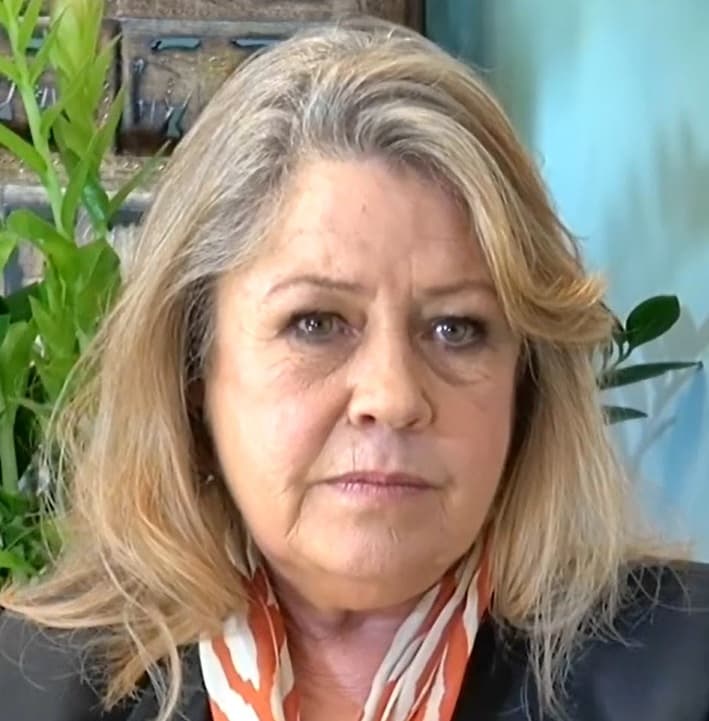
The score for June Again knows exactly when to stop playing
The score for JJ Winlove's film does its best work in the silences between the cues, where Hazlehurst's face carries everything the music chose not to.
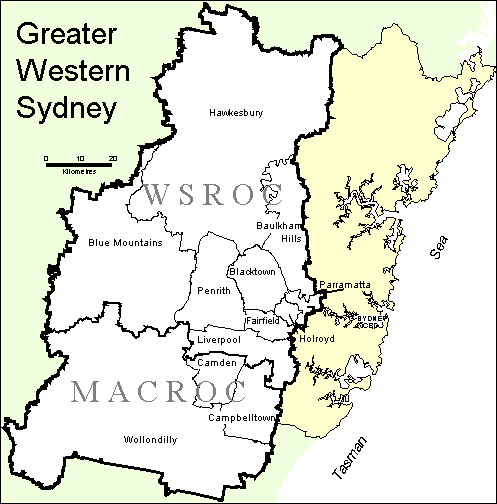
Here Out West built Western Sydney from eight directors and one shared street
Eight directors filmed eight stories on a single Western Sydney street, and the accumulation is more than any one of them could have managed alone.