The score for June Again knows exactly when to stop playing
The score for JJ Winlove's film does its best work in the silences between the cues, where Hazlehurst's face carries everything the music chose not to.
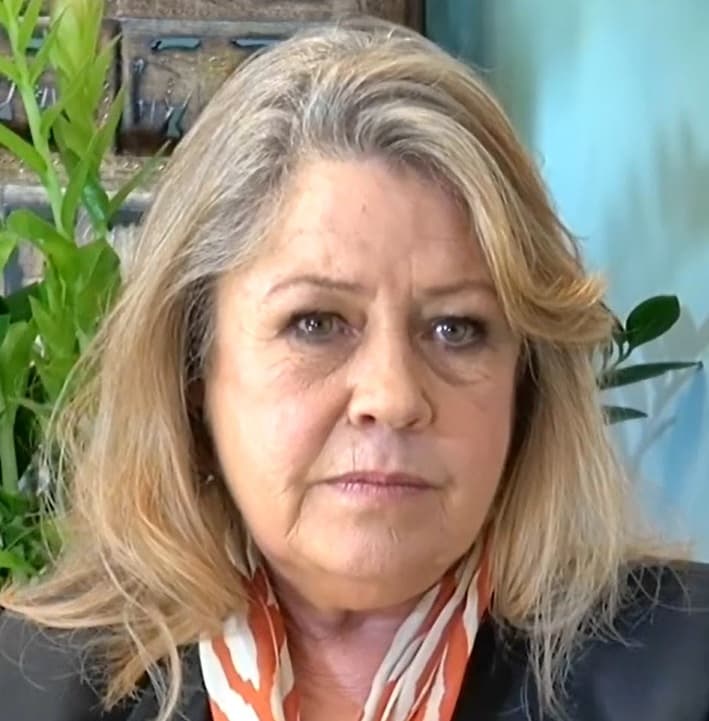
The most important moment in the score for June Again (JJ Winlove, 2021) is a silence. June (Noni Hazlehurst) has been lucid for a stretch of hours, returned temporarily from the fog of her neurological decline, and she is sitting in a room looking at her adult children as though she is memorising them. The score has been present, gently, for the preceding scenes. Piano figures, mostly. A string line that enters low and does not rise. And then, at this moment, the music withdraws. It does not fade. It stops. The silence is not gradual. It is a decision, and the decision is to let Hazlehurst’s face do the work alone.
This is the central intelligence of the score: it knows when to leave.
The shape of a lucid day
June Again is built on a premise that is, in structural terms, a clock. June has dementia. A medical event temporarily restores her clarity, and she uses the window of lucidity to repair what she can in her family’s fractured relationships before the fog returns. The film does not tell you exactly how long the window will last, but the audience understands from the beginning that it will close, and this knowledge sits beneath every scene like a pulse.
The score marks time differently depending on where June is in the cycle. During the lucid passages, the music is warm, present, grounded in acoustic instruments played with a simplicity that registers as clarity. The piano is not ornamented. The melodies, such as they are, move by step rather than by leap. The harmonic language is tonal, settled, consonant. This is the sound of a mind that is working, and the music embodies the relief of functionality by being itself functional: clear in its purpose, economical in its means, arriving when needed and departing when done.
During the passages of decline, the scoring changes. Not dramatically, not with the heavy-handedness of a different key or a shift to minor. The change is textural. The piano sustains longer. The edges of the notes blur. A reverb enters that was not there before, as though the sound is being heard from further away, through a medium that softens and distorts. The melody is the same, or nearly the same, but the delivery has changed, and the difference between the lucid cue and the declining cue is the difference between hearing a voice clearly and hearing it from the next room through a closed door.
What Hazlehurst gives the composer
Noni Hazlehurst’s performance in June Again is the kind that makes a composer’s job both easier and harder. Easier because the emotional information is already on screen, in her face, in the way she holds her hands, in the shift between recognition and confusion that she plays with a subtlety that needs no musical reinforcement. Harder because the temptation to score what is already visible is enormous, and the score must resist that temptation at every turn.
The composer resists. The score does not double what Hazlehurst is doing. It does not swell when she cries, does not darken when she forgets, does not provide the audience with an emotional annotation of what is already legible on screen. Instead, it occupies the spaces between her expressions, the transitional moments where June is moving from one state to another and the face has not yet settled into the next emotion. These are the moments where music can do something that performance cannot: hold the uncertainty, sustain the in-between, give the audience permission to feel something that the character has not yet felt.
Restraint as a tradition
2021 was a year in which two of the strongest Australian dramas were scored with an almost identical philosophy of restraint. Peter Raeburn’s work on The Dry (Robert Connolly, 2020, released in 2021) operates in a similar register: sparse, acoustically grounded, withdrawing at the moments of highest emotional intensity to let the performances and the landscape carry the weight. Both scores seem to have arrived independently at the same conclusion: that the Australian drama, when it is working at the level of character rather than spectacle, requires music that is present but not assertive, that accompanies without directing.
The comparison is instructive because the films are so different in their emotional terrain. The Dry is a crime film set in drought-stricken rural Victoria, and its silences are arid, empty, shaped by the landscape’s refusal to yield. June Again is a family drama set in suburban and coastal New South Wales, and its silences are domestic, populated by the ambient noise of a household, the clink of a cup, the sound of someone moving through a hallway. Raeburn’s restraint serves the landscape. The restraint in June Again serves the face. Both composers understood that the strongest gesture available to a film score is the choice not to play.
The clock and the cue
What makes the scoring of June Again structurally interesting is the way it handles the ticking clock of June’s lucidity. A lesser score would have made the clock audible, would have introduced a rhythmic element that accelerated as the window narrowed, would have built tension through tempo the way thriller scores build tension. This score does the opposite. As June’s lucid time runs down, the cues become shorter, not faster. The gaps between them widen. The music appears for less time in each scene, as though it too is losing its grip, as though the score is experiencing the same decline as the character.
By the final act, the music is barely there. A single piano note, held. A string harmonic so high it sits at the edge of audibility. The withdrawal is so gradual that the audience does not notice the absence until it is complete, and by then the absence is the statement. The music has gone where June is going, into a quiet that is not silence but something further away than silence, a place where sound still exists but no longer organises itself into meaning.
What the silence holds
I have listened to the score separated from the film, on its own terms, and it is a modest piece of work. The cues are short, the vocabulary limited, the emotional range narrow. Taken in isolation, it sounds slight. But film scoring is not an isolated art. It is an art of context, of placement, of the relationship between what is heard and what is seen, and in context, this score does something that more ambitious and more technically complex scores often fail to do: it makes the audience feel the passing of time as a physical sensation, a warmth that is withdrawing, a presence that is thinning, a voice that is still speaking but is no longer sure who is listening.
Hazlehurst’s performance earned the attention it deserved. The score, working beneath it, earned less. This is how it should be. The best scores for films about human frailty are the ones that do not ask to be noticed, that do their work in the spaces between the scenes the audience remembers, and that know, with a precision that is itself a form of compassion, exactly when to stop playing.
Kieran writes about what films sound like. Played in a band that nearly got signed in 2012 and has been thinking about attack and decay ever since. Devoted to Warren Ellis, Amanda Brown, and the quiet work of sound editors nobody interviews.
MORE BY KIERAN BOUSTANY →
The score for Penguin Bloom knows the bird is carrying the emotion
Zarvos scores the recovery around the magpie rather than the woman, and the displacement is exactly right.
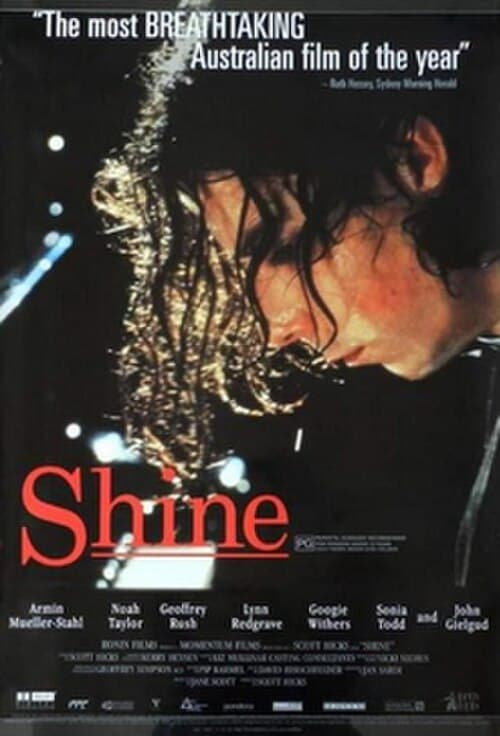
Shine and the score hiding under the Rachmaninoff
David Hirschfelder had to write original music that lives under the loudest warhorse in the piano repertoire, and the quiet writing is what carries the film.
Nigel Westlake smuggled a cathedral into a film about a pig
The score for Babe borrows its grandeur from a French organ symphony, and the trick tells you everything about how Nigel Westlake hears the relationship between small subjects and large feelings.