Australian novels keep becoming Australian films and the novels keep winning
The adaptation pipeline from page to screen is the steadiest production line in Australian cinema, and the question is whether the films are earning the books or borrowing from them.
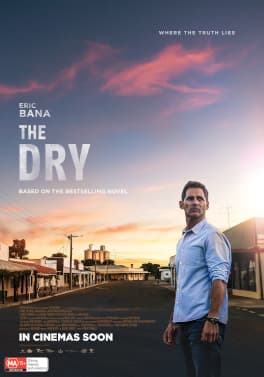
I want to say something generous about adaptations, because I think the instinct to dismiss them is lazy, and I have been lazy about it in the past. A novel is a novel. A film is a film. The translation between them should be an act of interpretation, not transcription, and when it works the film becomes something the novel could not have been. But I keep watching Australian adaptations and I keep noticing that the novels are doing the heavy lifting, and I want to understand why.
The pipeline is steady and it has been steady for years. Australian publishers produce a literary bestseller. A producer options it. Screen Australia funds the development. A director attaches. The cast draws from the same rotating ensemble of Australian actors who appear in everything. The film opens at a festival, gets a theatrical release or a streaming deal, and the audience arrives pre-sold because they already loved the book. This is not a criticism. This is a production strategy, and as production strategies go it is one of the more rational ones available to an industry that cannot rely on star power or franchise IP the way Hollywood can. The novel is the IP. The readership is the built-in audience. The story has already been tested by the market.
What interests me is what happens after the deal is signed. What does the film do with the novel? Does it find something new, something the prose could not deliver, something that justifies the translation? Or does it simply illustrate, turning pages into frames with dutiful competence and nothing more?
The ones that found something
The Dry is, I think, the clearest example of an Australian adaptation that earns its existence apart from the novel. Jane Harper’s book is excellent. It is a procedural set in a drought-stricken country town, built on dual timelines and the slow reveal of buried violence, and it does what good crime fiction does: it makes you turn pages while it quietly tells you something about the place and the people that the plot alone would not convey. Robert Connolly’s film keeps the structure and the setting and most of the plot, and then it does something the novel cannot do. It shows you the landscape.
I do not mean this as a trivial observation about the difference between prose and cinema. I mean that Connolly understood that the landscape was not backdrop but subject, that the drought was not atmosphere but character, and he shot the film accordingly. The wide shots of the Wimmera are not establishing shots. They are arguments. They say: this place did this to these people. Eric Bana, who is very good in the film, spends long stretches simply existing in the landscape, sweating through his shirt, squinting into the glare, and his body becomes a register of the environment in a way that Harper’s prose, for all its skill, could only approximate. The film found what the novel could not show, and it showed it.
Boy Swallows Universe did something similar, though in a different register. Trent Dalton’s novel is enormous and maximalist and stuffed with incident and voice and sentiment. It is a book that runs hot. The television adaptation, spread across seven episodes, had the room to keep the novel’s sprawl but also had to make visual and tonal choices that the prose could leave ambiguous. The series found its version of Eli Bell’s Brisbane, the particular quality of the fibro houses and the overgrown yards and the light filtered through subtropical canopy, and it committed to that world with a specificity that the novel, for all its descriptive energy, had to leave partly to the reader’s imagination. The casting of Felix Cameron as young Eli was the kind of decision that an adaptation lives or dies on, and it lived. Cameron’s face carries the mix of wonder and damage that Dalton’s prose works so hard to sustain, and he carries it silently, which is something prose cannot do.
The ones that illustrated
Jasper Jones should have been a good film. Craig Silvey’s novel is a coming-of-age story set in a small Western Australian mining town in the 1960s, and it has the raw materials that adaptation thrives on: a specific time, a specific place, a central friendship between two boys across a racial divide, and a mystery that pulls the reader through the narrative while the real subject, racism, violence, the lies communities tell to preserve themselves - unfolds underneath. Rachel Perkins directed the film, and she is a filmmaker whose work I admire, but the adaptation feels constrained by its fidelity to the novel’s plot. The film moves through the story’s events with the diligence of a book report. Each scene delivers its narrative payload and moves to the next. What is missing is the interiority that makes Silvey’s novel work, the voice of Charlie Bucktin narrating his own loss of innocence, the way the prose lets you sit inside a thirteen-year-old’s consciousness as the world reveals itself to be worse than he thought. The film does not find a cinematic equivalent for that interiority. It shows you what happens. It does not show you what it feels like to be the person it happens to.
The comfort of pre-built structure
Apples Never Fall is the adaptation that frustrates me most, because the source material is Liane Moriarty, whose novels are precision-engineered narrative machines, and the series does almost nothing with that engineering beyond reproducing it. Moriarty’s novel is about the Delaney family, retired tennis parents whose marriage and family unravel when a mysterious young woman appears in their lives. The plotting is intricate. The character work is sharp. The prose does exactly what it needs to do and nothing more, which is Moriarty’s particular skill and also, I think, her particular limitation. The series, produced for Peacock and then distributed here, adapts the novel with a faithfulness that borders on redundancy. You watch it and you think: I could have just read the book. I did read the book. Why am I watching someone else read it to me?
What the flowers did
The Lost Flowers of Alice Hart sits somewhere between these poles. Holly Ringwald’s novel is rich with botanical symbolism and generational trauma and the particular weight of Australian rural silence, the things that go unsaid in families that live far from anyone who might overhear. The series, produced for Prime Video, is lush and carefully made and takes the novel’s imagery seriously, perhaps too seriously. There are moments where the flowers and their meanings become illustrative in a way that tips into the didactic, where the symbolism that felt organic on the page becomes laboured on screen. But there are also moments, particularly in Sigourney Weaver’s performance as the grandmother, where the adaptation finds a register the novel could not reach. Weaver brings a physical authority to the role that transforms the character from a figure of mystery into a figure of power, and power is something you can see in a way you cannot quite read.
The argument, such as it is
I keep coming back to a simple question: what did the film give me that the novel did not? When I can answer that question clearly, I know the adaptation justified itself. The Dry gave me the landscape as a felt experience. Boy Swallows Universe gave me faces and silences and a Brisbane I could walk through. The Lost Flowers of Alice Hart gave me Sigourney Weaver. When I cannot answer the question, when the film simply reproduces the novel’s experience in a different medium at lower resolution, I wonder why we keep doing this. Not why we keep adapting novels. That part makes sense. The audience is there. The funding logic is sound. The stories are proven. I wonder why we keep adapting them so carefully, so respectfully, so faithfully that the adaptation has nothing to say for itself.
The best adaptations are arguments. They argue that the story means something different, or something more, when you can see it instead of read it. The worst adaptations are summaries. They tell you what happened in the book, and they tell you in pictures instead of words, and the pictures are nice but they do not change your understanding of anything. Australian cinema has a reliable pipeline from page to screen. I just want the pipeline to produce more arguments and fewer book reports.

Mara writes essays. She came to film writing from a decade of literary criticism and still reaches, sometimes, for a novel before she reaches for a shot list. She lives in the inner north of Melbourne and does not explain which city that is.
MORE BY MARA DENG →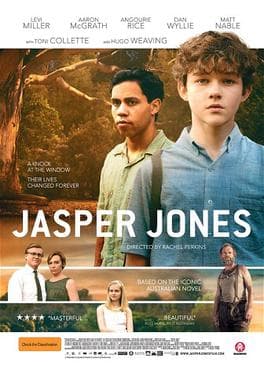
Australian coming-of-age films keep growing up in the wrong suburbs
The kids in Australian cinema grow up in small towns, coastal edges, and outer suburbs, and the geography is never accidental.
2021 was the year Australian cinema got serious and the audience looked away
Four of the year's most significant Australian films dealt in violence, guilt, grief, and landscape, and the domestic audience chose to watch something else.
Australian cinema keeps going back to drought because drought never really left
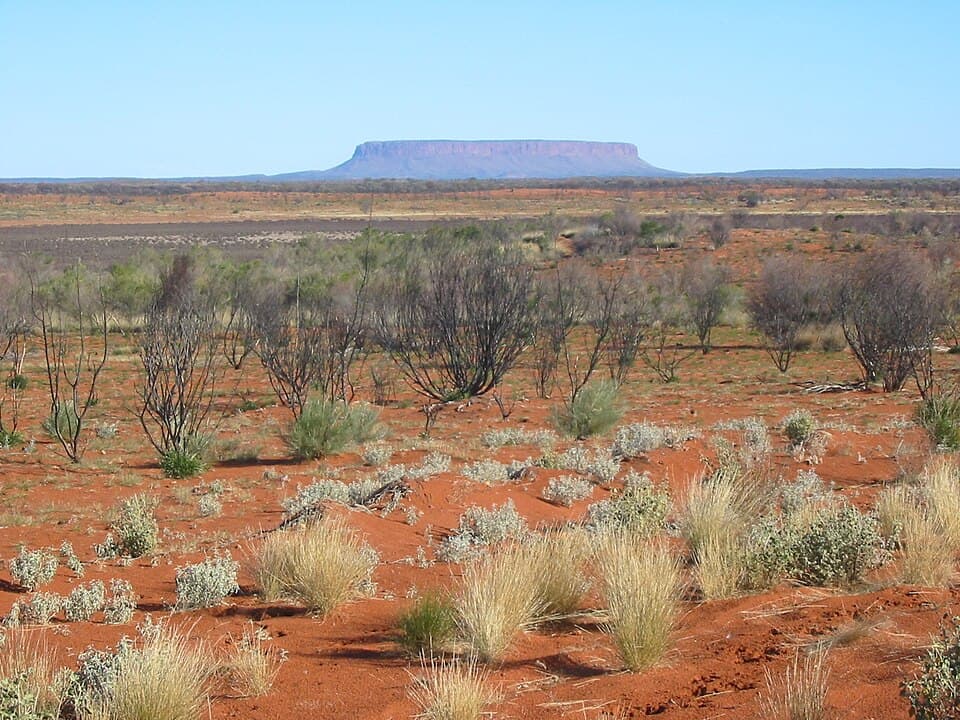
The dry country is not a backdrop; it is a condition, and Australian film returns to it the way a tongue returns to a broken tooth.