Australian cinema keeps going back to drought because drought never really left
The dry country is not a backdrop; it is a condition, and Australian film returns to it the way a tongue returns to a broken tooth.
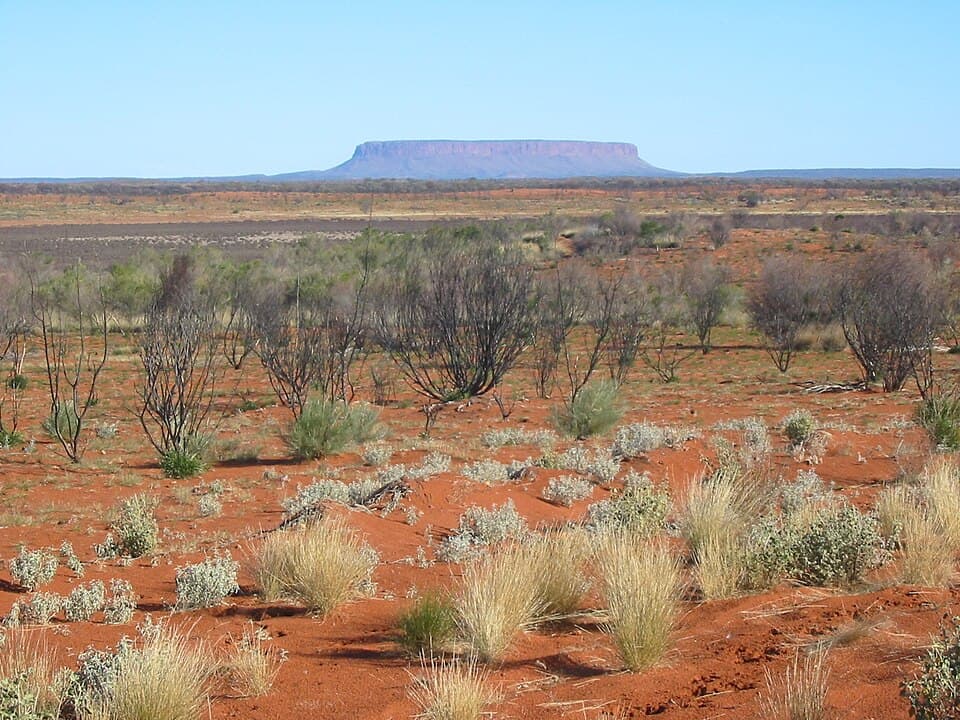
I grew up in Sydney, which means I grew up near water. There was always a tap, always a shower, always a beach twenty minutes away in most directions. The drought, when it came, was a thing that happened on the news. It was footage of cracked earth and dead sheep and a farmer standing in a paddock that used to be green, squinting at a sky that had nothing to offer. I watched it the way I watched everything on the news: with concern, at a distance, from a couch. The drought was real and it was happening to other people and the two facts sat side by side without troubling each other.
Then I watched Wake in Fright for the first time, years later, in a cinema that was air-conditioned to the point of aggression, and the drought stopped being something I understood from a distance. Ted Kotcheff’s film does not explain the outback. It drops you into it. John Grant arrives in Bundanyabba and the heat is already there, already winning, already the dominant presence in every frame. The sky is white. The ground is yellow. The men drink because there is nothing else to do with a body in a place like this, and the drinking does not help but it fills the hours, and the hours are the enemy because they are empty and hot and they stretch.
What I mean is that Wake in Fright taught me something that the news footage could not: drought is not an event. It is a condition. It does not arrive and depart. It persists. It shapes the people inside it the way a river shapes stone, except in reverse, because the shaping here is done by absence. The absence of water, the absence of relief, the absence of any visible reason to believe that the sky will change its mind.
The dry country as character
Australian cinema has returned to drought so many times that it has become a kind of grammar. You can trace it through decades. Wake in Fright in 1971. Rabbit-Proof Fence in 2002, where the girls walk through a landscape that is trying to erase them, and the dryness is both the obstacle and the proof of how far they have come, because every step across that cracked earth is a step the authorities assumed they would not take. Australia in 2008, where Baz Luhrmann used the drought as spectacle, as backdrop, as something enormous and cinematic to put behind Nicole Kidman, and where the land looked beautiful in a way that felt slightly dishonest, because Luhrmann’s camera loves surfaces more than it loves the truth of what is underneath them.
And then The Dry in 2021, where Robert Connolly put Eric Bana back in a country town and let the heat do half the work of building dread. The town in The Dry is parched in every sense. The river is dry. The relationships are dry. The grief is dry, meaning it does not flow, it sits, it hardens, it cracks when you press on it. Aaron Falk returns to a place he left twenty years ago and the landscape has not moved on. The paddocks are the same yellow. The sky is the same white. The drought is still there, or it is there again, and the difference between those two possibilities is the kind of distinction that only matters to people who left.
Punishment and permission
I have been thinking about what drought does in these films as a narrative device, and I think it does at least two things at once. First, it punishes. The dry country is a place where bad things happen, where isolation breeds violence, where the absence of water stands in for the absence of civilisation or compassion or whatever the film needs its characters to lack. Wake in Fright is the purest version of this: the outback as a trap, a place that strips away the manners and the self-image of a man who thought he was better than his surroundings. The drought does not care what John Grant thinks of himself. It just keeps being hot.
But drought also permits. It gives Australian filmmakers a landscape that does the emotional work for them. You do not need to write a line of dialogue about a character’s interior desolation if you can put that character in a paddock where nothing has grown for three years. The landscape becomes a metaphor without trying, and because it is also literally true, the metaphor does not feel forced. This is the advantage that Australian cinema has over, say, British cinema, where the weather is always doing too many things at once to serve as a reliable symbol. In Australia, the drought is singular. It means one thing. It means: there is not enough.
Zak Hilditch’s Gold (2022) pushed this further than most. Two strangers find a gold nugget in the desert and one of them stays to guard it while the other goes for help. The film is almost entirely composed of a man sitting in a place where there is no water, no shade, no company. The drought is not a metaphor in Gold. It is the plot. It is the antagonist. It is the thing that will kill the protagonist if he does not leave, and the thing that will take the gold from him if he does. The tension is not psychological or interpersonal. It is meteorological. The sky is the enemy.
What the city does not feel
I want to be honest about something. I have never experienced drought. I have experienced water restrictions, which is not the same thing. I have experienced standing in a garden with a timer on my phone making sure I did not water the lawn for more than the permitted number of minutes, which is a suburban inconvenience, not a catastrophe. The distance between my experience of drought and a grazier’s experience of drought is so vast that I am not sure the same word should cover both.
And yet I keep watching these films. I keep returning to the dry country on screen, to the cracked earth and the white sky and the characters who are being slowly desiccated by their surroundings. I think what draws me, and what draws Australian cinema more broadly, is that drought makes visible something that is usually hidden. The emotional withholding that runs through so much of Australian life, the reluctance to say what you mean, the preference for understatement, the way whole families can orbit a grief or a resentment for decades without naming it. Drought is what that looks like from the outside. Drought is the landscape version of not talking about it.
The return
This is why Australian cinema cannot leave the dry country alone. Not because filmmakers are nostalgic for suffering, or because cracked earth photographs well (though it does), but because the drought is already doing the work that Australian storytelling is often too reticent to do with words. The landscape says what the characters will not. The empty dam says what the father will not say to the son. The dead tree says what the town will not say about the death that everyone remembers and nobody discusses.
The Dry understood this perfectly. The murder mystery at the centre of the film is almost beside the point. What matters is the return, the act of going back to a place that has not changed and finding that you have not changed either, not in the ways that matter, not in the ways you hoped. Aaron Falk left the dry country and went to Melbourne and built a life with water in it, and when he comes back the dryness recognises him. It knows him. It was waiting.
I think about that every time I drive west of Sydney and the green starts to thin out and the paddocks turn yellow and the sky opens up into something that feels less like weather and more like a statement. The dry country is right there. It has always been right there. And Australian cinema keeps going back to it because it knows, the way a body knows, that the drought is not a setting. It is a sentence that the landscape keeps repeating, and nobody has worked out how to finish it.

Mara writes essays. She came to film writing from a decade of literary criticism and still reaches, sometimes, for a novel before she reaches for a shot list. She lives in the inner north of Melbourne and does not explain which city that is.
MORE BY MARA DENG →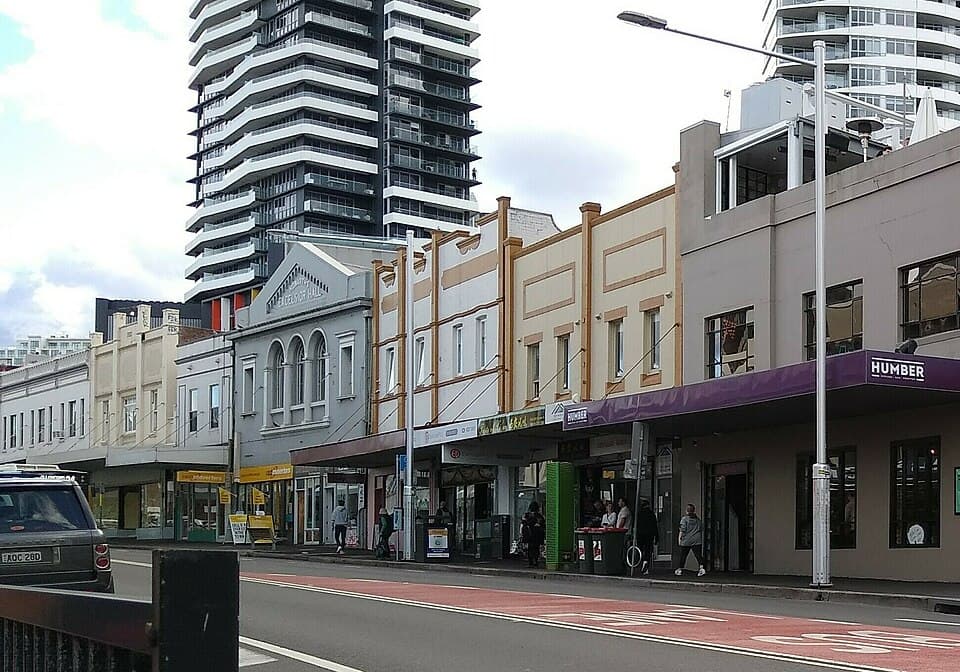
Australian cinema keeps filming the outback and forgetting the towns in between
The films get made in Sydney and Melbourne, the stories get set in the outback, and the actual regional cities where most Australians live barely appear at all.
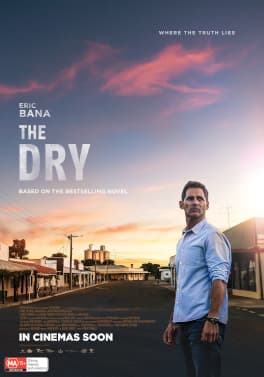
Australian novels keep becoming Australian films and the novels keep winning
The adaptation pipeline from page to screen is the steadiest production line in Australian cinema, and the question is whether the films are earning the books or borrowing from them.
2021 was the year Australian cinema got serious and the audience looked away
Four of the year's most significant Australian films dealt in violence, guilt, grief, and landscape, and the domestic audience chose to watch something else.