2021 was the year Australian cinema got serious and the audience looked away
Four of the year's most significant Australian films dealt in violence, guilt, grief, and landscape, and the domestic audience chose to watch something else.
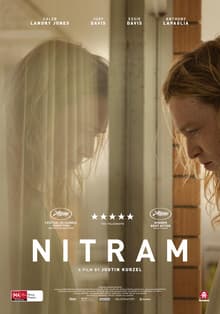
I saw Nitram in a cinema in Chippendale on a Tuesday afternoon in October. There were six other people in the theatre. I counted them because I had nothing else to do during the ads and because counting felt like a way of marking something. Six people in a room, watching a film about the worst mass shooting in Australian history, in a country that had spent twenty-five years not talking about it and had now decided, through the mechanism of a Cannes-winning film, to look at it directly. Six people. The Tuesday discount was $14.
I do not know what I expected. More people, maybe. Or fewer. What I did not expect was the particular quality of silence in that room, which was not the comfortable silence of a drama but the silence of people who had chosen to be uncomfortable and were now sitting inside the choice. The film ended and I walked out and the sun was too bright and I bought a coffee I did not drink and sat on a bench for a while thinking about Caleb Landry Jones’s shoulders, the way they rounded forward as if his body was apologising for itself, and about how a national cinema can make a film this precise and this necessary and still, functionally, be talking to an empty room.
Four films, one year, nobody watching
The numbers for 2021 tell a story that nobody in the industry wants to narrate in full. The Dry, adapted from Jane Harper’s bestseller and starring Eric Bana, was the commercial success. It took $20 million at the domestic box office, which in the context of Australian cinema is enormous, and in the context of a pandemic year with rolling lockdowns and capacity limits it is something like a miracle. But The Dry was also the easiest of the year’s significant films to watch. It is a mystery. It has a star. The landscape is beautiful. The violence is contained within a plot that moves toward resolution. You can watch it and feel something without having to rearrange yourself afterward.
Nitram was harder. High Ground was harder. Penguin Bloom tried not to be hard and ended up in a strange middle space, a film about paralysis and grief that had been shaped, visibly, into something the audience could sit through without feeling implicated. Naomi Watts falling off a balcony in Thailand, learning to love again through a baby magpie. I do not say this dismissively. I say it descriptively. The film was designed to be watchable, and it was watched, modestly, and it disappeared.
High Ground opened to $1.2 million and dropped quickly. Nitram performed below expectations despite the Cannes prize, despite the reviews, despite Justin Kurzel’s name and the quality of the work. The audience, or rather the absence of audience, was not a mystery. People knew what the film was about. They chose not to go. This is their right. I am not here to scold anyone for skipping a film about Martin Bryant. What I want to do is sit with the fact of it, the gap between what Australian cinema produced in 2021 and what Australian audiences consumed, and ask what that gap means.
The weight problem
I want to say something about weight. The four films I keep thinking about from this year are all, in different ways, heavy. Not heavy in the sense of slow or dull or self-important, though you could make a case for any of those accusations depending on your tolerance. Heavy in the sense that they ask you to carry something out of the cinema. The Dry asks you to carry the landscape, the desiccated rural towns, the way drought and grief become structurally identical. High Ground asks you to carry the colonial violence that this country was built on and the fact that the people who committed it are the people whose descendants now fund the films about it. Nitram asks you to carry the knowledge that the worst thing that ever happened in this country was done by a person who was recognisably human, not a monster, not an aberration, but a product of failures that are still operating.
These are not unreasonable things to ask. They are the things a national cinema is supposed to ask. The whole point of having a subsidised, culturally mandated film industry is that it makes the work the market will not make on its own, the work that is difficult and specific and necessary precisely because it does not sell itself. Screen Australia exists so that films like Nitram can exist. The question is what happens when those films exist and nobody sees them.
Being alone in the cinema
I keep returning to the empty seats. Not as a metaphor. As a literal, physical experience. I saw High Ground in a cinema in the city, a weekday evening, maybe twelve people scattered across a room built for two hundred. The film has a sequence early on where Simon Baker’s character participates in a massacre of Aboriginal people, and the camera does not look away, and I was aware, sitting in that mostly-empty room, that I was watching a depiction of mass killing in something very close to solitude. The communal part of cinema, the thing where you process difficulty alongside strangers, was not operating. There were not enough strangers.
This happened again with Nitram. Again with a Tuesday screening, again with single-digit attendance, again with a film that was asking its audience to do something strenuous and finding that its audience had, in the main, declined the invitation. I do not blame them. Lockdowns had been grinding people down for the better part of two years. The appetite for difficulty was low. Streaming services were offering warmth and familiarity and algorithmic comfort, and the cinema was offering Simon Baker shooting Aboriginal people and Caleb Landry Jones buying semi-automatic weapons, and the audience made a rational choice.
What it means when nobody watches
But I keep thinking about what it means. Not commercially. Commercially it means what it always means: Australian films struggle, always have, the market share hovers between four and seven percent in a good year, the policy settings have not changed, the conversation has not changed, everyone involved is tired of having it. I mean something else. I mean what it means for a culture when its artists make work about the culture’s central traumas and the culture does not engage with the work.
The films still exist. They still circulate, on streaming platforms and in festival retrospectives and in the syllabi of film courses. Nitram will be written about for years. High Ground opened conversations about frontier violence that are not going to close. The work matters. But the experience of watching it, in 2021, in those half-empty cinemas, with the hand sanitiser and the QR codes and the vacant seats, was the experience of participating in a conversation that the rest of the country had decided not to join.
What I remember
I remember walking out of Nitram and standing on Broadway and watching the traffic and thinking: nobody I know has seen this film. Not because they are incurious. Because they are tired. Because the year had been long and the film was about the worst thing, and watching the worst thing requires a surplus of emotional capacity that most people did not have in 2021, and may not have now.
I do not have a conclusion. I do not think the industry failed. The films were good. Some of them were extraordinary. Kurzel’s direction in Nitram is as controlled and devastating as anything he has done, and Jones’s performance is the kind of work that justifies the existence of the entire apparatus. But the apparatus made the work and put it in cinemas and the cinemas were empty, and I sat in them, six people, twelve people, alone with the sound of someone else’s popcorn, watching the country explain itself to a room that had mostly decided not to listen. That is what 2021 felt like. Not a failure. Something more like a letter that was written and posted and delivered and left on the kitchen table, unopened, beside the keys.
Mara writes essays. She came to film writing from a decade of literary criticism and still reaches, sometimes, for a novel before she reaches for a shot list. She lives in the inner north of Melbourne and does not explain which city that is.
MORE BY MARA DENG →
The five Australian films of 2021 that will still matter in a decade
The year gave us a portrait of a mass killer, a drought-country thriller, a sheep-farming feud, and a lucid day with a grandmother, and all four will last.
Australian cinema does not know what it wants to be next and that might be the whole point
Six years of writing about Australian film has taught me that the industry's identity crisis is not a bug; it is the condition under which the best work gets made.
This year I watched forty Australian films and the best ones made me nervous
The comfortable films were fine, the difficult ones were better, and the gap between the two is where Australian cinema lives.