The five Australian films of 2021 that will still matter in a decade
The year gave us a portrait of a mass killer, a drought-country thriller, a sheep-farming feud, and a lucid day with a grandmother, and all four will last.
Every year I try to write this list in December and every year I spend the first week arguing with myself about what belongs on it. The argument is usually about the difference between the films I admired and the films I loved, which is the difference between craft and feeling, and the years when those two categories overlap are the good years. 2021 was a good year.
Australian cinema came back from COVID in a shape that surprised me. I expected hesitant films, safe films, films that felt like they had been made with one eye on the pandemic and the other on the audience’s diminished tolerance for difficulty. What I got instead was a year of films that refused to be careful. A portrait of a mass killer. A frontier revenge film. A sheep-farming feud. A woman reclaiming a single day of clarity. A drought-country thriller with a movie star at its centre. None of these films are easy. All of them will last.
1. Nitram
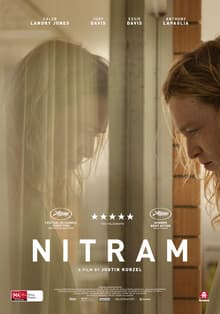
Justin Kurzel’s Nitram is the Australian film of 2021, and I suspect it will be one of the Australian films of the decade. I wrote about it from Cannes in June, three hours after the screening, still unsettled, and six months later I am still unsettled, which is the point.
The film is about the man who committed the Port Arthur massacre. It does not depict the massacre. It does not explain the massacre. It watches the years that preceded it and asks the audience to sit with the knowledge of what is coming and to feel the weight of that knowledge in every scene. Caleb Landry Jones won the Palme d’Or for Best Actor and the prize feels inadequate to what he does, which is not really acting in any conventional sense but a sustained physical inhabitation of a person who is recognisably human and recognisably broken.
Judy Davis and Essie Davis (no relation) are both extraordinary, and Anthony LaPaglia does the quietest work of his career as a father who has run out of ways to help. Kurzel’s direction is austere, almost clinical, held at a distance that feels like a refusal to sensationalise and also like a recognition that getting closer would be unbearable. The film opened the national conversation about gun reform again, briefly, and then the conversation moved on, which is its own kind of commentary on the culture Kurzel is examining.
2. The Dry
Robert Connolly’s The Dry did something unusual for an Australian film: it made money. Sixteen million dollars at the domestic box office, making it the highest-grossing local film since Lion in 2016. Eric Bana returned to Australian cinema for the first time in years and brought an audience with him, and the audience discovered a film that is better than its genre obligations require it to be.
Bana plays Aaron Falk, a federal police officer who returns to his drought-stricken hometown for a funeral and is drawn into an investigation that connects to an older, unresolved death. The plot is solid crime fiction, adapted from Jane Harper’s bestseller, but the film’s real subject is landscape. Connolly shoots the Wimmera as a place where the heat is a character and the silence between people is louder than anything they say. Bana is excellent, doing the kind of restrained, interior work that he was always capable of and rarely given the opportunity to attempt in Hollywood.
The Dry matters because it proves that Australian audiences will show up for Australian films when the films give them a reason to. The reason does not have to be spectacle. It can be a familiar face in an unfamiliar landscape, telling a story that is rooted in the specific conditions of this country.
3. Rams
Jeremy Sims’s Rams is the quietest film on this list and the one I have thought about most since seeing it. An adaptation of the Icelandic film of the same name, relocated to Western Australia, it tells the story of two estranged brothers (Sam Neill and Michael Caton) who are forced to cooperate when a disease threatens their neighbouring sheep flocks.
The pleasure of the film is in its patience. Sims lets the landscape and the silence do the work that dialogue does in other films. Neill and Caton do not speak to each other for the first act, and the absence of words between them is more expressive than any conversation could be. When they do begin to communicate, it is through gestures, through the shared vocabulary of farming, through the things they do for each other’s animals that they would never do for each other directly.
It is a small film about stubbornness and grief and the particular loneliness of men who have never learned to say what they feel. It is also very funny, in the dry, understated register that Australian comedy does better than any other national cinema.
4. June Again
JJ Winlove’s June Again was released without fanfare and found its audience slowly, mostly through word of mouth, mostly among audiences who do not read film criticism and would not recognise a festival laurel. That it found them at all is a testament to Noni Hazlehurst’s performance, which is the best screen work she has done since Little Fish and one of the great Australian performances of the year.
Hazlehurst plays June, a woman with dementia who experiences a brief period of lucidity and uses it to intervene in the lives of her adult children, who have made a mess of everything in her absence. The premise sounds like it could be sentimental, and in other hands it would be, but Winlove keeps the tone honest and Hazlehurst keeps June specific. She is not a generic grandmother. She is a particular woman with particular opinions and particular blind spots, and her day of clarity is not a gift from the screenwriter but a medical event that she treats with the pragmatism of someone who knows it will not last.
5. High Ground
Stephen Johnson’s High Ground is the most ambitious film on this list and the most flawed. Set in Arnhem Land in the 1930s, it tells the story of a frontier massacre and its aftermath through the perspectives of a conflicted white sniper (Simon Baker) and a young Yolngu man (Jacob Junior Nayinggul) caught between two worlds.
The film is uneven. The pacing sags in the middle act, some of the dialogue is too expository, and the white characters are less fully realised than the Indigenous ones, which is a structural problem in a film that gives Baker top billing. But the sequences that work, and there are many, are extraordinary. Johnson shoots the Top End landscape with a reverence that never tips into tourism, and Nayinggul gives a debut performance of remarkable composure and physical intelligence.
High Ground matters because it attempts to tell a story that Australian cinema has largely avoided: the story of frontier violence as seen, in part, from the perspective of the people it was enacted upon. The attempt is imperfect. The telling is compromised by the commercial requirements of casting and structure. But the attempt itself is significant, and the film’s best moments suggest what Australian cinema could become if it commits fully to the stories it has only begun to tell.
What the year tells us
Five films, five different registers, five different audiences. What connects them is ambition. Not ambition in the sense of scale or budget, but ambition in the sense of taking on subjects that are difficult, uncomfortable, or structurally demanding and trusting the audience to meet the film where it lives.
This is the Australian cinema I want. Not safe. Not tentative. Not calibrated to international markets or streaming algorithms. Films that are made here, about here, in voices that could not come from anywhere else. 2021 delivered five of them, and if I had to choose one, I would choose Nitram, because it is the one that will not leave me alone, and because the films that refuse to leave you alone are the ones that last.
Bronte writes long-form criticism of Australian cinema and the international art films that feed into it. She was on the ground at Cannes in 2019 and has not entirely forgiven the festival for 2020. Patient with slow films; impatient with tidy ones.
MORE BY BRONTE HAUGHEY →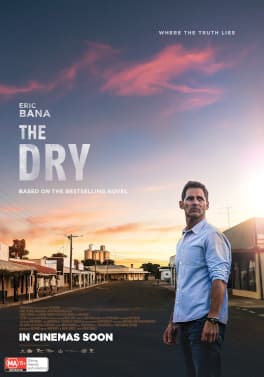
The Australian films worth anticipating in 2021
The pipeline froze in 2020, but the films that waited are beginning to move, and several of them are worth the delay.
2021 was the year Australian cinema got serious and the audience looked away
Four of the year's most significant Australian films dealt in violence, guilt, grief, and landscape, and the domestic audience chose to watch something else.
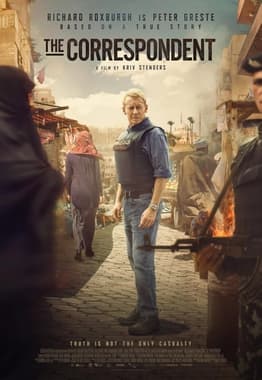
The Correspondent is a grief film wearing a prison film
Kriv Stenders built an Egyptian prison on a Sydney soundstage in six weeks, and the picture he made inside it is not about Egypt at all.