The Australian films worth anticipating in 2021
The pipeline froze in 2020, but the films that waited are beginning to move, and several of them are worth the delay.
I am writing this on a Tuesday in January, which is the most optimistic day of the most optimistic month, and I am going to do something I have not done in twelve months: I am going to talk about Australian films I have not yet seen as though I expect to see them. This feels strange. For most of 2020, the pipeline was frozen. Productions shut down. Festivals went online or went dark. Release dates became hypothetical. The phrase “date TBC” appeared so often on Screen Australia’s production slate that it started to read less like a scheduling note and more like a philosophical position.
But the films that stalled did not disappear. They waited. Some of them finished shooting before the lockdowns. Some resumed production in the second half of the year under COVID-safe protocols that added weeks and cost to already stretched budgets. A few managed to complete post-production entirely during the shutdown, their editors and composers and sound designers working from home on laptops that were not designed for this kind of work. Now, in January 2021, the release calendar is filling back in, and some of what is coming looks genuinely strong.
Here is what I am watching for.
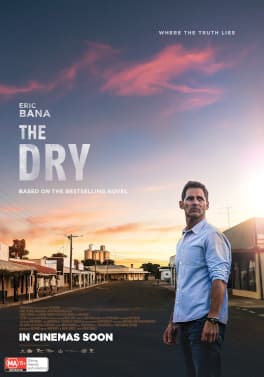
The Dry
Robert Connolly’s adaptation of Jane Harper’s bestselling novel opens on New Year’s Day, which is a bold move for an Australian film and a signal that Roadshow has real commercial confidence in it. Eric Bana plays Aaron Falk, a federal police officer who returns to his drought-stricken hometown for a funeral and finds himself drawn into something older and more tangled. I have not read Harper’s novel, which feels like an advantage; I want to encounter the story through Connolly’s images first, through the Wimmera as he frames it, through whatever Bana does with a character who is defined by what he will not say.
The early signs are good. Connolly knows this landscape. His previous work, particularly Balibo (2009), demonstrates a capacity for restraint that the crime-thriller genre does not always reward but always benefits from. And Bana coming back to Australian cinema for the first time in years carries its own weight. There is something meaningful about a star of his calibre choosing to return to a local production, and the choice itself tells you something about the material.
Nitram
Justin Kurzel is making a film about the Port Arthur massacre. That sentence alone is enough to divide a room, and Kurzel knows it, and I suspect that knowledge is part of why he is making it. The film is called Nitram, it stars Caleb Landry Jones, Judy Davis, Essie Davis and Anthony LaPaglia, and it is heading to Cannes if the festival runs, which it says it will.
I do not know what this film will be. I do not know how Kurzel will handle the subject, whether he will depict the event itself or circle around it, whether the film will be an explanation or a refusal to explain. What I know is that Kurzel is the right director for this kind of difficulty. Snowtown (2011) remains one of the most controlled depictions of violence in Australian cinema, a film that understood that horror lives in proximity, not in spectacle. If he brings the same discipline to Nitram, the result will be a film that this country needs to sit with, whether or not it wants to.
High Ground
Stephen Johnson’s High Ground has been waiting for release since before the pandemic, which is a long time for any film to sit on a shelf. It is a frontier western set in Arnhem Land in the 1930s, starring Simon Baker and a cast of First Nations actors including Jacob Junior Nayinggul in his screen debut. The film deals with a massacre and its aftermath, and it does so from a perspective that Australian cinema has historically failed to centre: the perspective of the people who survived.
I am cautious about frontier narratives because Australian cinema has a long history of telling them badly, of using the landscape as a backdrop for white guilt rather than engaging with the lived experience of Indigenous Australians. But Johnson’s previous work, particularly Yolngu Boy (2001), suggests a filmmaker who listens before he speaks. And the involvement of Witiyana Marika as a producer and cultural consultant gives me confidence that the film is accountable to the community whose story it tells.
Penguin Bloom
Glendyn Ivin’s Penguin Bloom is the film on this list I am least certain about and most curious to see. Naomi Watts stars as Sam Bloom, a real woman who was paralysed in a fall and found an unlikely path through grief via a rescued magpie. The premise sounds dangerously close to the kind of inspirational true story that Australian cinema produces when it is feeling safe. But Ivin is not a safe filmmaker. His work on Advertising Rules! and various short-form projects shows a visual sensibility that earns its emotions through framing and light rather than through dialogue, and Watts has always been at her best when playing women who are holding something together and failing.
The test for Penguin Bloom will be whether it trusts its audience to understand grief without the film having to narrate it. If Ivin and Watts resist the urge to make the magpie a metaphor and instead let it be what it was, a bird, a distraction, a small warm thing that needed caring for, then the film could be something genuinely affecting. If it reaches for uplift too early, it will join the long list of Australian true stories that flatten their subjects into lessons.
June Again
JJ Winlove’s June Again is the film I know least about and the one I keep coming back to in my mind. Noni Hazlehurst plays a woman with dementia who experiences a brief period of lucidity and uses the day to intervene in her adult children’s lives. The concept could be handled with the kind of broad sentimentality that Australian family dramas default to when they are unsure of their audience. But Hazlehurst is not a sentimental performer. She is precise, observant, and capable of finding the specific where other actors would settle for the general.
I want this film to be good because I want Australian cinema to prove that it can tell stories about older women without turning them into saints or punchlines. Hazlehurst deserves a role that matches her ability, and if Winlove gives her the room to work, June Again could be the performance of the year.
What I want from 2021
I want the same thing I always want: films that are specific to this country without being provincial, that take risks without congratulating themselves for the risk-taking, that treat their audiences as adults. I want fewer films about the outback as metaphor and more films about the suburbs as reality. I want more First Nations filmmakers given the budgets and the distribution that their stories require. I want to sit in a cinema and watch something that surprises me, which is not the same as wanting to be shocked; surprise can be quiet, can come from a performance or a cut or a piece of music that arrives at exactly the right moment and makes you reconsider everything that came before it.
The pipeline froze in 2020. It is thawing now. Some of these films will be great. Some will disappoint. All of them exist because someone refused to give up on them during the worst year the industry has faced, and that refusal, that stubbornness, is itself worth something. I will be in the cinema when they open. I have missed it.
Bronte writes long-form criticism of Australian cinema and the international art films that feed into it. She was on the ground at Cannes in 2019 and has not entirely forgiven the festival for 2020. Patient with slow films; impatient with tidy ones.
MORE BY BRONTE HAUGHEY →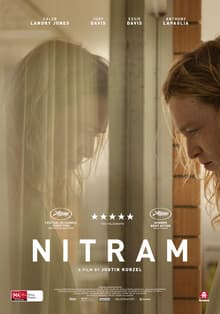
The five Australian films of 2021 that will still matter in a decade
The year gave us a portrait of a mass killer, a drought-country thriller, a sheep-farming feud, and a lucid day with a grandmother, and all four will last.
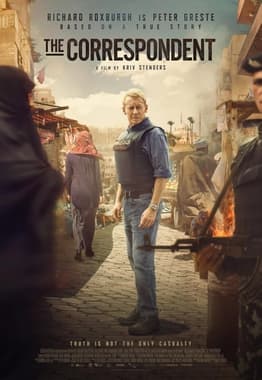
The Correspondent is a grief film wearing a prison film
Kriv Stenders built an Egyptian prison on a Sydney soundstage in six weeks, and the picture he made inside it is not about Egypt at all.
Furiosa and the country George Miller will not leave
Two years after Furiosa underperformed in May 2024, the picture has clarified into the most patiently photographed film of George Miller's career, and possibly the last one he will shoot in the Hay plains.