Six years of Australian cinema and the argument is still open
The films got better, the audiences stayed complicated, and the critics kept writing.

I have been writing about Australian cinema for this publication for six years, and the honest version of what that has taught me is less flattering than the version I would prefer to tell. I got things wrong. I underrated films that grew. I overrated films that shrank. I mistook confidence for quality more than once, and I mistook quietness for insignificance more than once, and the fact that these errors roughly cancelled each other out does not make either of them less instructive.
Start with what I got wrong. I was dismissive of Penguin Bloom when it came out in 2021, and I stand by most of the review: the film smooths over the difficulty of its subject in ways that feel protective of the audience rather than honest about the experience. But I watched it again two years later, and Naomi Watts does something in the second half that I had not given her credit for. There is a scene where she is alone in the house and her body simply stops cooperating, and Watts plays it without any of the cues that disability narratives typically offer the viewer. No swelling music. No cut to a reaction shot. Just a woman on the floor, and the camera holding on her long enough for the discomfort to become real. I had missed it. The rest of the film had made me inattentive to the moments where it told the truth.
Foe went the other direction. I saw Garth Davis’s science fiction drama at its premiere and wrote a review that was kinder than the film deserved, partly because the ambition was real and partly because Saoirse Ronan’s performance was doing so much heavy lifting that it obscured the structural problems beneath it. The film has not aged well. The twist, which felt earned on first viewing, retroactively flattens everything that preceded it, and the Australian landscape, which Davis uses as a stand-in for emotional desolation, starts to feel like a production design choice rather than a thematic one. I should have been harder on it. I was seduced by the surfaces.
The directors who changed the landscape
Six years is long enough to watch directors emerge, and the ones who have reshaped what Australian cinema looks like in 2026 are not the ones I would have predicted. Danny and Michael Philippou came out of YouTube, which should not have worked, and Talk to Me was a horror film that succeeded on formal discipline rather than franchise mechanics. The Philippou brothers understood something about the relationship between the camera and the body that most first-time directors take years to learn, and they understood it immediately. Their follow-up has only confirmed what the debut suggested: these are filmmakers who think in physical terms, whose horror is located in the body rather than in the idea.
Noora Niasari’s Shayda was a debut of a completely different order, quiet where the Philippous were loud, intimate where they were visceral. What the two share is precision. Niasari knew exactly how close to put the camera and exactly when to cut, and the restraint of the film is not timidity but control. She made a film about domestic violence that refuses to raise its voice, and the refusal is the point.
Goran Stolevski came through You Won’t Be Alone in 2022, a film that I initially found more interesting than satisfying, and then kept thinking about for weeks after I saw it. The folk horror elements are a delivery mechanism for something much stranger, a film about what it means to inhabit a body, any body, and the disorientation of consciousness moving through forms it does not understand. Stolevski has continued to make films that resist easy categorisation, which is either courage or commercial impracticality, and the distinction may not matter as much as the industry likes to pretend.
The films that will last
Predictions about durability are a fool’s game, and I am going to play it anyway, because six years of reviewing gives you either the standing or the delusion required to try.
Nitram will last. Justin Kurzel’s film about Martin Bryant operates with a formal severity that makes it impossible to sentimentalise and difficult to dismiss. The decision to focus on the years before the massacre, to make a film about the accumulation of warning signs that were visible and ignored, gives the picture a weight that does not diminish. Caleb Landry Jones’s performance does not age because it does not rely on the kind of theatrical intensity that dates. He plays Bryant as a person, not a symbol, and the horror of the film is located in the gap between the ordinariness of the behaviour and the magnitude of what it leads to.
The Stranger will last. Thomas M. Wright’s procedural about the undercover investigation that led to the arrest of a child murderer is the most disciplined Australian film of the past decade. It is a film that withholds almost everything the audience expects from a crime narrative, the satisfaction of the chase, the catharsis of the capture, the moral clarity of the investigation, and replaces it with something much harder to watch: the psychological cost of pretending to be someone else for months on end, and the question of whether the pretence leaves you intact.
Memoir of a Snail will last. Adam Elliot’s claymation film about grief and hoarding and the particular loneliness of a life spent collecting things that cannot love you back is the most emotionally precise Australian film I have seen in six years of writing about them. It is funny and devastating and ugly in a way that animation is rarely allowed to be, and it is so deeply rooted in Melbourne, in the textures and the weather and the suburban geography of a specific kind of Australian life, that it could not have come from anywhere else.
What six years of reviewing feels like
The temptation with a piece like this is to build towards a conclusion, to say that Australian cinema is in a golden age or a crisis or a transition, to impose a shape on six years that would make the writing feel purposeful. I am not going to do that. What I have learned from six years of watching these films is that the industry resists narrative. The best year is followed by the weakest. The most promising debut is followed by a sophomore film that nobody sees. The funding arrives for the wrong project and dries up for the right one, and the critics write about all of it with a certainty that the next year’s films will quietly disprove.
What I can say is that the argument about what Australian cinema is and what it should be has not been settled, and that the failure to settle it is the most interesting thing about the national cinema. The films keep arriving, and they keep refusing to agree with each other about what an Australian film looks like, and the critics keep writing, and the audience keeps being complicated, and the conversation stays open. Six years in, I would not want it any other way, though I reserve the right to get that wrong too.
Bronte writes long-form criticism of Australian cinema and the international art films that feed into it. She was on the ground at Cannes in 2019 and has not entirely forgiven the festival for 2020. Patient with slow films; impatient with tidy ones.
MORE BY BRONTE HAUGHEY →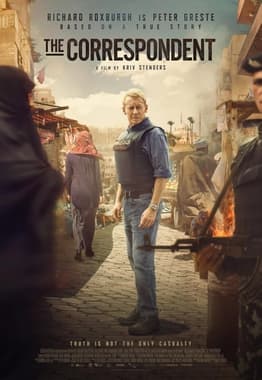
The Correspondent is a grief film wearing a prison film
Kriv Stenders built an Egyptian prison on a Sydney soundstage in six weeks, and the picture he made inside it is not about Egypt at all.
Furiosa and the country George Miller will not leave
Two years after Furiosa underperformed in May 2024, the picture has clarified into the most patiently photographed film of George Miller's career, and possibly the last one he will shoot in the Hay plains.
Sydney Film Festival 2026 opens with a question the programme cannot answer alone
The programme is strong, the Australian titles are stronger, and the question of who will be in the audience remains.