Australian cinema keeps filming the outback and forgetting the towns in between
The films get made in Sydney and Melbourne, the stories get set in the outback, and the actual regional cities where most Australians live barely appear at all.
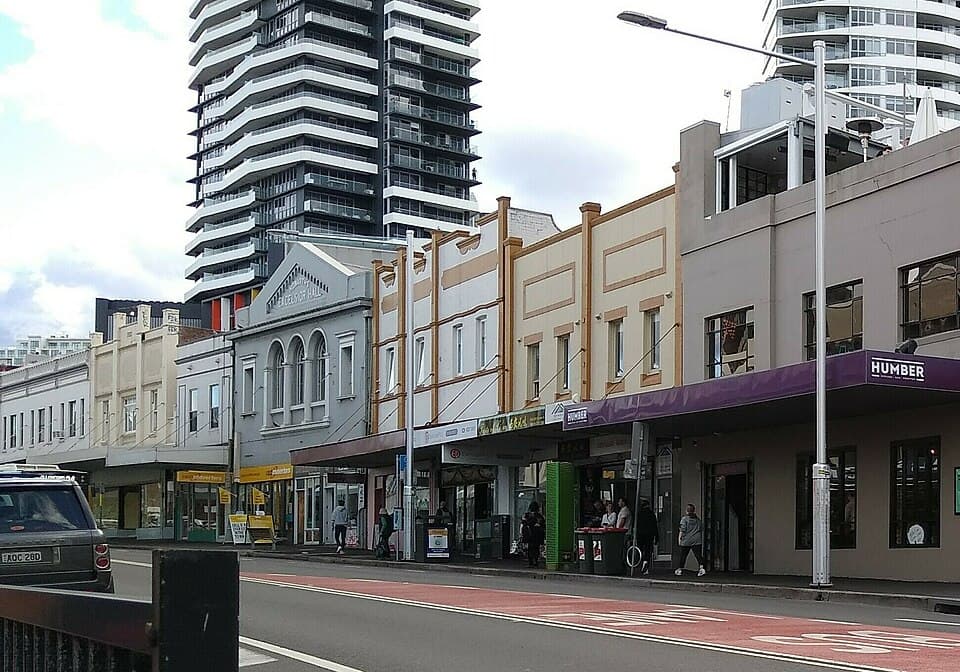
I grew up in Wollongong. Not the kind of growing up that makes it into films, which I suppose is the point. There was no crime to solve, no family disintegrating in photogenic ways, no coming-of-age revelation set against a dramatic cliff face, although we had the cliff faces. We had the steelworks and the beaches and the particular light that comes off the Illawarra escarpment in late afternoon, a light that is different from Sydney’s light, softer and lower and more golden, though I have never seen it in a film. Not once.
I want to say this essay is about representation, and it is, but not in the way that word usually gets used. I am not asking for a quota. I am not asking Screen Australia to mandate one Wollongong film per funding round. What I mean is something more basic and harder to fix: Australian cinema has a geography problem, and the geography problem is also an imagination problem, and the imagination problem means that most Australians never see the places they actually live reflected on screen.
The two-city industry
Here is how Australian cinema maps the country. There is Sydney. There is Melbourne. Then there is the outback, which is not a real place so much as a visual concept, a flat red abstraction that stretches between the two coasts and functions in films the way forests function in fairy tales. You go there to be tested. You go there to disappear. You go there to confront something primal about the land or yourself or both.
Between the two capital cities and the symbolic desert, there is almost nothing. Geelong does not exist. Townsville does not exist. Cairns, Launceston, Toowoomba, Ballarat, Rockhampton, Darwin in any sustained way: none of these places exist in Australian cinema. They exist in Australian life, obviously. More than a third of the population lives outside the capital cities. But you would not know this from watching our films.
The production logic is straightforward. Sydney and Melbourne have the studios, the crews, the post-production houses, the casting directors, the coffee. Films get made where the infrastructure is, and the infrastructure is in two cities on the east coast. When a story requires landscape, the production drives outward until the terrain looks sufficiently dramatic, shoots for a few weeks, and drives back. The region becomes a backdrop. The actual communities who live there become extras, if they appear at all.
Brisbane, Adelaide, Perth
Brisbane has done slightly better in recent years, mostly because of Boy Swallows Universe, which is set in the outer suburbs with a specificity that feels lived-in rather than scenic. The Darra and Bracken Ridge of that series are real places with real textures, the fences, the fibro, the mango trees, the particular humidity that warps everything. It works because Trent Dalton wrote from memory, not from a location scout.
Adelaide gets used, but it gets used wrong. When the city appears in screen productions, it is usually playing somewhere else. Mortal Kombat was filmed there. So were parts of Clickbait. In both cases, Adelaide stood in for American cities, its streets and infrastructure serving as affordable doubles for places that could not be bothered to film themselves. The city’s own character, the churches, the grid, the wine country pushing up against the suburbs, the strange civic formality of it, almost never registers as itself.
Perth is the most striking absence. Nearly two million people live there. It is the fourth-largest city in Australia. It has a film culture, a film school, local filmmakers who care deeply about the work. And it barely registers in the national cinema at all. I can count the significant Perth-set films on one hand, and several of them are decades old. The tyranny of distance that defined colonial Australia continues to define its screen industry. Perth is too far from the production centres, too expensive to crew remotely, too isolated from the distribution networks that run through the eastern seaboard.
What gets lost
I am not making an argument for regional boosterism. I do not want films about Wollongong that treat the city the way tourism ads do, all sunsets and surfers and the obligatory lighthouse shot. What I want is something more ordinary and more difficult: films that understand that most Australians live in places that are neither the glamorous inner city nor the mythic outback, and that these places have their own rhythms, their own light, their own ways of being boring and beautiful and specific.
The absence matters because cinema shapes how a country imagines itself. If the only Australian places that appear on screen are Sydney terraces, Melbourne laneways, and the red centre, then the country that exists in our collective imagination is a place of extremes. Urban or remote. Cosmopolitan or primal. There is no middle register. There are no medium-sized cities where people work at the hospital and drive to Bunnings on Saturday and watch the NRL at the pub and never once encounter a serial killer or a dust storm or a property developer with a dark secret.
When I go home to Wollongong now, I see a city that is changing. There are new apartments near the harbour. The steelworks are smaller than they used to be. The university has expanded and the population has shifted and the relationship between the city and Sydney to the north has become more complicated, more dependent, more anxious. This is a story. Not a dramatic story, necessarily. Not a story that would win at Cannes. But a story about how a place changes when the industry that built it contracts, and what the people who stay do with what remains.
The camera has to go there
There are practical solutions. State screen agencies in Queensland, South Australia, and Western Australia have been increasing their incentive packages, trying to pull productions away from the eastern seaboard. Some of this is working. More productions are shooting in regional locations, though “shooting in” is not the same as “being about.” A Marvel film that uses the Gold Coast hinterland as a stand-in for an alien planet is not the same as a film that understands the Gold Coast as a place where people live.
The harder solution is cultural. It requires filmmakers, and the people who fund them, to believe that a story set in Geelong or Cairns or Launceston is as commercially and artistically viable as one set in Surry Hills. It requires audiences to want to see places they recognise but have never seen on a cinema screen. It requires a shift in what we think Australian cinema is for.
I keep coming back to that escarpment light. The way it falls across the northern beaches in Wollongong around four in the afternoon, turning the Norfolk pines into something that looks almost painted. No one has filmed it. No one has thought it was worth filming. And maybe it is not, in any conventional sense. But I have stood in it, and it is real, and it is Australian, and it is not the outback, and it is not Sydney, and it is the place where I learned to see.

Mara writes essays. She came to film writing from a decade of literary criticism and still reaches, sometimes, for a novel before she reaches for a shot list. She lives in the inner north of Melbourne and does not explain which city that is.
MORE BY MARA DENG →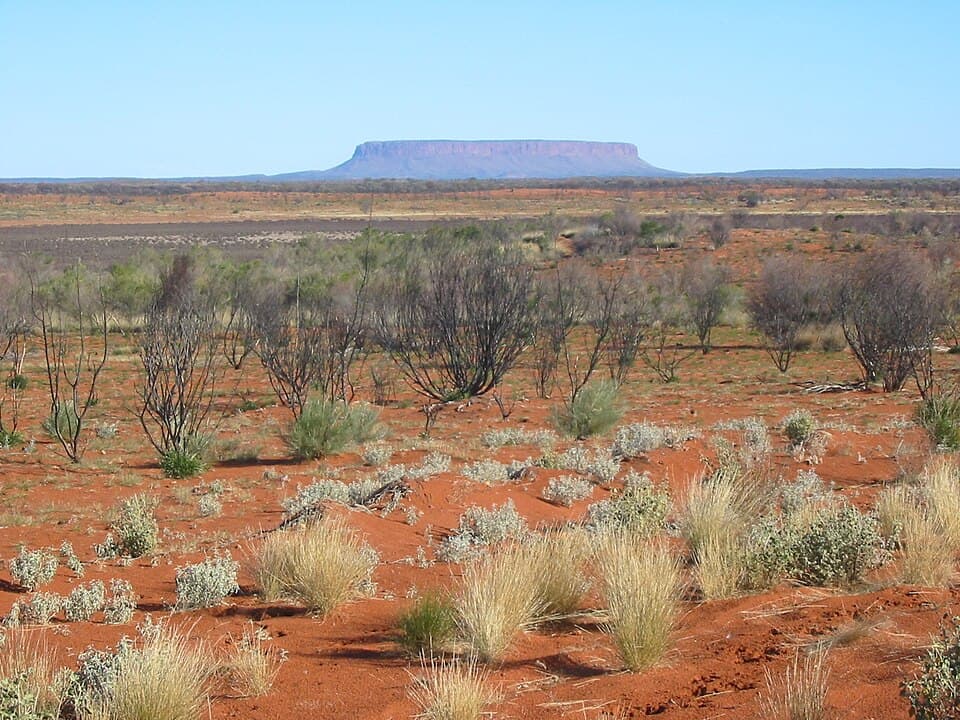
Australian cinema keeps going back to drought because drought never really left
The dry country is not a backdrop; it is a condition, and Australian film returns to it the way a tongue returns to a broken tooth.
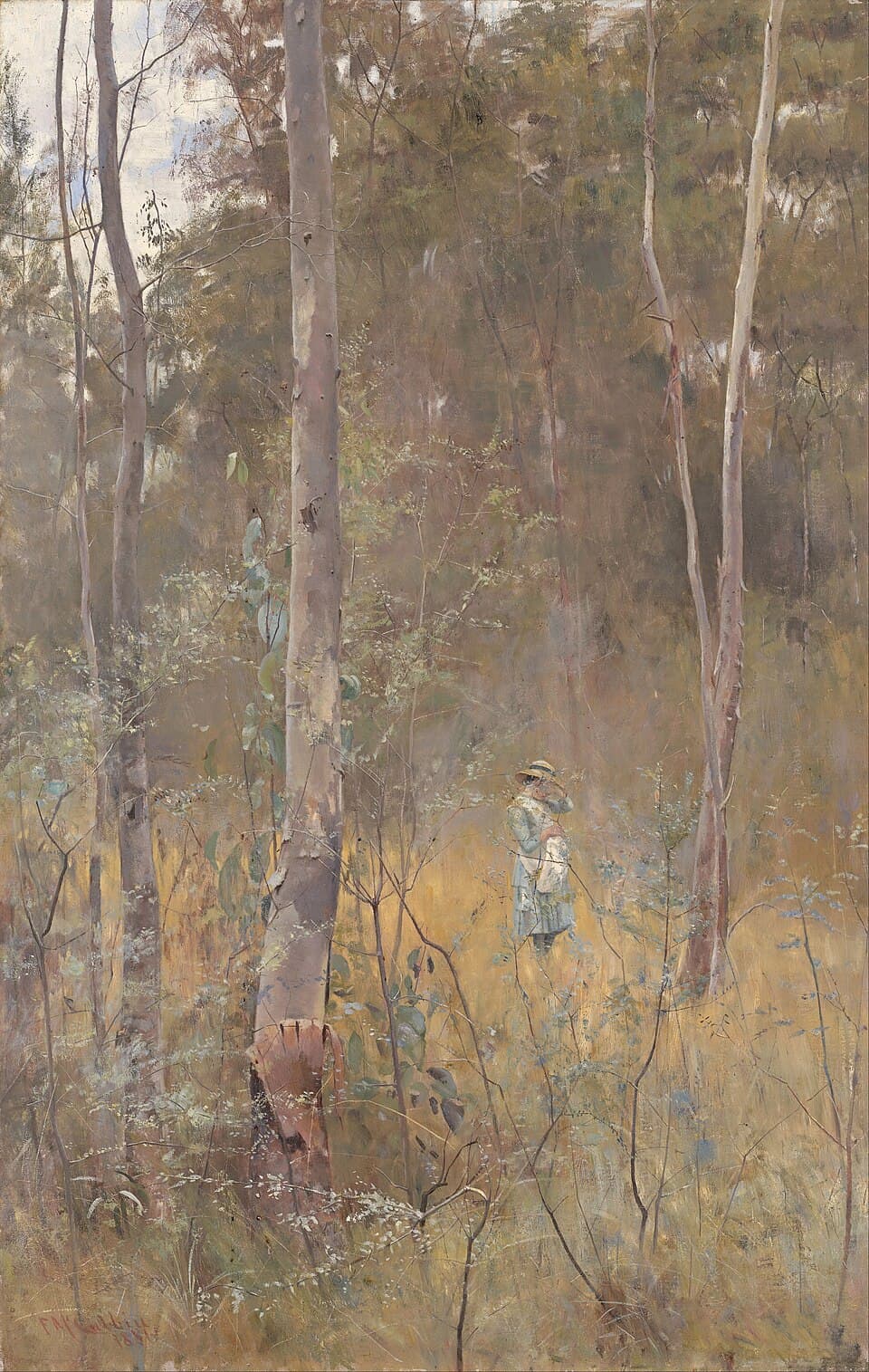
Watching Picnic at Hanging Rock in a room I could not leave
Three women vanish into a landscape that does not want them, and I watched it from a flat with no balcony in Fitzroy.
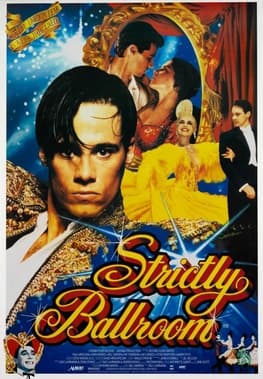
Strictly Ballroom is a film about who is allowed to teach the steps
Baz Luhrmann's 1992 comedy is sold as a story about dance. It is also a story about an Australian champion who has to be taught his own steps by a Spanish-Australian family in their own house.