Australian coming-of-age films keep growing up in the wrong suburbs
The kids in Australian cinema grow up in small towns, coastal edges, and outer suburbs, and the geography is never accidental.
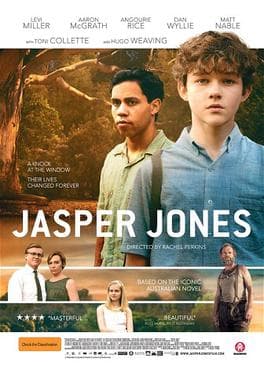
I want to say that I grew up in a suburb that looked like it could have been in an Australian coming-of-age film, but that would not be true. I grew up in a suburb that looked like a suburb. It had a Coles, a Subway, a bus route that ran every forty minutes, and a stretch of nature strip where someone had once planted native grasses and then given up. Nobody has ever set a film there. Nobody has ever set a film anywhere near there. The suburbs where Australian coming-of-age stories take place are always somewhere else: smaller, stranger, further from the centre, the kind of places that exist on a map but not in the national conversation until a filmmaker decides to put a teenager there and see what happens.
This is not a complaint, or not only a complaint. It is an observation about a pattern that has become so consistent it feels like a rule. Australian coming-of-age films are set at the margins. The country town. The coastal nowhere. The outer ring suburb that the city pretends does not exist. The choice of location is never incidental. It is saying something about who gets to grow up on screen, and what kind of growing up counts as a story worth telling.
The town where something happened
Jasper Jones (2017), adapted from Craig Silvey’s novel, is set in Corrigan, a fictional town in rural Western Australia during the summer of 1965. Charlie Bucktin is thirteen and bookish. Jasper Jones is the town’s outcast, half-Indigenous, blamed for everything. When Jasper shows Charlie a body hanging from a tree in the bush, the film becomes a story about secrecy, racism, and the moment when a child realises that the adults around him are not merely flawed but actively cruel.
The town is everything. Corrigan is small enough that everyone is implicated in its violence, its silences, its refusal to see what is directly in front of it. You could not set this story in Sydney or Melbourne. The intimacy of the small town is structurally necessary. Charlie cannot go to a different school or find a community of people who think differently. He is sealed inside a world that is wrong, and the coming-of-age is not about leaving it but about understanding that he has been living inside it all along.
Breath and the edge of the continent
Simon Baker’s Breath (2017), adapted from Tim Winton’s novel, is set on the coast of Western Australia in the 1970s. Two teenage boys, Pikelet and Loonie, fall under the influence of Sando, an older surfer who pushes them into increasingly dangerous waves. The film is about bodies, risk, and the way that adolescent boys are drawn to danger as a form of self-knowledge. Pikelet learns who he is not through conversation but through the physical experience of being held under water and choosing not to panic.
The coast is not a backdrop. It is the mechanism of the story. The isolation of the beach town means there is nobody to intervene, nobody except Sando, who is not a protector but a provocateur. Breath could not take place in Bondi. It needs the emptiness, the long stretches of shore where nobody is watching, the sense that these boys are at the very edge of the continent and there is nothing beyond them but water.
Babyteeth and the wealthy margin
Shannon Murphy’s Babyteeth (2019) complicates the pattern, but does not break it. Milla is a teenager in Sydney’s northern suburbs, her family is middle-class, and the house is comfortable. But Milla has cancer, and into her life comes Moses, a small-time drug dealer with a face tattoo who is older, chaotic, and precisely the wrong person for a dying girl to fall in love with. The film is set in a suburb that is outwardly stable, but the stability is a shell. Milla’s parents are falling apart. Her mother takes pills. Her father prescribes them. The house, the suburb, the lawn, the school uniform are all performing normality while everything underneath is dissolving.
What Babyteeth does is place the coming-of-age story inside a body that is running out of time. Milla does not have the luxury of a long adolescence. The film’s energy comes from this compression, every experience both first and possibly last. The suburb matters because it is where nothing is supposed to go wrong. Babyteeth sets its story in a place that promises safety and then watches the promise break.
Sweet As and who the outback belongs to
Jub Clerc’s Sweet As (2022) does something that almost no other Australian coming-of-age film does: it centres a young Indigenous woman. Murra is fifteen, living in a rough home situation in the Pilbara, and she is sent on a photography program that takes a group of at-risk teenagers through the Kimberley. The landscape is red and vast and frequently beautiful, but the film is careful not to romanticise it. For Murra, the outback is not a metaphor. It is Country. It is where her family comes from, and the coming-of-age is partly about learning to see it through her own eyes rather than through the lens of trauma that has been imposed on her.
Sweet As exposes the blind spot in the pattern I have been describing. When Australian coming-of-age films place their stories in remote or marginal locations, they almost always do so from the perspective of white characters for whom the place is strange, difficult, a crucible. Murra’s relationship to the Kimberley is not one of strangeness. She belongs there, and the film’s achievement is showing a young Indigenous woman claiming her place in a landscape that Australian cinema has more often used as a set than as a home.
Boy Swallows Universe and the cul-de-sac
Boy Swallows Universe (2024), adapted from Trent Dalton’s novel, is set in Bracken Ridge and Darra, outer suburbs of Brisbane in the 1980s. Eli Bell is a kid growing up around drug dealing, a mother in prison, and a stepfather who is kind but involved in things that will destroy him. The suburb is specific: fibro houses, hot days, neighbours who know your business, a sense of being far from anywhere that matters. Eli narrates his own story with a hyper-articulate wonder that is either a gift or a defence mechanism, and the series never fully decides which.
Bracken Ridge is not a country town, but it functions like one in the geography of the story. It is a place where escape feels theoretical. Eli’s world is bounded by streets he can walk, people he already knows, systems that have already failed him. The coming-of-age is about seeing through the suburb, understanding that the life he has been given is not the only life available, and that understanding is both liberation and loss.
The suburb that is never on screen
I keep thinking about my suburb, the one with the Coles and the Subway and the native grasses that nobody watered. It was not dramatic enough for a coming-of-age film. Nothing terrible happened there, or nothing that looked terrible from the outside. It was just ordinary, the kind of ordinary that does not photograph well, that does not produce a narrative arc, that is too comfortable for tragedy and too dull for comedy.
But I grew up there, and growing up there was its own kind of education, and the fact that no one has ever thought to put a camera in a place like it tells me something about what Australian cinema thinks a coming-of-age story requires. It requires extremity. The remote town, the dying girl, the criminal stepfather, the waves that could kill you. The quiet suburbs where most Australian teenagers actually live are too shapeless, too much like the audience’s own experience to be interesting.
The films I have described are all good, some of them very good. But I notice the pattern, and I notice what it excludes, and I wonder what it would look like if someone made a coming-of-age film set in a suburb where the most dramatic thing that happened was that the bus was late and you had to walk home in the heat and by the time you got there you were a slightly different person than when you left, and you could not explain why, and nobody asked.

Mara writes essays. She came to film writing from a decade of literary criticism and still reaches, sometimes, for a novel before she reaches for a shot list. She lives in the inner north of Melbourne and does not explain which city that is.
MORE BY MARA DENG →
Australian novels keep becoming Australian films and the novels keep winning
The adaptation pipeline from page to screen is the steadiest production line in Australian cinema, and the question is whether the films are earning the books or borrowing from them.
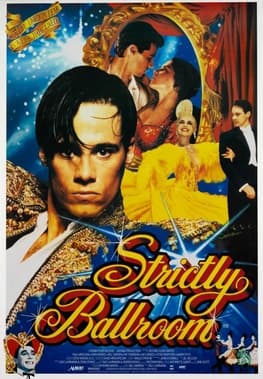
Strictly Ballroom is a film about who is allowed to teach the steps
Baz Luhrmann's 1992 comedy is sold as a story about dance. It is also a story about an Australian champion who has to be taught his own steps by a Spanish-Australian family in their own house.

Looking for Alibrandi was the first Australian story handed to me as mine
It was not my family's story. It was the shape of my family's story, put on a screen in a country that had never once bothered to hold it before.