Nine Perfect Strangers and the wellness retreat that eats itself
Nicole Kidman plays a wellness guru who microdoses her guests, and somehow that is not the strangest choice the show makes.
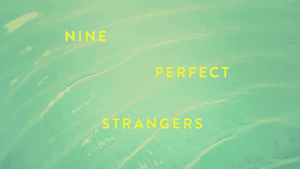
Look, I will say this for Nine Perfect Strangers: it commits. Whatever you think about the show (and I think several contradictory things at once), nobody involved was doing half-measures. Nicole Kidman plays Masha, a Russian-born wellness guru who runs a luxury retreat called Tranquillum House, and she plays her with an accent that exists in no country on earth, a vocal cadence borrowed from a meditation app designed by wolves, and an intensity that suggests she has never once in her life been asked to dial it back. It is, depending on your tolerance, either a magnificent performance or a catastrophe. I have decided it is both.
The show is adapted from Liane Moriarty’s 2018 novel of the same name, and it was filmed entirely in Australia, mostly around the Byron Bay hinterland, which is the kind of detail that matters more than the show itself seems to realise. Tranquillum House is shot to look like a place where rich Americans would pay twelve thousand dollars to drink smoothies and cry in a yurt, and the Australian landscape does that work beautifully. The light is right. The eucalypts frame every establishing shot with exactly the right amount of menace. If you squint, you can almost see the property developer waiting just off camera.
The Moriarty adaptation problem
Here is the thing about adapting Liane Moriarty for television: it worked once, spectacularly, with Big Little Lies, and then everyone assumed it would keep working. The logic was straightforward. Moriarty writes ensembles of complicated women in domestic settings where violence hums underneath polite surfaces. That is basically a television pitch already. Just add a prestige cast, a good director of photography, and a soundtrack that tells you when to feel uneasy.
But Big Little Lies worked because it had a clear engine: who died, and who killed them? The mystery pulled you through the tonal shifts, the flashbacks, the occasional melodrama. Nine Perfect Strangers does not have that engine. It has nine guests at a wellness retreat, each carrying a different trauma, and Masha is secretly microdosing them with psilocybin, and somehow the show treats this revelation as a mid-season twist rather than what it obviously is, which is the entire premise. You spend four episodes watching people behave strangely in smoothie-adjacent settings before the show tells you what you already worked out in episode two. That is not suspense. That is a pacing problem.
The accent and the commitment
Kidman’s performance deserves its own discussion, separate from whether the show around it works, because what she is doing is genuinely interesting even when the material is not. The Russian accent is, on a technical level, inconsistent. It drifts. It thickens and thins depending on whether Masha is performing authority or vulnerability. I do not think this is a mistake. I think Kidman is playing Masha as a woman who invented herself, and the accent is part of the invention, a costume that does not quite fit because it was never meant to be examined this closely.
To its credit, the show gives Kidman room to be weird. There is a scene in episode five where Masha leads a guided meditation while clearly dissociating, and Kidman plays it as comedy and horror simultaneously, her face doing something that should not be possible with human musculature. It is the kind of acting choice that only works if everyone around you is playing it straight, and the ensemble (Melissa McCarthy, Bobby Cannavale, Michael Shannon, Regina Hall) mostly obliges.
Australian infrastructure, American story
The production side of Nine Perfect Strangers is worth noting because it represents a model that Australian screen agencies have been chasing for a decade. The show was produced by Made Up Stories (Bruna Papandrea and Steve Hutensky) and Blossom Films (Kidman’s company), with Endeavor Content packaging it for Hulu. It shot entirely in New South Wales, used Australian crew at every level, booked stages and locations that kept local businesses running through a period when the industry desperately needed the work, and accessed both state and federal offset incentives.
The trade-off, and it is always a trade-off, is that the show is an American production in every creative sense. The showrunner is David E. Kelley, who also ran Big Little Lies. The cast is overwhelmingly American. The characters are American. The Australian landscape is used as a backdrop, gorgeous and largely anonymous, and the story could be set in Sedona or the Cotswolds without changing a single plot point. Australian crews built the sets, lit the rooms, pulled focus on every shot. Australian stories were not part of the deal.
Does it hold together
Honestly, not really. The back half of the season collapses into a series of trauma-revelation scenes that play like a therapy session where everyone has been given the same worksheet. Each guest gets their breakdown episode, each breakdown follows roughly the same arc (resistance, confrontation, tearful acceptance), and by the seventh or eighth round the structure has become so predictable that the psychedelic sequences start feeling less like narrative experimentation and more like the show trying to distract you from the formula.
The finale attempts something ambitious, pulling Masha’s backstory into a collision with the guests’ collective catharsis, and it does not earn it. The emotional beats land at about sixty per cent. You can feel what the show wants you to feel, you can see the machinery working, but the machine is running on smoothie and good intentions rather than on the accumulated pressure of eight hours of storytelling.
And yet. Kidman is extraordinary in the final episode. McCarthy finds something real in a role that the scripts do not always deserve. The Byron Bay light does its thing in every frame. Nine Perfect Strangers is a show that is less than the sum of its parts, but some of those parts are remarkable, and the gap between what it is and what it could have been is, if nothing else, interesting to sit with. Like a wellness retreat, really. You pay too much, you are not sure it worked, and the setting was incredible.
Rhys watches more television than is healthy and writes about it with a dryness that tips occasionally into cruelty. His favourite ABC drama is the one the ABC just cancelled, whichever that happens to be.
MORE BY RHYS TAVITA →
Stan made a great Australian road comedy and told nobody
Dylan River directed all eight episodes of a stolen-taxi comedy set in the 1980s outback, and it went out on Stan with roughly the fanfare of a software update.
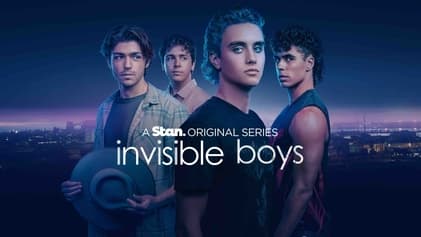
Invisible Boys never puts anyone on the bus to Perth
Nicholas Verso's ten-part Stan drama refuses the one ending Australian queer coming-of-age stories always reach for, and is far better for the refusal.
Scrublands sends a journalist to a country town and trusts the silence to do the rest
Luke Arnold drives into a drought-stricken town where a priest shot five men, and the show's best quality is that nobody wants to explain why.