Australia sent a claymation snail to the Oscars and it was the right call
The selection of Memoir of a Snail as Australia's Oscar entry is a bet on craft over scale, and the bet is sound.
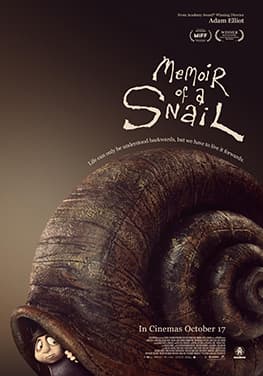
Australia’s selection committee chose Memoir of a Snail as the country’s official entry for the Best International Feature Film category at the 97th Academy Awards, and the decision, once you sit with it for a moment, is so obviously correct that the interesting question is not whether it was the right call but why it took a claymation film about grief and snail figurines to make the category feel like it belonged to us.
The committee had options. There were live-action Australian films released in the eligibility window that would have been defensible choices, films with recognisable casts and conventional production values and the kind of narrative architecture that the Academy’s international branch tends to reward. The committee looked at those options and chose a stop-motion animated film made by a man who has released two features in twenty-five years, whose characters are made of plasticine and whose subject matter is hoarding, alcoholism, childhood separation, and the particular loneliness of growing up in suburban Melbourne without enough love and too many ornaments. This is either a brave choice or an obvious one, and I think it is both.
The case for the film
Memoir of a Snail arrived at the Oscars with festival heat that most Australian submissions do not carry. It premiered at Annecy, where it won the Cristal for Best Feature Film. It opened MIFF. It screened at Toronto. It won the AACTA for Best Film, not Best Animated Film but Best Film, outright, against live-action competition. The critical response was not merely positive but specific; reviewers were not praising the film in general terms but identifying particular qualities, the fingerprints visible in the clay, the structural daring of the non-linear timeline, the voice performance by Sarah Snook that manages to be funny and devastating in the same sentence.
This matters for the Oscar campaign because the International Feature category is voted on by a subset of Academy members who have committed to watching all shortlisted films, and this subset tends to reward distinctiveness over formula. A film that looks and sounds like nothing else in the category has an advantage that cannot be bought with a campaign budget. Memoir of a Snail looks and sounds like nothing else. It is handmade in a literal sense, and that handmade quality, the visible labour of it, registers immediately. You do not need to read a press kit to understand what you are looking at. You can see the hours in every frame.
The competition
The field in any given year is unpredictable, but the 2024 cycle was unusually strong. France submitted Jacques Audiard’s Emilia Perez, which arrived with Cannes prizes and a campaign budget that dwarfed anything an Australian submission could match. Germany sent The Seed of the Sacred Fig, which Mohammad Rasoulof made under conditions of genuine personal danger and which carries the moral weight of that context into every screening. Brazil sent Walter Salles’s I’m Still Here, a film about political disappearance during the dictatorship that had been decades in the making. Ireland submitted Kneecap, a bilingual punk film about Irish-language rap that had become a genuine cultural event.
Against this field, Memoir of a Snail could not compete on scale or on the geopolitical significance of its subject matter, and it did not try to. What it offered instead was precision. Adam Elliot’s film is not about a big subject rendered in broad strokes. It is about a small subject rendered in strokes so fine that the smallness becomes its own kind of enormity. Grace Pudel’s grief is not a metaphor for anything. It is grief, specific and textured and expressed through clay, and the refusal to allegorise is what makes the film feel universal rather than parochial.
The history of Australian submissions
Australia’s track record with the Oscar category is thin and instructive. The country has been submitting films since the category was established in its current form, and the list of submissions tells a story about what Australian selectors have historically believed the Academy wants to see. There have been period dramas. There have been outback films. There have been prestige literary adaptations with international casts. Very few of these films have made the shortlist, and fewer still have been nominated.
The submissions that have performed best tend to share a quality that has nothing to do with genre or scale: they are films that could not have come from anywhere else. Tanna (2015), which was made with a Ni-Vanuatu cast and told a story rooted in Melanesian customary law, made the shortlist precisely because it was irreplaceable. You could not remake it in another country’s cinema. The specificity was the selling point.
Memoir of a Snail has this quality. It is a Melbourne film in its bones, set in a version of the city that is fibro houses and op shops and flats with linoleum floors and views of nothing. Elliot’s Melbourne is not the Melbourne of tourism campaigns or international co-productions. It is the Melbourne of people who stay home, who collect things, who watch the weather through a kitchen window. This particularity, which might seem like a liability in an international competition, is the thing that makes the film legible to audiences everywhere. Everyone knows a version of Grace’s flat. Everyone has been in a room that felt too full and too empty at the same time.
Elliot’s position
The selection also positions Adam Elliot in a way that his career has not previously allowed. He is sixty years old. He has been making films since the mid-1990s. He won an Academy Award for Harvie Krumpet in 2003, which should have opened doors, and it did, but the doors led to a process that took fifteen years to produce another feature. The gap between Mary and Max (2009) and Memoir of a Snail (2024) is not a gap of ambition or talent but of financing, of the particular difficulty of funding handmade animation in a country whose screen agencies are structured around live-action production pipelines.
The Oscar submission gives the film, and Elliot, a campaign infrastructure that Australian animation rarely receives. Whether or not Memoir of a Snail is nominated, the submission itself is a statement from the Australian industry about what it values, and the statement is this: craft counts. Slowness counts. A film that took fifteen years to follow its predecessor is not a failure of productivity but a commitment to a standard that the market does not incentivise and that the audience, when it finally arrives, recognises immediately.
The bet
I said at the outset that the selection was a bet on craft over scale, and I want to be specific about what that bet means. It means that Australia’s Oscar campaign is not built around star power or a director’s international profile or a subject that maps onto current geopolitical anxieties. It is built around a clay snail in a fibro flat in Melbourne, and around the proposition that a film this small and this specific and this handmade can hold its own in a competition designed for films that are none of those things.
The bet is sound. Whether it pays off in a nomination is a question of campaign mechanics and voter turnout and the unpredictable chemistry of an awards season that will not resolve until March. But the rightness of the selection does not depend on the outcome. Australia sent its best film, and its best film happens to be made of clay, and the clay holds its shape.
Bronte writes long-form criticism of Australian cinema and the international art films that feed into it. She was on the ground at Cannes in 2019 and has not entirely forgiven the festival for 2020. Patient with slow films; impatient with tidy ones.
MORE BY BRONTE HAUGHEY →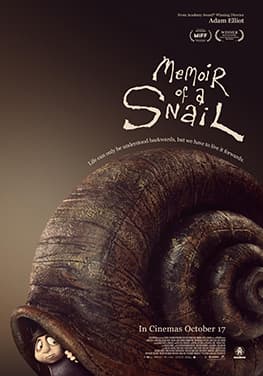
Adam Elliot made grief out of clay and it holds its shape
Elliot's second feature is a hoarder's inventory of loss, rendered in plasticine and voiced by Sarah Snook, and it is the best Australian film of 2024.
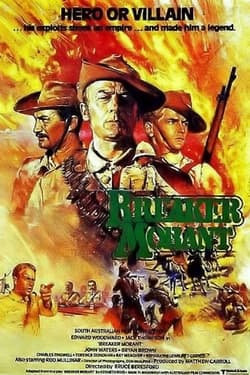
Breaker Morant and the country that adopted its scapegoat
Bruce Beresford's 1980 courtroom drama made an English-born soldier into an Australian martyr, and the picture's argument about empire has outlived its historical certainties.
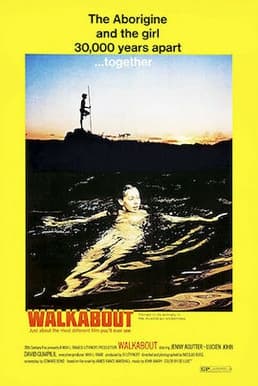
Walkabout is a British film about a country it never claims
Nicolas Roeg's 1971 picture is claimed as an Australian classic, though it was made by a Londoner, financed by two Americans and sold by 20th Century Fox. Its best argument is how little it pretends otherwise.