The Devil's Playground split its prize between a boy and a Brother
Fred Schepisi's juniorate drama opened fifty years ago last month, and the most accurate verdict it ever received was an acting award shared between a thirteen-year-old and a Brother.
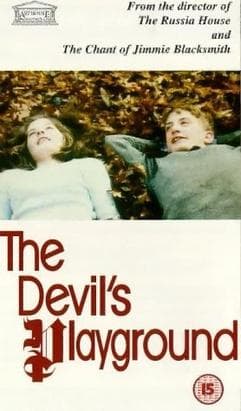
When the Australian Film Institute handed out its awards for 1976, it gave the prize for best lead actor to two people at once, Simon Burke and Nick Tate, a boy playing a pupil and a man playing one of his teachers; and it is hard to think of a jury decision in the history of those awards that doubles so neatly as criticism. The Devil’s Playground, Fred Schepisi’s first feature, opened on 12 August 1976, fifty years ago last month, and it is still routinely described as a film about a boy in a Catholic juniorate. That is the premise. It is not the picture. The picture is about a house full of men who were all, once, that boy, and who have not stopped being him.
The shared award saw that. A good deal of the writing since has not.
Eighteen months at Macedon
The autobiography is well documented and worth being exact about. Schepisi, born in Richmond in 1939, spent eighteen months of his schooling at the Marist Brothers’ juniorate at Macedon, in regional Victoria, before leaving school at fourteen, trying and failing to be a mechanic in one of his father’s car yards, and finding his way into advertising as a messenger. By the seventies he was directing commercials, and had his own production company, the Film House.
The screenplay took him five years to write and the money took three to find. The Australian Film Commission put in $100,000, the Film House $154,000 of its own, and private investors the balance, for a budget reported at around $300,000. The picture returned $334,000 at the Australian box office, which by Schepisi’s own account came close to getting its money back and no closer.
He set it in August 1953. Tom Allen, played by Burke, is thirteen and a boarder at a juniorate run by Brothers; the film follows him, and it follows them, with the same attention.
A seminary that had just stopped being one
It was shot in 1975, mostly at Werribee Park, west of Melbourne, and the choice of location carries more weight than it first appears to. The mansion there was a working Catholic seminary, Corpus Christi College, from 1923 to 1973. Schepisi’s crew moved into rooms that had been training priests for half a century and had stopped doing so two years earlier; much of what you see did not need dressing to look institutional, because it had been the institution until very recently.
Ian Baker photographed it. He was in his late twenties, had studied painting and sculpture before film, and had started with Schepisi as a runner on commercials at the Film House; he would go on to shoot most of Schepisi’s films, including The Chant of Jimmie Blacksmith, Roxanne and A Cry in the Dark. Here his light is plain and cool indoors and almost startlingly open outside, where the boys run across the Werribee grounds as if the parkland were a rumour of some other life. Brian Kavanagh cut it. Bruce Smeaton scored it, and scored it, as this magazine has noted before, small and secular, so that the institution’s own sound registers as the institution rather than as God.
The same camera for everyone
The structural decision that matters most is one of parity. Schepisi gives the Brothers’ temptations exactly the camera, and exactly the patience, that he gives the boys’. Tom gets a fit of the giggles through an elderly Brother’s excruciating lecture on puberty, and later a kiss from a local girl on a weekend at home that teaches him more than a term of instruction. The men get their equivalents, and they are not played for satire.
Arthur Dignam’s Brother Francine is the film’s most exposed figure: a man wound so tight around his own vow that an outing to a public swimming pool undoes him, and he ends up in a cubicle, clutching a towel and weeping. Tate’s Brother Victor is his opposite number, more at ease in the world, and his test comes at a pub, with two women and an offer he declines by a narrower margin than he would like. Charles McCallum’s Brother Sebastian tells Tom he has a smile that should be seen around the world, which is a kindness the rules do not require. John Frawley and Jonathan Hardy fill out a community whose members have each made a private accommodation with the doctrine that the body is the enemy, and none of the accommodations quite holds.
When Gene Siskel and Roger Ebert finally reviewed the picture on Sneak Previews, after its belated American release in 1982, what they singled out was precisely this: that it did not confine itself to the boys, and gave the Brothers’ struggles the same weight. They were right, and it is the reason the film has aged into something harder than a coming-of-age story. A coming-of-age story assumes the adults have arrived somewhere. Schepisi’s adults are still in the corridor.
Keneally’s sermon
There is a piece of casting in the picture that functions almost as a footnote in its own margin. The priest who arrives to prepare the boys for a three-day retreat of complete silence, Father Marshall, is played by Thomas Keneally, who had spent six years at St Patrick’s Seminary at Manly, been ordained a deacon, and left without taking priest’s orders; he had since won a Miles Franklin Award for Three Cheers for the Paraclete, a comic novel about a doubting priest. Schepisi’s next feature would be the adaptation of Keneally’s The Chant of Jimmie Blacksmith.
Marshall’s sermon, on death and damnation and what the fires of hell will feel like, was by the National Film and Sound Archive’s account composed the night before it was shot, out of things the cast and crew remembered being told by religious teachers in their own childhoods. Baker’s camera creeps closer and closer to Keneally as he warms to the subject. The scene is played straight, and it is a collective memory spoken by a man who had walked out of the institution delivering it; the film knows exactly what it is doing with that.
What the award understood
The AFI gave the picture Best Film, Best Direction, Best Screenplay and the cinematography award as well as the shared acting prize and the Jury Prize, and it is the shared prize that I keep returning to. Burke was a child actor of thirteen when he created Tom; Tate was thirty-three and fresh from Space: 1999. Their performances could not be more different in scale or experience, and the jury could not separate them, because the film does not separate them either.
Burke went back to Tom Allen in 2014, for the Showcase series Devil’s Playground, with Rachel Ward and Tony Krawitz directing, a sequel made in a country that had by then learnt a great deal it did not want to know about its church institutions. The series had to carry that knowledge. The 1976 picture did not, and it is important not to read it backwards; its subject is not abuse but self-denial, the long private war of men who were taught as boys that their bodies were a devil’s playground and never found a way to stop believing it.
The Umbrella Blu-ray from 2014 is how most people will now see it. See it for Tom, by all means. Then watch it again for Francine in the cubicle and Victor at the pub, and notice that Schepisi never once suggests the boy will grow out of what the men are still inside.
Bronte writes long-form criticism of Australian cinema and the international art films that feed into it. She was on the ground at Cannes in 2019 and has not entirely forgiven the festival for 2020. Patient with slow films; impatient with tidy ones.
MORE BY BRONTE HAUGHEY →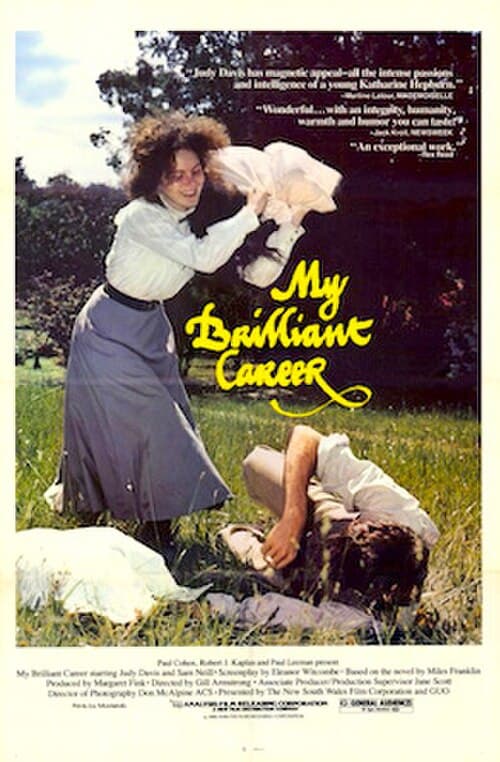
My Brilliant Career and the woman who would not marry the plot
Gillian Armstrong's 1979 debut took a heroine who refuses the marriage plot and made the refusal the whole shape of the picture.
Wake in Fright and the negative that almost burned
A film about a man who cannot leave a town nearly became a film that could not leave a shipping container, and the rescue is now part of what the picture means.
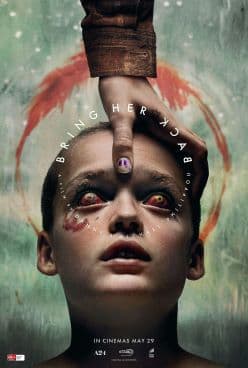
Bring Her Back builds its horror around what Piper cannot see
The Philippou brothers made a $15 million grief picture in the Adelaide suburbs and organised its entire visual scheme around a fourteen-year-old who can only see shapes.