Breaker Morant and the country that adopted its scapegoat
Bruce Beresford's 1980 courtroom drama made an English-born soldier into an Australian martyr, and the picture's argument about empire has outlived its historical certainties.
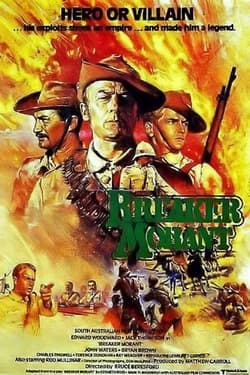
There is a particular kind of Australian film that stages a trial and lets the nation sit in the dock. Breaker Morant is the best of them; it is also the one that most openly confuses its own subject. The picture is a court martial set in South Africa in 1901, made by a director from Sydney with money from South Australia, about three soldiers, two of whom would be shot. It argues that an empire used them and then discarded them. It has been taken, for four and a half decades, as an Australian argument, and the interesting thing is how much work the picture does to make that reading feel natural.
Bruce Beresford adapted it with Jonathan Hardy and David Stevens from Kenneth Ross’s play, and the screenplay was nominated for an Academy Award for adapted writing. Don McAlpine shot it; the South African veldt was supplied by South Australia, with the country around Burra standing in for the Transvaal. The picture is a handsome piece of work in a register the Australian new wave had mastered by 1980: light that is a character, space that is a verdict.
The trial as form
The structure is plain. Lieutenants Harry Morant (Edward Woodward), Peter Handcock (Bryan Brown) and George Witton (Lewis Fitz-Gerald) are charged with the killing of prisoners and of a German missionary during a counter-insurgency campaign. Their defence is conducted by a Major Thomas (Jack Thompson), a country solicitor with no courtroom experience, whose scenes are the film’s moral engine. The tribunal, presided over by Lieutenant Colonel Denny, played by Charles Tingwell with a permanent expression of administrative regret, is plainly following instructions.
What the picture does with this material is withhold the comfort of innocence. The men did kill prisoners; the film shows it. The argument is not that they were blameless but that they were following an order whose author would be allowed to stay silent. That gives the film its edge, and it makes the courtroom scenes crackle in a way that a straightforward injustice story would not. Thompson, who won the best supporting actor prize at Cannes for the performance, plays Thomas as a man whose indignation arrives late and then does not leave.
An English soldier, an Australian myth
The historical Morant was born in England and reinvented himself in Queensland, where he made a name as a horseman and a versifier. His origins were murky enough that he was himself a minor work of fiction. The film’s decision to treat him as an Australian figure is not an error so much as an act of adoption, and it is characteristic of its decade. In 1980 the local industry was busy collecting its own history, and the Boer War, a conflict most viewers knew only as a dull entry in a schoolbook, supplied a story of colonials sacrificed by metropolitan officers.
That framing belongs to the picture’s own moment more than to the record. Historians have argued over the Morant case for a century, and the argument is not settled. The film is a persuasive advocate; it is not a neutral witness. It is useful to watch it knowing that it is arguing, and knowing that its best scenes work because Beresford is honest enough to give the prosecution’s logic a hearing.
The last scenes
The film closes on the execution, and on the line that has been attached to Morant by legend, which the picture adopts as its farewell. Whether the man said it is something the sources do not let us settle. What the film does with it is a matter of tone: it lands as defiance and as farce at once, the correct note for a story about men told to die tidily. The stillness of the final shot does the rest.
Where it sits now
Breaker Morant is regularly listed among the great Australian films, and it is one of a handful of the period’s pictures that travelled, finding an American audience and an Oscar nomination. It has been restored and reissued, and it plays as cleanly as it ever did.
What has changed is the context around it. A film that once read as a rebuke to British imperial habits now also reads as a document of the Australian national story in its self-forgiving phase, the one in which the country’s role in empire was largely a matter of being betrayed by it. That is not a reason to dismiss the picture. It is a reason to watch it twice: once for the trial it stages, and once for the national mood that made a trial the right form.

Bronte writes long-form criticism of Australian cinema and the international art films that feed into it. She was on the ground at Cannes in 2019 and has not entirely forgiven the festival for 2020. Patient with slow films; impatient with tidy ones.
MORE BY BRONTE HAUGHEY →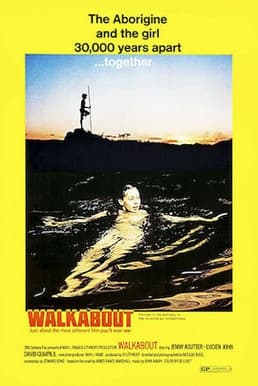
Walkabout is a British film about a country it never claims
Nicolas Roeg's 1971 picture is claimed as an Australian classic, though it was made by a Londoner, financed by two Americans and sold by 20th Century Fox. Its best argument is how little it pretends otherwise.
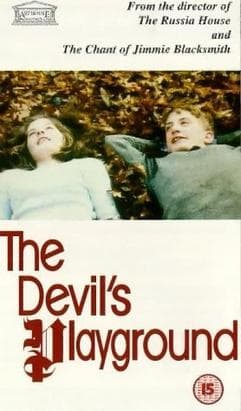
The Devil's Playground split its prize between a boy and a Brother
Fred Schepisi's juniorate drama opened fifty years ago last month, and the most accurate verdict it ever received was an acting award shared between a thirteen-year-old and a Brother.
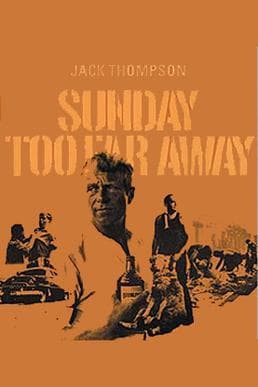
Geoff Burton's light and the truth of Sunday Too Far Away
The NFSA's restoration returns Ken Hannam's shearing drama to full clarity, and what comes back is a film that honours the work without ever romanticising the men who do it.