Walkabout is a British film about a country it never claims
Nicolas Roeg's 1971 picture is claimed as an Australian classic, though it was made by a Londoner, financed by two Americans and sold by 20th Century Fox. Its best argument is how little it pretends otherwise.
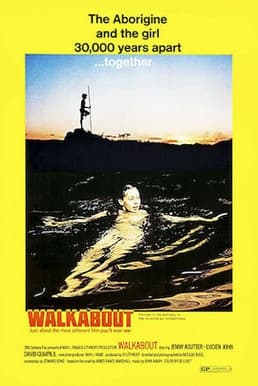
Walkabout is among the pictures most often cited when Australian cinema is asked where it began, and it is useful to remember, before the citation hardens into a lineage, that nothing about it was Australian in the sense the word later acquired. Nicolas Roeg was a Londoner and a former cinematographer; the screenplay was by Edward Bond, an English playwright; the money came from two American businessmen, Max Raab and Si Litvinoff, who set up a company in Australia and sold the distribution rights to 20th Century Fox. The film is Roeg’s second feature as director, following Performance, which he had co-directed. It is not a national cinema’s first word. It is a visitor’s report, and the report is better for knowing that it is one.
Fourteen pages and a country
The history of the script is the history of the picture. James Vance Marshall’s 1959 novel, which Roeg had long meant to film, strands two American children after a plane crash and has the Aboriginal boy who rescues them die of influenza caught from them. Roeg approached Bond, who returned fourteen pages of handwritten notes; Roeg, impressed, had him expand them into a screenplay of sixty-three pages. The Americans became a Sydney girl and her little brother in their school uniforms, the plane crash became a father’s suicide in the desert, and the novel’s tidy moral about contagion gave way to something Roeg preferred to find on the road.
Filming began in Sydney in August 1969 and moved to Alice Springs. Roeg, who also photographed the picture, said afterwards that nothing was really planned: they came across things by chance and filmed whatever they found. That is the method that gives the picture its grain. A weather balloon drifts into the story; a research team appears and vanishes. The interest is in how little of it the film pretends to understand.
The picture and its register
What Roeg has, as an outsider, is a trained eye for composition and an editor’s instinct for juxtaposition. He cuts between the Sydney the children left and the country they walk through, and the cuts function as a kind of argument without commentary: a city that has lost the vocabulary for survival, a place that has not. John Barry’s score supplies a languor that the picture occasionally needs and occasionally does not, and the last words of the film are not Bond’s but Housman’s, the fortieth poem of A Shropshire Lad, read as the picture closes on the adult girl in a suburban kitchen, her husband talking about his day at the office, and her memory of a billabong.
I want to dwell on that ending, because it is where the picture shows its hand. The poem is about “the land of lost content,” a country that can be seen but cannot be returned to. Roeg gives it to an Englishwoman in a modern kitchen, remembering or imagining a swim in a billabong with her brother and the boy who died. That is not a flourish. It places the film’s feeling in the person who left, rather than the place that was left, and it is honest about whose loss this is. The film’s Eden is not a place that Australia lost; it is a place that the visitor could not keep.
What the boy is given
The Aboriginal boy has no name in the picture, and none of its characters do; the girl and her brother are as anonymous as he is, so the effect is levelling, though it is not equal. The English children are given their school uniforms, their rules, their instincts for order and their grief. He is given the skills to feed them, the patience to teach them, and, in the end, a courtship ritual the girl is too frightened to understand. His death is the film’s central cruelty and the structure’s central question: what did he owe them, and what did they owe him?
David Gulpilil was a teenage dancer from Arnhem Land, and the picture’s hold on its audience is largely his. He would be cast again by Peter Weir in The Last Wave in 1977 and, much later, by Rolf de Heer in Charlie’s Country, for which he won the Un Certain Regard prize for best actor at Cannes in 2014. If you want to see the film’s answer to its own limits, it is in that career: the boy who could not be given a name in 1971 became, over fifty years, the person Australian cinema could least afford to be without.
The Cannes year
Walkabout was one of two Australian pictures in competition at Cannes in 1971, alongside Ted Kotcheff’s Wake in Fright, and the pairing is instructive. Both films were directed by outsiders, one a Canadian and one an Englishman, and both are pictures about visitors who cannot cope with the country. They opened in the United States in July 1971 and in Australia in December of that year, and between them they described the first image of the interior that the Australian New Wave would spend a decade complicating.
The complication is where the real lineage runs. Weir’s The Last Wave takes Roeg’s premise, that the country knows something the visitor does not, and moves it into the life of a Sydney lawyer. De Heer’s work, from Ten Canoes to Charlie’s Country, takes the camera out of the visitor’s hands and gives it to the people who live there. Neither film is possible without Walkabout, and neither would exist if Walkabout had been what it was commonly taken to be, a definitive account of the place.
It was never that. It was a report from a man who stayed for a few months, and who had the sense to know what that entitled him to say.

Bronte writes long-form criticism of Australian cinema and the international art films that feed into it. She was on the ground at Cannes in 2019 and has not entirely forgiven the festival for 2020. Patient with slow films; impatient with tidy ones.
MORE BY BRONTE HAUGHEY →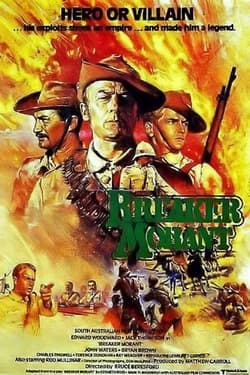
Breaker Morant and the country that adopted its scapegoat
Bruce Beresford's 1980 courtroom drama made an English-born soldier into an Australian martyr, and the picture's argument about empire has outlived its historical certainties.
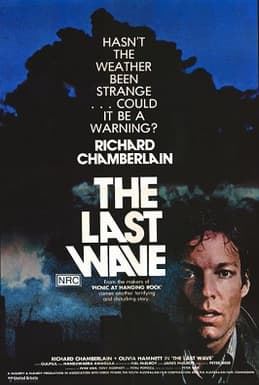
The Last Wave and the rain Sydney could not explain
Peter Weir's 1977 film puts a corporate lawyer in a drowned city and asks what a settler place owes to the ground and weather beneath it.
Rolf de Heer keeps handing the film to whoever gets left out
Across forty years Rolf de Heer never settled on a style, because his real signature was never visual; it was a decision about who gets to hold the camera.