Babyteeth and the dignity of falling apart in public
Shannon Murphy's debut refuses to tidy its grief, and the mess is exactly where the film finds its nerve.

I saw Babyteeth in early March, in a cinema that would close eleven days later. I did not know that at the time. Nobody did, or rather, everybody almost knew it but was still performing the motions of not-knowing, the way you keep setting the table when you can smell smoke. The film ended and I walked out into a foyer full of hand sanitiser dispensers that had not been there the week before, and I thought: something is about to change. Not because of the film, exactly, but because the film had already described the feeling. That sensation of being inside a life that is about to become a different life, and having no say in the transition.
Shannon Murphy’s debut is a film about dying, but it does not behave like one. It does not follow the template. You know the template: the diagnosis, the brave face, the bucket list, the hospital scene with the tubes and the pale light, the death itself rendered as a kind of spiritual graduation. Babyteeth knows this template exists and it is not interested. What it wants instead is the mess around the dying, the way a terminal diagnosis does not cancel out desire or stupidity or the impulse to get a terrible haircut. Milla (Eliza Scanlen) is sixteen and she has cancer and she falls for Moses (Toby Wallace), a small-time drug dealer with a face tattoo and no clear plan for anything. The film does not ask you to approve of this. It asks you to watch.
The body that is still here
What Scanlen does with the role is something I keep trying to describe and keep failing at, or rather, I keep reaching for words like “brave” and “raw” and then pulling back because those words have been used so often for dying-girl performances that they have lost their edges. What I mean is something more specific. Scanlen plays Milla as a person who is still fully inside her body. She is not ethereal. She is not wise beyond her years. She is awkward and horny and impulsive and she makes choices that are clearly bad and she does not offer the audience a redemptive frame for any of it. There is a scene where she dances at a party, clumsy and joyful and visibly unwell, and the camera holds on her without editorialising. She is not dancing to prove something. She is dancing because she is alive and there is music.
I want to say this is rare. It should not be rare, but it is. Dying teenagers in cinema are almost always instruments of lesson. They exist to teach the adults around them about what really matters, to redistribute wisdom downward from the deathbed. Milla does not do this. She is selfish in the way that teenagers are selfish, which is to say she is selfish in the way that living people are selfish, and the film respects this enough not to sand it down.
Two parents drowning in a house with good furniture
Ben Mendelsohn and Essie Davis play Milla’s parents, Henry and Anna, and what they do in this film is extraordinary in its ordinariness. Henry is a psychiatrist. Anna is a former concert pianist. They have a nice house in a nice suburb and their daughter is dying and they are handling it the way real people handle things they cannot fix: badly, unevenly, with bursts of competence interrupted by long stretches of private collapse. Davis plays Anna as a woman whose composure has become a kind of architecture she lives inside, and watching it crack is not satisfying the way screen breakdowns are usually satisfying. It is just painful.
Mendelsohn is doing something I have not seen him do before, or not in this register. He plays Henry as a man who keeps reaching for the professional tools he uses with his patients and finding that they do not work on his own life. He medicates his wife. He analyses his daughter’s boyfriend. He performs fatherhood with a kind of desperate sincerity that is both moving and slightly absurd, and Murphy’s direction is generous enough to hold both of those qualities at once. There is a scene where he sits in his car in the driveway, just sitting, not going anywhere, and the film lets the shot run long enough that you feel the weight of what he is not doing. He is not going inside. He is not leaving. He is suspended between the two, and the car is the only space in his life where nobody needs anything from him.
Murphy’s refusal of the clean cut
The film is structured in chapters, each one named after a character or an idea, and this gives it a rhythm that is deliberately choppy. Murphy came from television (she directed episodes of Killing Eve) and you can feel that in the pacing, the willingness to cut a scene short, to drop you into a moment without establishing context and trust that you will catch up. But the effect is not slick. It is jagged. The chapter breaks work like the breath you take between crying and talking, that involuntary pause where your body resets just enough to keep going.
The colour palette is warm, almost overexposed. The house is full of golden light and polished surfaces, and Murphy shoots it the way you might photograph a room you are about to leave. There is a tenderness to the framing that never becomes sentimental because the camera is always aware that the warmth is temporary. Every domestic scene carries a double register: this is happening, and this will stop happening.
What I did not know yet
I keep coming back to the timing. I saw Babyteeth on a Wednesday afternoon in a half-empty cinema in Newtown. The film ended. I liked it. I walked home. Within two weeks the cinemas were closed, the borders were closing, and the phrase “social distancing” had entered the language like a new piece of furniture that did not fit anywhere but was suddenly in every room. I did not watch another film in a cinema for seven months.
Babyteeth is not a pandemic film. It was made before any of this. But it understood something about the texture of ending that I did not fully register until much later. The film knows that the approach of loss does not make the present more vivid or more meaningful in the way that books and greeting cards suggest. Sometimes it just makes the present louder. The colours are brighter because your nerves are frayed, not because you have achieved some philosophical clarity. Milla does not learn the meaning of life. She gets a tattoo and dyes her hair and falls in love with someone unreliable and goes to a party where she should not be, and the film holds all of this with a kind of fierce, unsentimental care that I find almost unbearable to think about now.
The mess is the point
What Babyteeth gave me, sitting in that cinema that was about to become a memory of itself, was permission to fall apart without narrative. Not every collapse has an arc. Not every grief resolves into wisdom. Sometimes the dignity is in the mess itself, in the fact that you kept wanting things and doing things and being ridiculous right up to the edge. Milla does not exit the film gracefully. She exits it alive, which is a different thing entirely, and the distinction matters more to me now than it did then, though I could not have told you why at the time.
I think about her dancing at that party. I think about her father sitting in the car. I think about the cinema closing and reopening and closing again, and all the films I watched on my laptop in the months that followed, and how none of them quite had the same nerve. Not better or worse, but Babyteeth arrived at a hinge, a moment when the world was still pretending to be one thing while becoming another, and the film had already described what that felt like. It felt like loving someone who is leaving. It felt like dancing anyway. It felt like a mess, and the mess was the whole point.

Mara writes essays. She came to film writing from a decade of literary criticism and still reaches, sometimes, for a novel before she reaches for a shot list. She lives in the inner north of Melbourne and does not explain which city that is.
MORE BY MARA DENG →
Australian women directors stopped waiting for permission and started making the difficult films
Kent, Murphy, Green, and Purcell made the films the industry did not ask for, and the films were better for not being asked.
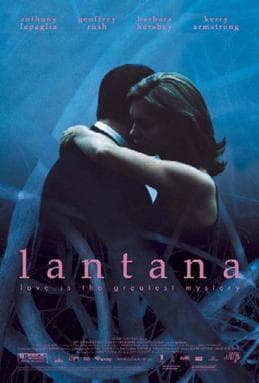
Rewatching Lantana in lockdown and noticing what the neighbours hear
Ray Lawrence's film is about what happens when suburban walls are too thin, and in lockdown every wall became too thin.

Babyteeth arrived in cinemas at exactly the wrong moment and deserved better
Shannon Murphy's debut deserved a packed cinema and instead it got a pandemic, a VOD pivot, and an audience that found it anyway.