Babyteeth arrived in cinemas at exactly the wrong moment and deserved better
Shannon Murphy's debut deserved a packed cinema and instead it got a pandemic, a VOD pivot, and an audience that found it anyway.
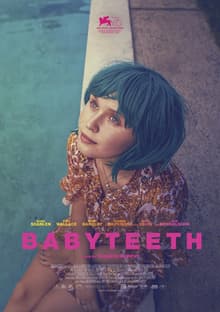
I saw Babyteeth at the Sydney Film Festival in June 2019, in a room of six hundred people who laughed and cried and walked out buzzing with the particular energy that follows a film you did not expect to hit that hard. Shannon Murphy’s debut had already screened at Venice, where it won the Marcello Mastroianni Award for Eliza Scanlen. It had Sundance heat. It had a cast that read like an embarrassment of riches: Scanlen, Ben Mendelsohn, Essie Davis, Toby Wallace. It had everything a small Australian film needs to break through except luck.
The theatrical release was set for January 2020 in Australia. Then it shifted to March. Then the cinemas closed.
Babyteeth opened on 23 January in limited release and managed a few weeks of modest but steady business before COVID-19 shut every screen in the country. By mid-March, the film was gone from cinemas. Not because audiences had finished with it, but because there were no cinemas left for audiences to attend. The pivot to premium VOD happened in April. You could rent it on iTunes and Google Play for $6.99, which is the correct price for a new release and an insult to everything the film is.
The film that needed a room
There are films that work fine on a television. There are films that work better on a television. Babyteeth is neither. It is a film built for the conditions of a cinema, not because of its visual scale, which is intimate, domestic, frequently handheld, but because of its emotional scale. It asks you to sit with a dying teenager’s decision to live recklessly, and the communal experience of sitting with that, of hearing other people breathe and shift and laugh at the wrong moments and cry at the right ones, is part of what the film is doing.
Watching Babyteeth alone on a laptop is not a lesser version of the experience. It is a different experience entirely. The film still works. Murphy’s direction is too precise and Scanlen’s performance is too immediate for the medium to defeat them. But something is lost when the laughter of a stranger two rows behind you is replaced by the silence of your own living room. The film’s tonal swings, its refusal to settle into grief or comedy or domestic drama, need the validation of a crowd. You need to hear someone else laughing at Mendelsohn’s face to know that it is all right to laugh, that the film is giving you permission, that the comedy and the dying are not in opposition.
What the numbers do not say
The Australian box office figures for Babyteeth are modest. Depending on which source you consult, it grossed somewhere between $1.2 million and $1.5 million domestically before cinemas closed. The VOD figures are not public. The international theatrical run, handled by Roadside Attractions in the US and IFC in various territories, was similarly curtailed. The total global gross will land somewhere under $5 million, a figure that, in normal circumstances, would mark a solid result for a film of this scale and ambition.
These are not normal circumstances. The question is not what Babyteeth earned but what it would have earned with a full theatrical window, and that question has no answer, only speculation. My guess, based on the festival response, the reviews (87 per cent on Rotten Tomatoes, 75 on Metacritic), and the strength of the cast, is that it would have performed in the range of The Nightingale or Hounds of Love: a genuine word-of-mouth film that builds over six to eight weeks and finishes at $3 to $4 million domestically. Not a blockbuster. Not a failure. A film that finds its audience through the oldest distribution mechanism in cinema: one person telling another person to go and see it.
That mechanism requires cinemas. It requires a window of time. It requires a version of cultural life that did not exist in Australia between March and June 2020, and the loss is not just financial. It is structural. Babyteeth was the kind of film that converts audiences. Not converts them to Australian cinema in the abstract, but converts them to the specific understanding that a film made in Melbourne with local actors and a first-time director can be as electrifying as anything Hollywood produces. Every person who would have seen Babyteeth in a cinema and did not is a conversation that did not happen, a recommendation that was not made, a ticket that was not bought for the next Australian film.
Eliza Scanlen, stranded
What frustrates me most is what the release did to Scanlen’s trajectory. She was coming off Sharp Objects and Little Women. She was twenty years old. Her Milla is one of the great Australian screen performances of the decade: furious, tender, physically precise, alive in a way that makes the character’s illness feel not like a plot device but like an outrage. The performance was there. The reviews noticed it. The awards bodies noticed it (AACTA, AIFTA, Venice). But the audience that would have carried her name forward, the non-industry audience, the people who decide whether an actor becomes a star or remains a critical favourite, that audience largely did not see the film in the context where it hits hardest.
Scanlen will be fine. She is talented enough and young enough that more opportunities will come, and they have. But the moment was there, in January 2020, for Babyteeth to announce her to the broadest possible audience, and the moment was taken away by a virus that had nothing to do with cinema and everything to do with the world in which cinema exists.
The broader damage
Babyteeth is not the only Australian film that lost its theatrical life to COVID. True History of the Kelly Gang was still in some cinemas when the shutdowns came. Relic, Natalie Erika James’s horror debut, had its release delayed entirely. Rams, the Jeremy Sims remake, was pulled mid-run. Each of these films had its own release strategy, its own audience, its own commercial logic, and each was disrupted in ways that the eventual VOD release could not fully repair.
The damage is cumulative. An industry that already struggles with theatrical visibility cannot afford to lose an entire season of releases. The films that were ready in early 2020 represent years of development, production, and post-production. They represent Screen Australia investment, state agency funding, private equity, personal risk. They represent careers. And they arrived at exactly the moment when the infrastructure that delivers them to audiences ceased to exist.
I am writing this in June 2020. The cinemas are beginning to reopen, in some states, with reduced capacity and social distancing and a release calendar that has been emptied of tentpoles. The hope is that the gap will create space for Australian films, that the absence of Marvel and Bond will mean screens for local titles. Maybe. But the films that needed those screens in March are not coming back. They have had their moment, and their moment was defined not by their quality but by a pandemic that treated all films, good and bad, with the same indifference.
Babyteeth deserved better. It deserved a packed house, a long run, an audience that found it the way audiences are supposed to find films: by showing up. Instead it got a pandemic, a $6.99 rental, and the quiet recognition that a great film and a successful film are not always the same thing, and that the distance between them is sometimes measured not in quality but in timing.
Bronte writes long-form criticism of Australian cinema and the international art films that feed into it. She was on the ground at Cannes in 2019 and has not entirely forgiven the festival for 2020. Patient with slow films; impatient with tidy ones.
MORE BY BRONTE HAUGHEY →
Babyteeth and the dignity of falling apart in public
Shannon Murphy's debut refuses to tidy its grief, and the mess is exactly where the film finds its nerve.
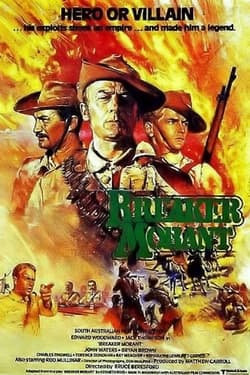
Breaker Morant and the country that adopted its scapegoat
Bruce Beresford's 1980 courtroom drama made an English-born soldier into an Australian martyr, and the picture's argument about empire has outlived its historical certainties.
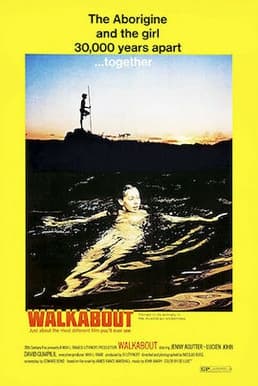
Walkabout is a British film about a country it never claims
Nicolas Roeg's 1971 picture is claimed as an Australian classic, though it was made by a Londoner, financed by two Americans and sold by 20th Century Fox. Its best argument is how little it pretends otherwise.