Australian women directors stopped waiting for permission and started making the difficult films
Kent, Murphy, Green, and Purcell made the films the industry did not ask for, and the films were better for not being asked.
I want to start with a correction. The phrase “women directors” already concedes something I do not want to concede, which is that the default state of directing is male and that women who direct are a subcategory. I am going to use the phrase anyway because the alternative is to pretend that the distinction does not exist, and it does exist, in funding bodies and festival programming and trade press coverage and the simple, grinding arithmetic of who gets to make a second film. But I want to be clear about the terms: the films I am writing about are not “women’s films.” They are films. The directors happen to be women. The qualifier is a fact of industrial history, not a description of the work.
With that said: when I look at the most formally adventurous, most thematically uncompromising Australian films of the last decade, a striking number of them were directed by women. This is not a coincidence and it is not a quota outcome. It is the result of specific directors making specific choices under specific constraints, and the choices they made are worth examining on International Women’s Day not because the directors are women but because the films are extraordinary.
Jennifer Kent and the refusal to repeat
Jennifer Kent made The Babadook in 2014 and the world decided what she was. She was a horror director. She was the person who had made the motherhood-as-monster film, the grief film with the top hat, the Sundance sensation that proved you could make a genuinely frightening film for under two million dollars in Adelaide. The world decided this and then waited for the next thing, which it assumed would be another horror film, probably with another metaphor, probably with another woman at the centre losing her grip on something domestic.
Kent made The Nightingale instead. Set in 1825 Tasmania, it is a film about colonial violence, about the brutalisation of an Irish convict woman and the genocide of Aboriginal Tasmanians, and it is one of the most confronting films ever made in this country. People walked out of the Venice premiere. People walked out of screenings in Australia. The film does not flinch from depicting things that most Australian films will not even acknowledge happened, and it does so with a formal control that makes the violence impossible to dismiss as provocation.
What interests me about Kent’s career is the refusal. She had every incentive to make another contained horror film. The industry was ready for it. The audience was ready for it. She refused, and made something that cost her years of development and tested the tolerance of every audience that encountered it, and the refusal is the point. The Nightingale exists because Kent decided that comfort was not her responsibility.
Shannon Murphy and the formal risk
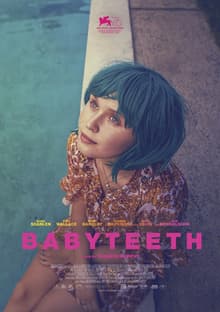
Shannon Murphy came from theatre and television and made Babyteeth in 2019, and the film is structured in a way that should not work. It is divided into titled chapters. It is about a terminally ill teenager who falls in with a small-time drug dealer. The premise sounds like the kind of film that aims for tears and arrives at sentiment. Babyteeth is not sentimental. It is chaotic and funny and angry and precise, and the performances, particularly Eliza Scanlen and Ben Mendelsohn, operate at a register that feels improvised even when it is not.
Murphy directed the film with a looseness that disguises how controlled it actually is. The camera moves like it is discovering things in real time. The editing cuts against expectation, leaving scenes early, arriving late, withholding the emotional beats that a more conventional director would have centred. The result is a film about dying that feels, paradoxically, more alive than almost anything else released in Australia that year.
What I admire about Murphy’s approach is the willingness to let the film be messy. Australian cinema has a long tradition of polished, well-crafted dramas that hit their marks and deliver their themes and leave you with a clear understanding of what you were supposed to feel. Babyteeth does not do this. It trusts you to find your own way through the chaos, and the trust is generous.
Kitty Green and the quiet accumulation
Kitty Green made documentaries before she made The Assistant in 2019, and the documentary training shows. The Assistant is a fiction film that behaves like a documentary. It follows a single day in the life of a junior assistant at a New York film production company, and the film’s argument about workplace complicity and institutional abuse is built not through dramatic confrontation but through the accumulation of small details. The fluorescent lighting. The early morning arrivals. The stains on the couch in the executive’s office. Green trusts the audience to understand what these details mean without ever stating it directly.
The discipline of The Assistant is remarkable. The film is eighty-seven minutes long. Almost nothing happens in the conventional sense. No one raises their voice. No one delivers a speech. The horror of the film is entirely structural, embedded in routines and hierarchies and the particular exhaustion of a person who knows something is wrong and has no mechanism to address it.
Green followed The Assistant with The Royal Hotel in 2023, set in outback Australia, and the shift from New York to the Northern Territory did not change her method. She is still interested in systems, in the way that environments produce behaviours, in the gap between what people say and what they permit. Both films are about women navigating spaces that were not designed for them, and both films refuse to provide the catharsis of confrontation.
Leah Purcell and the reclamation
Leah Purcell’s The Drover’s Wife: The Legend of Molly Johnson (2021) does something that almost no Australian film has attempted, which is to take a foundational text of the national canon, Henry Lawson’s 1892 short story, and rewrite it from the perspective of the people Lawson’s version erased. Purcell, a Goa-Gunggari-Wakka Wakka Murri woman, had already adapted the story for the stage. The film version expands the scope and sharpens the argument.
The result is a western that is also a corrective, a genre film that interrogates the genre it inhabits. Purcell directed, wrote, produced, and starred in it, and the film’s anger is not decorative. It is structural, woven into the landscape, the framing, the way the camera looks at country that has been stolen and renamed and mythologised into someone else’s story.
Natalie Erika James and the architecture of dread
Natalie Erika James made Relic in 2020, her first feature, and the film does something precise with the haunted house genre. The house in Relic is not haunted by ghosts. It is haunted by dementia, by the slow deterioration of a grandmother’s mind, and the horror is architectural. Rooms shift. Corridors narrow. The house becomes a physical manifestation of a mind that is losing its own floor plan.
James, who is of Japanese-Australian heritage, drew on her own grandmother’s experience with Alzheimer’s, and the personal origin gives the film a specificity that lifts it beyond genre exercise. The final sequence, in which a granddaughter peels away layers of her grandmother’s skin to reveal something underneath, is both grotesque and tender, and the tenderness is what stays with you.
The films are the argument
I could frame this essay as an argument about representation, about the need for more women behind the camera, about funding equity and festival parity and the statistics that demonstrate ongoing disparity. These arguments are real and important and I am not dismissing them. But they are also arguments about the industry, and the industry is not what moves me when I think about these directors.
What moves me is the work itself. Kent chose historical violence over commercial repetition. Murphy chose formal disorder over polished convention. Green chose accumulation over confrontation. Purcell chose reclamation over deference. James chose architecture over jump scares. Each of these choices was a risk, and each risk produced a film that expanded what Australian cinema could be.
The common thread is not gender. The common thread is difficulty. These directors chose the harder version of every film they made, and the difficulty is not incidental to the quality. It is the source of it. The films are better because they are difficult, because they refused the comfortable version, because they were made by people who understood that the comfortable version would be funded more easily and received more warmly and forgotten more quickly.
That is the argument. Not that women should direct more films, though they should. Not that the industry should fund them equally, though it should. The argument is simpler than that: these are among the best Australian films of the last decade, and they exist because the people who made them did not wait for the industry to ask for them.
Mara writes essays. She came to film writing from a decade of literary criticism and still reaches, sometimes, for a novel before she reaches for a shot list. She lives in the inner north of Melbourne and does not explain which city that is.
MORE BY MARA DENG →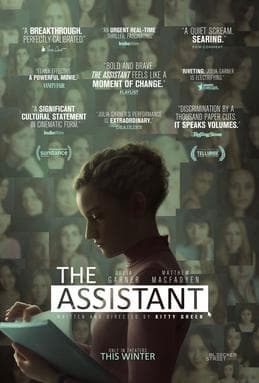
Kitty Green keeps making films about women watching men decide
Green's camera sits where her protagonists sit: on the edge of the room, seeing everything, authorised to do nothing about it.
Australian women on screen in 2023 were allowed to be difficult and the work was better for it
The year's strongest Australian screen work gave women permission to be angry, messy, cruel, and specific, and the camera did not flinch.
Babyteeth and the dignity of falling apart in public
Shannon Murphy's debut refuses to tidy its grief, and the mess is exactly where the film finds its nerve.