Kitty Green keeps making films about women watching men decide
Green's camera sits where her protagonists sit: on the edge of the room, seeing everything, authorised to do nothing about it.
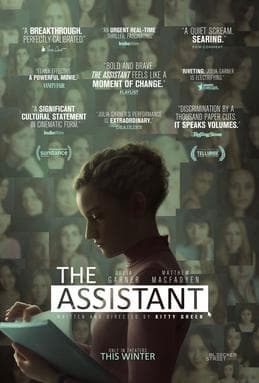
There is a particular kind of exhaustion that comes from watching someone else have power over your day. Not dramatic power, not the kind that announces itself with a slammed door or a raised fist, but the low, grinding power of someone who controls the temperature of the room you are sitting in. Kitty Green makes films about this exhaustion, and what startles me every time I return to her work is how precisely she locates it in the body. Her characters do not collapse. They stiffen. They keep working. They absorb one more thing, and then one more, and then the film is over and you realise that the accumulation was the plot.
The Assistant came out in 2019. The Royal Hotel came out in 2023. The two films are set in different countries, different industries, different registers of threat. One takes place in a sleek Manhattan office where a junior employee (Julia Garner) spends a single day processing the evidence of her boss’s predation. The other takes place in a pub in remote South Australia where two backpackers (Jessica Henwick and Julia Garner again) pull pints for men who regard them as part of the amenities. The settings could not be more different. The power dynamics are identical.
The geometry of not being asked
What Green understands, and what makes her work feel so specific, is that power does not need to be violent to be total. In The Assistant, Jane (Garner) sits at a desk in a dim anteroom outside her boss’s office. She answers phones. She arranges car services. She wipes down the couch. The boss is never shown, never named, and the film does not need to show or name him because his presence saturates every frame. Jane knows what is happening in that office. Everyone in the building knows. The knowledge circulates through the space like air conditioning: invisible, ambient, controlled by someone else.
Green’s camera sits where Jane sits: low, peripheral, facing the door that keeps opening and closing. The framing is a formal argument about position. Jane is not at the centre of the story because she is not at the centre of the power structure. She is at its edge, processing its outputs, and the film refuses to promote her to a position of narrative agency she does not actually occupy. This is what makes The Assistant so difficult to watch and so difficult to dismiss. It does not give you the satisfaction of a confrontation. Jane goes to HR. HR talks her out of it. She goes back to her desk. The couch needs wiping down again.
The pub at the end of the world
The Royal Hotel transposes this geometry to the Australian outback, and the shift in setting reveals just how portable Green’s concerns are. Hanna (Henwick) and Liv (Garner) arrive at a remote pub to work a stint behind the bar. The publican, Billy (Hugo Weaving), is alternately charming and menacing, sometimes within the same sentence. The regulars are men who drink steadily and regard the barmaids with an entitlement that is partly sexual, partly territorial, and entirely unremarkable to everyone except the two women serving them.
The film’s engine is not a single act of violence but the sustained negotiation of proximity. How close is too close. Which jokes you laugh at. When to pour another round and when to cut someone off, knowing that cutting someone off changes the room in ways you cannot control. Hanna watches everything with a wariness that Henwick plays beautifully, a kind of full-body attentiveness that looks like calm but is actually vigilance. Liv, by contrast, tries to manage the situation by participating in it, drinking with the men, matching their energy, as though the threat might dissolve if she can make herself legible to them on their own terms.
Green does not judge either strategy. She observes both with the same patient, slightly flattened gaze that characterised The Assistant. What interests her is not which woman gets it right but the fact that both are performing a constant calculation about safety that the men around them never have to make.
Emotional labour as plot structure
I keep thinking about the work these women do in Green’s films. Not the formal work, though that is present too, the photocopying and the glass-washing and the spreadsheet-formatting. I mean the other work. The labour of managing someone else’s mood. The labour of reading a room for threat while appearing relaxed. The labour of smiling at someone who has just said something that made your skin crawl, because the alternative to smiling is a confrontation you are not authorised to win.
This is not a metaphor in Green’s cinema. It is the literal content of the scenes. Her films are built from these micro-transactions: the email that goes unanswered, the hand that stays on the bar a beat too long, the question that is not really a question. Each one is small enough to be dismissed individually. Taken together, they describe a system, and the system is the subject.
What makes Green’s approach so effective is her refusal to escalate. Other filmmakers would build toward a climax, a confrontation, an eruption of the violence that has been simmering. Green does not do this, or rather, she does it so quietly that you might miss it. In The Assistant, the climax is Jane sitting back down at her desk. In The Royal Hotel, the climax is a night that goes wrong in ways that feel both inevitable and ambiguous. Neither film gives you the release of a clear resolution. The systems these women navigate are still running when the credits roll.
The same room, different wallpaper
What strikes me most when I watch these two films together is how little the setting matters. The Manhattan office and the outback pub are aesthetically opposite: one is glass and fluorescent light, the other is corrugated iron and afternoon sun. But the architecture of power is the same. In both spaces, a man controls the room. In both spaces, a woman does the work of maintaining the room’s functioning while absorbing its hostility. In both spaces, the woman’s awareness of what is happening is treated as irrelevant by the structure that surrounds her.
Green grew up in Australia and has spoken about how the culture of the outback pub informed her understanding of gendered space. But The Assistant proves the point is not regional. The conditions she describes are not about the Australian landscape or the American workplace. They are about what happens when one person holds power and another person holds the knowledge of what that power does, and the two are not the same person.
Watching as a mode of survival
I have watched both films more than once, which is not something I say to demonstrate commitment. I say it because each rewatch changes the balance of what I notice. The first time through The Assistant, I watched Jane. The second time, I watched the other assistants, the ones who have been there longer, who have already absorbed what Jane is only beginning to understand. Their faces carry a competence that is also a kind of scar tissue. They know. They stay. The reasons they stay are economic, professional, personal, and the film does not reduce them to a single explanation.
Green’s cinema is about watching, but it is also about what watching costs. Her protagonists see everything and are changed by the seeing, and the films track this change with a precision that feels almost clinical. There is no catharsis. There is no moment where the system cracks open and the light gets in. There is only the accumulation, the record, the evidence arranged on the desk or gathered behind the bar, and the quiet, furious patience of women who know exactly what they are looking at and cannot make anyone else look too.

Mara writes essays. She came to film writing from a decade of literary criticism and still reaches, sometimes, for a novel before she reaches for a shot list. She lives in the inner north of Melbourne and does not explain which city that is.
MORE BY MARA DENG →
Australian women on screen in 2023 were allowed to be difficult and the work was better for it
The year's strongest Australian screen work gave women permission to be angry, messy, cruel, and specific, and the camera did not flinch.
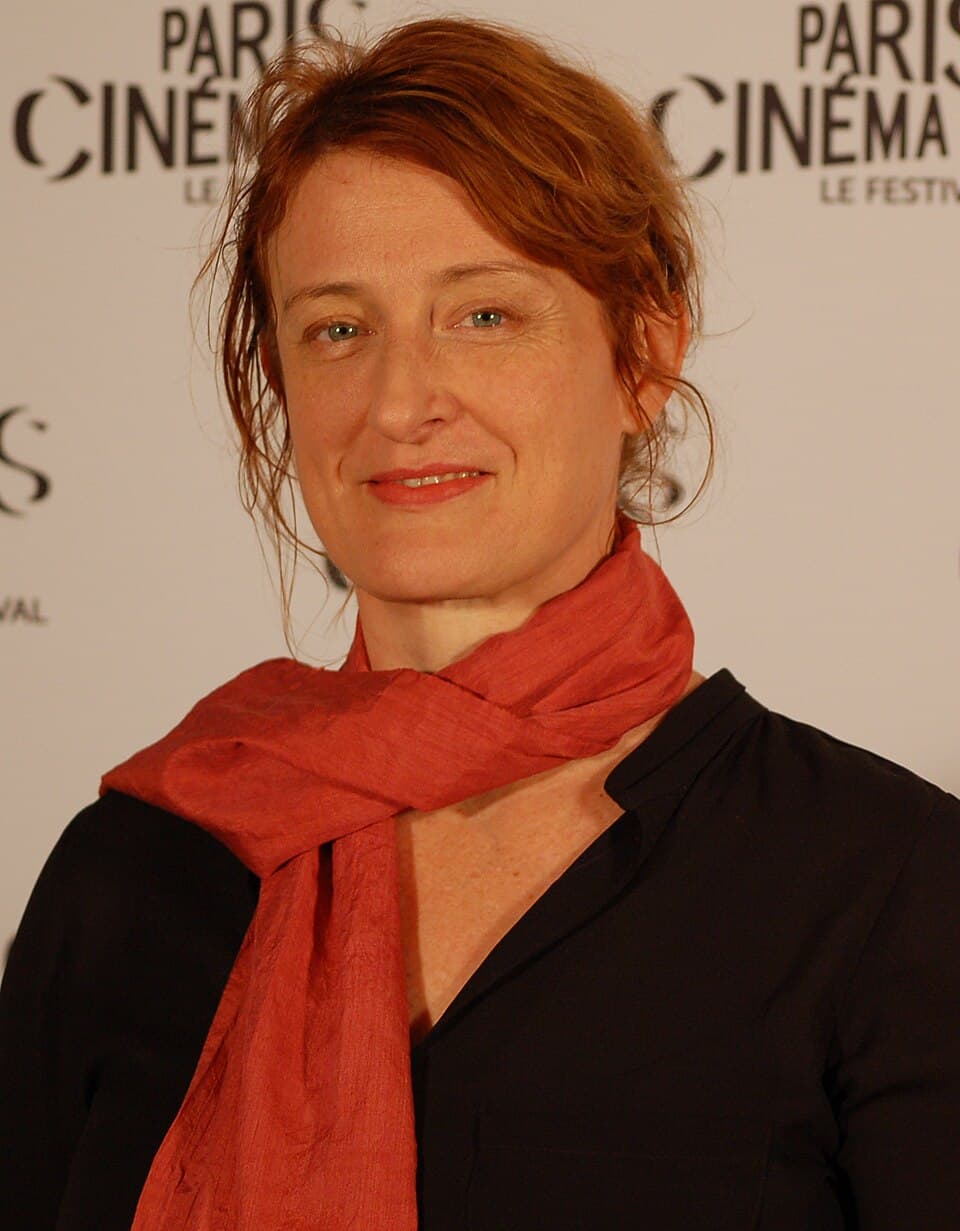
Australian women directors stopped waiting for permission and started making the difficult films
Kent, Murphy, Green, and Purcell made the films the industry did not ask for, and the films were better for not being asked.
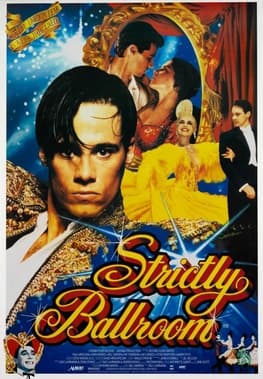
Strictly Ballroom is a film about who is allowed to teach the steps
Baz Luhrmann's 1992 comedy is sold as a story about dance. It is also a story about an Australian champion who has to be taught his own steps by a Spanish-Australian family in their own house.