Apples Never Fall proves that Liane Moriarty adaptations work until the last episode
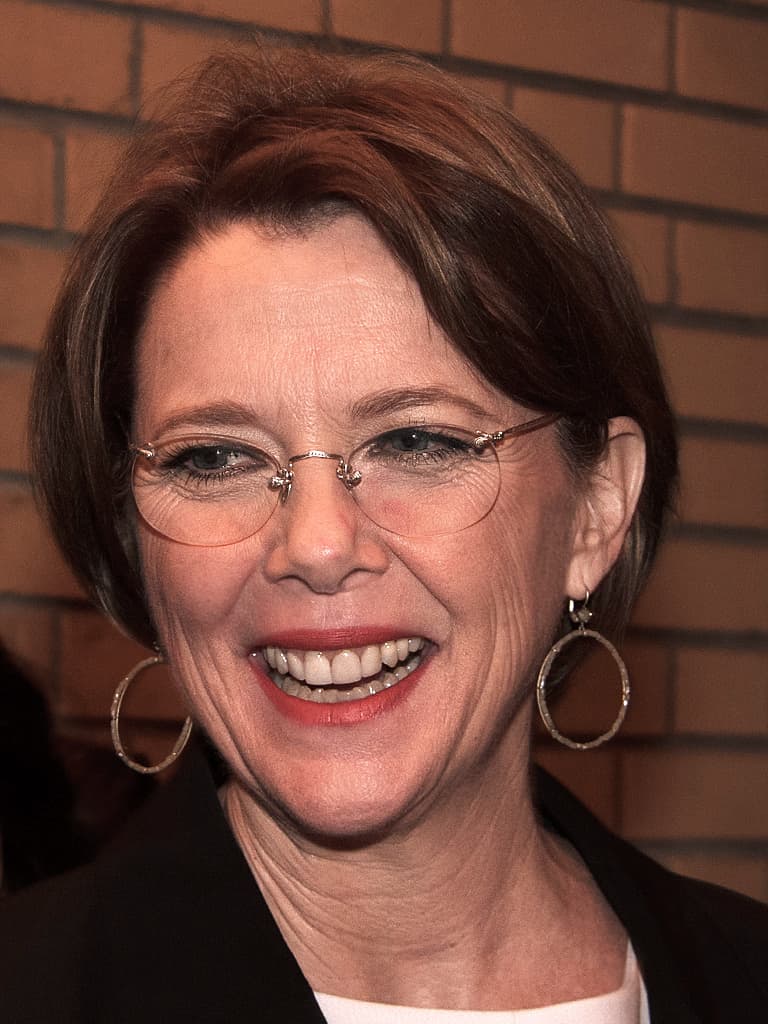
Annette Bening disappears in suburban Australia, the family fractures on cue, and the final episode does what every Moriarty adaptation does: it explains too much.
The Liane Moriarty adaptation has become its own subgenre. You know the structure by now. A group of affluent (or affluent-adjacent) Australians live in a community that appears pleasant. Something violent or mysterious happens. The community fractures along existing fault lines that the violence merely reveals. Everyone has a secret. The secrets are revealed in a sequence calibrated to sustain seven episodes of television. The final episode explains everything, and the explanation is always less interesting than the mystery.
Apples Never Fall follows this template with the fidelity of a cover band playing the hits. Joy Delaney (Annette Bening) disappears. Her husband Stan (Sam Neill) becomes the obvious suspect. Their four adult children, each carrying a distinct grievance and a distinct theory, circle the investigation like satellites losing orbit. A mysterious young woman named Savannah (Essie Randles) arrived at the Delaney home weeks before Joy’s disappearance, and her presence catalysed something that the family had been carefully not addressing for years. The setup is efficient. The middle episodes are absorbing. The finale is a problem.
But we will get to the finale.
The Moriarty machine
Moriarty has published eleven novels, and three have been adapted for screen before Apples Never Fall: Big Little Lies (HBO, 2017), Nine Perfect Strangers (Hulu, 2021), and Three Wishes (which was optioned but has not materialised). The pattern established by Big Little Lies is now the industry standard for Moriarty adaptations: international cast, Australian setting, mystery structure, and a budget that allows the production to look expensive without looking extravagant.
Big Little Lies worked because the adaptation (by David E. Kelley, directed by Jean-Marc Vallee) understood that the mystery was secondary to the relationships. The show was about five women in Monterey, and the murder was the frame, not the painting. The first season, particularly, used the mystery as pressure applied to characters who were already under strain, and the result was television that felt urgent and specific even when the plot mechanics were conventional.
Nine Perfect Strangers worked less well because it inverted the ratio: too much plot, not enough character, and a finale that required Nicole Kidman to deliver exposition while wearing a kaftan. The show was watchable, partly because Kidman is always watchable, but it collapsed under the weight of its own reveal. The twist explained the mystery and in doing so made the mystery feel mechanical.
Apples Never Fall lands between the two, closer to Big Little Lies in quality but repeating the structural error of Nine Perfect Strangers in its final hour.
Bening commits
Annette Bening is doing extraordinary work here, and the show knows it. The early episodes, which alternate between the present-day investigation and flashbacks to Joy’s life before the disappearance, give Bening the space to build a character who is both sympathetic and opaque. Joy is a retired tennis coach, a mother of four, a wife of forty years, and a woman who has spent decades managing other people’s emotions at the expense of her own. Bening plays this with a physical precision that is specific to actors who have done stage work for decades: the way she holds her shoulders, the way she smiles slightly too long, the way she occupies a kitchen as if she has been assigned to it.
The Australian accent is good. Not perfect, not the kind of accent that a linguist would certify, but good enough that it disappears after two episodes, which is all you can reasonably ask. Sam Neill, who is actually from New Zealand but has been playing Australians for so long that the distinction has become academic, is solid as Stan. He is doing a quieter version of what he did in The Twelve: a man whose calmness reads as either innocence or concealment, and the show lets you choose.
The children and their grievances
Jake Lacy, Alison Brie, Conor Merrigan-Turner, and Essie Randles play the four Delaney children, and each gets roughly one episode of focus. This is efficient storytelling and also its limitation. Troy (Lacy) is the overachieving eldest with a marriage in distress. Brooke (Brie) is the prickly one with a failed tennis career. Logan (Merrigan-Turner) is the gentle one whom the family underestimates. Amy (Randles) is the youngest, whose relationship with the mysterious Savannah becomes the show’s most interesting subplot.
The problem is that four children and four grievances in seven episodes means that none of the grievances get the room they need. Troy’s marriage troubles feel sketched. Brooke’s resentment about her tennis career is stated more than explored. Logan is underwritten in a way that feels like a production decision rather than a character choice. Amy fares best, partly because Randles is the strongest performer among the siblings and partly because her storyline connects most directly to the central mystery.
The suburb and the accent
The show is set in an unnamed Australian suburb and filmed in various locations around Sydney’s Northern Beaches. The production design does a competent job of building a world that feels specifically Australian: the houses, the gardens, the tennis courts, the particular quality of light that hits a Sydney suburb at 5pm in autumn. It is less successful at integrating the international cast into that world. Bening and Neill manage it. Lacy and Brie are doing their best, but there are moments, particularly in group scenes, where the accent work creates a slight uncanniness that pulls you out of the drama.
This is the persistent tension of the Moriarty adaptation model. Moriarty’s novels are set in Australia, among Australians, and the specificity of the setting matters to the stories. The adaptation model requires international stars to secure financing and platform interest. The result is a show set in Australian suburbia where half the cast is performing Australian-ness as a learned skill, and the other half is living it. The seam is usually visible.
The finale problem
Here is where the pattern completes itself. For six episodes, Apples Never Fall is a show about a family under pressure, and the mystery of Joy’s disappearance is the pressure. You watch because you care about these people, because Bening’s performance has made Joy real enough that her absence has weight, because the family dynamics are specific enough to feel true even when the plot mechanics are familiar.
Then the seventh episode explains everything. The mystery is resolved. The explanation is logical, coherent, and completely deflating. Every Moriarty adaptation does this. The reveal is always smaller than the mystery it resolves, because the mystery was never really about what happened. It was about what the characters felt while not knowing what happened. The explanation removes the uncertainty, and without the uncertainty, the emotions that the uncertainty produced feel retroactively diminished.
Honestly, I am not sure this is a solvable problem. Moriarty’s novels do the same thing: the endings explain, and the explanations are adequate but never revelatory. The adaptations inherit this structural weakness and cannot fix it, because fixing it would mean changing the ending, and changing the ending would mean the adaptation is no longer faithful, and faithfulness is the contract.
Is the model sustainable
Three adaptations in seven years, each with diminishing returns. Big Little Lies was a cultural event. Nine Perfect Strangers was a show people watched. Apples Never Fall is a show people watched some of. The trajectory suggests that the Moriarty adaptation, as a format, is approaching its natural ceiling. The audience knows the structure now. The mystery-in-suburbia setup is familiar. The international-cast-in-Australia model has been done enough times that the novelty has worn off.
What remains is the writing and the performances, and on those terms Apples Never Fall mostly delivers. Bening is worth watching. The middle episodes are genuinely suspenseful. The family dynamics are textured and specific. It is a good show that becomes a disappointing show in its final hour, and if you have seen a Moriarty adaptation before, you will know exactly when the disappointment begins.

Rhys watches more television than is healthy and writes about it with a dryness that tips occasionally into cruelty. His favourite ABC drama is the one the ABC just cancelled, whichever that happens to be.
MORE BY RHYS TAVITA →
Rake was never about the cases
Eight years and five seasons of Cleaver Greene taught Australian television that you can keep a man unredeemed, and that audiences will follow him anyway.
Kath & Kim mocked the suburbs, then sat down in the back yard
The ABC's great suburban satire has a tell. Almost every episode ends with its two leads sitting in a back yard, and that is where the show admits it likes them.
Return to Paradise imports the cosy-crime formula and survives the flight
The ABC took Britain's most reliable comfort-crime export, moved it to a NSW beach town, and somehow the formula arrived intact.