ACMI reopened and the new exhibition treats the screen as a surface worth touching
The renovation turned a film museum into a museum about looking, and the difference is worth noticing.
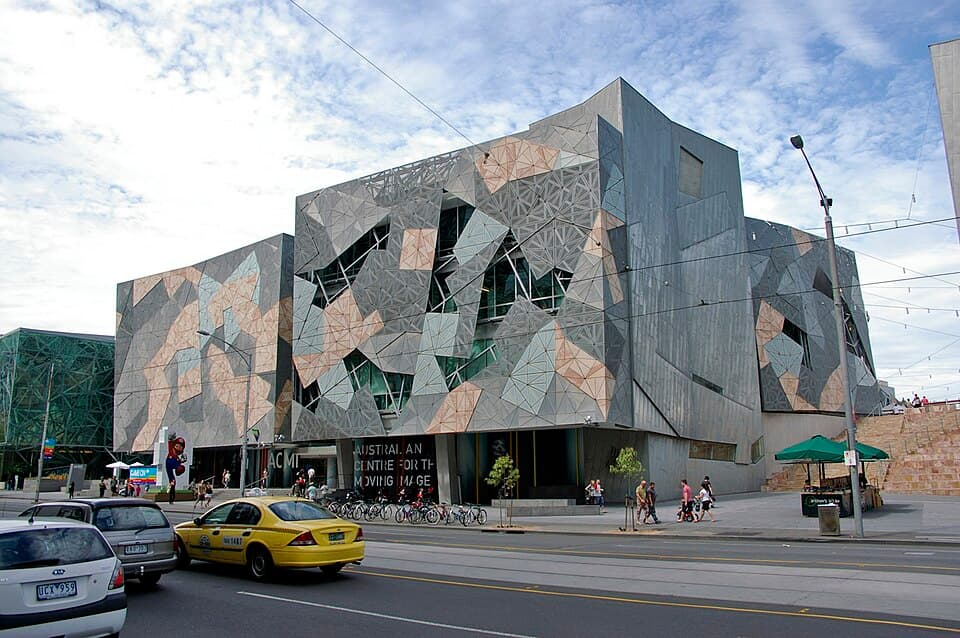
ACMI closed for renovation in mid-2019, which means it was shut for the entirety of 2020, which means it missed everything. It missed the year when Australians were confined to their homes watching more screens than at any point in human history while the institution dedicated to understanding screens sat empty on Federation Square, its galleries gutted, its collections in storage. The timing was accidental and the irony was enormous, and I thought about it constantly during Melbourne’s long lockdown: the one place in this city built to help us think about our relationship to moving images was closed during the year that relationship became the whole of daily life.
Now it is open again. I went on a Wednesday morning in late March, two weeks after the public reopening, expecting scaffolding dust and soft-launch apologies. What I found instead was a building that had been rethought from the ground up, and a permanent exhibition, The Story of the Moving Image, that makes a genuinely ambitious argument about what a screen museum should be.
The old ACMI and the new one
The old ACMI, which opened in 2002, was a good museum with a structural problem: it did not quite know what it was. The exhibitions were often excellent, the programming was adventurous, and the building itself was a generous public space in a city that values generous public spaces. But the permanent collection felt like a series of adjacent rooms rather than a single sustained thought. You would walk from a display about early cinema to a display about video games to a display about digital art, and the connections between them were implied rather than argued. The museum trusted you to make the links yourself, which is flattering but also a way of avoiding the harder curatorial question: what holds all of this together?
The renovation answers that question. The new permanent exhibition is organised around a single idea, which is that screens are not neutral surfaces. They shape how we see, what we remember, and who we understand ourselves to be. This sounds abstract, and in a lesser museum it would be abstract, but ACMI grounds it in objects. There are pre-cinema devices, zoetropes and magic lanterns and phenakistoscopes, displayed not as curiosities but as evidence that the human desire to animate the still image is older than photography, older than electricity, older than any of the technologies we associate with “screen culture.” There are costumes and props from Australian films. There are video game consoles and interactive installations and a section on virtual reality that manages to be thoughtful rather than gimmicky.
The Lens
The most interesting design decision is the Lens, a small handheld device that visitors collect at the entrance and use throughout the exhibition. You hold it against certain objects and it records them to a personal digital collection that you can access later online. The technology is not complicated. The idea behind it is.
What the Lens does is turn the visit into an act of curation. You are not just looking at the exhibition; you are selecting from it, building your own version of it, deciding what matters to you. This is a statement about how screen culture works: it is not a canon handed down from institutions. It is a personal history assembled from fragments, shaped by taste and accident and whatever happened to be in front of you on a particular Wednesday morning. The museum is making an argument about subjectivity, and it is making it through a device rather than through a wall text, which is more honest.
I am not sure the Lens works perfectly. Some visitors seemed confused by it. A few gave up and left it in their pockets. The technology is responsive but not seamless, and there were moments when the interaction felt like an interruption rather than an enhancement. But the ambition is right, and ambition that slightly overreaches is preferable to caution that achieves exactly what it sets out to achieve and nothing more.
Screen culture as heritage
The deeper question that the renovation raises is about value. What does it mean for a country to build a museum about screens? Not a museum that uses screens, which is what most museums are now, but a museum whose subject is the screen itself, its history, its influence, its presence in daily life.
Australia has always had an uncertain relationship with its own screen culture. We produce films and television of genuine quality and then forget about them with a speed that would be impressive if it were not depressing. Ask someone to name five great Australian films and they will usually manage three before falling back on Crocodile Dundee, which is not a criticism of Crocodile Dundee but a reflection of how shallow the popular memory runs. ACMI exists to deepen that memory, to give Australian screen culture an institutional home where it can be studied and celebrated and, most importantly, kept.
The renovation makes this mission more visible. The old ACMI could feel like a place you went to see exhibitions about other things that happened to be shown on screens. The new ACMI is a place about looking itself, about the act of watching and being watched, about what it means to live in a culture where screens are not tools but environments. Whether you find this idea exciting or exhausting probably says something about your relationship to screens, which is itself the kind of question the museum wants you to ask.
What the building says
I want to say something about the physical space, because it matters. The architects, Design Office, have opened the ground floor to Federation Square in a way that makes the museum feel less like an institution and more like an extension of the public realm. You can walk through it without paying, without committing, without deciding whether you are here for culture or shelter or a cup of coffee. This permeability is deliberate. It says: screen culture is not something that happens behind a ticketed barrier. It is something you are already inside.
The gallery spaces themselves are darker and more carefully controlled than before, which suits the material. You are looking at screens, and screens need darkness. The lighting design is precise, moving from the warmth of the pre-cinema rooms to the cooler tones of the digital galleries, and the transitions between sections are handled with enough care that you do not feel herded.
The critical assessment
I left ACMI after three hours, which is longer than I spend in most museums, and I left wanting to come back, which is the test. The renovation is not perfect. Some of the interactive elements feel like they belong in a science centre rather than a cultural institution. The Australian content, while present and well-presented, could be deeper; I wanted more on local television history, more on the specific conditions of Australian screen production, more on the economic and industrial structures that shape what gets made and what gets lost. The gift shop is too large and the cafe is too small, which is a complaint I have about every museum on earth.
But the ambition is real. ACMI has gone from being a good museum with an identity problem to being a genuinely distinctive institution with a clear argument about what it is and why it exists. In a country that tends to treat screen culture as a product rather than a heritage, that argument matters. The renovation cost $40 million and took two years, and what it produced is the closest thing Australia has to a statement about the cultural significance of the images that surround us. I think the statement is mostly right. I think the building earns it.

Bronte writes long-form criticism of Australian cinema and the international art films that feed into it. She was on the ground at Cannes in 2019 and has not entirely forgiven the festival for 2020. Patient with slow films; impatient with tidy ones.
MORE BY BRONTE HAUGHEY →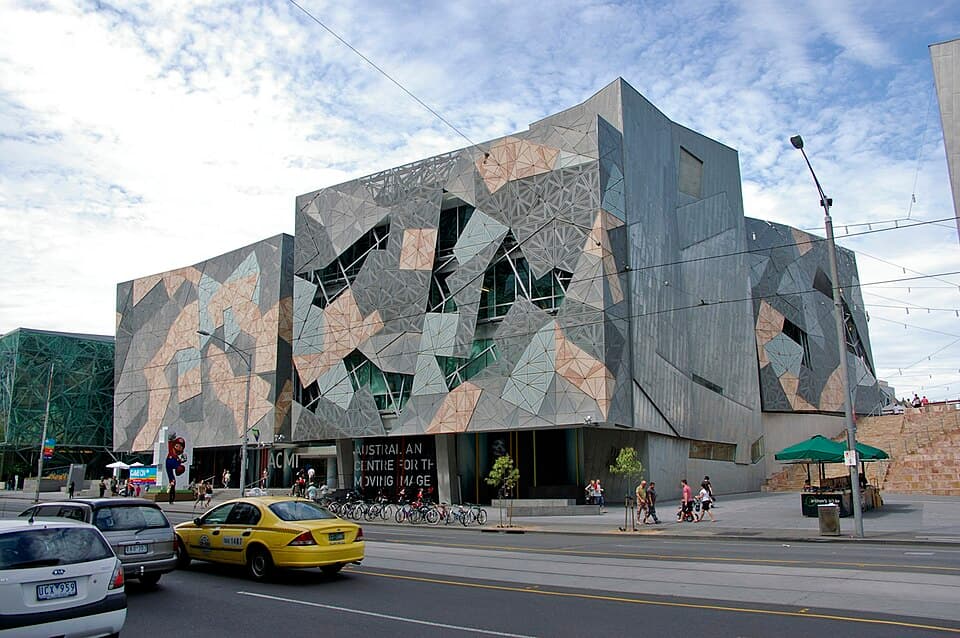
ACMI holds the memory that Australian cinema keeps forgetting to save
The museum on Fed Square is the only place in this country that treats Australian screen culture as something worth keeping, and the fact that it is the only one says everything.
The Plains watches a man drive home from work for three hours and earns every minute
David Easteal bolted a camera to a dashboard and recorded six months of a suburban commute, and the result is the most radical Australian film of the decade.
MIFF 2024 programmed for argument and the audience showed up ready
The 2024 programme leaned harder into difficulty than any MIFF in recent memory, and the sessions were fuller for it.