ACMI holds the memory that Australian cinema keeps forgetting to save
The museum on Fed Square is the only place in this country that treats Australian screen culture as something worth keeping, and the fact that it is the only one says everything.
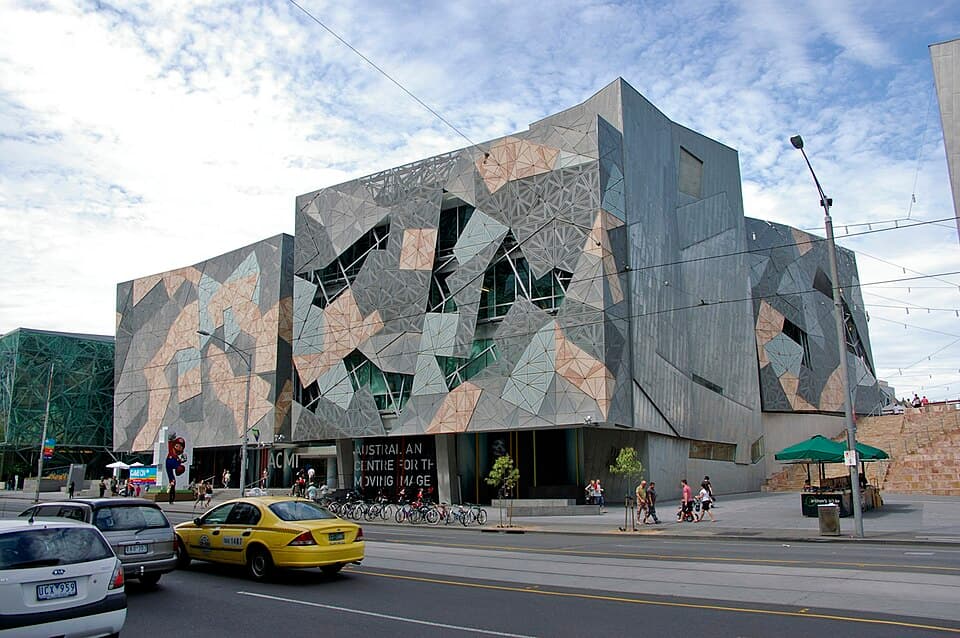
The first time I went to ACMI I was nineteen and had no particular reason to be there. I was in Melbourne for a weekend, it was raining, Federation Square was right there, and the building was free to enter. I walked in expecting the kind of museum experience where you look at things behind glass and read small plaques and leave feeling vaguely educated. What I got instead was a room full of screens playing fragments of Australian television and film that I had never seen, some of it decades old, some of it strange, all of it treated with the same care that an art gallery gives to paintings. There was a clip from a 1970s ABC children’s show that I watched for three minutes without understanding why I could not look away. Something about the grain of the footage, the colour of the sets, the quality of attention that the camera gave to a puppet made of felt. I stood there in a museum in Melbourne watching a puppet I had never heard of, and I thought: someone decided this was worth keeping. Someone fought to preserve this. And if they had not, it would simply be gone.
ACMI, the Australian Centre for the Moving Image, opened in 2002 and was, from the beginning, something Australia did not quite know how to categorise. Not a cinema, though it screens films. Not a gallery, though it exhibits art. Not an archive, though it holds collections. It is all of these things arranged around a single argument: that screen culture is a form of cultural heritage that deserves institutional protection.
This sounds obvious. It is not. Films are products. Television is content. Video games are entertainment. When they stop making money, they stop existing, or they exist only as titles in a database, things that people remember watching but can no longer find.
The 2021 redesign
ACMI closed for renovations in 2019 and reopened in 2021 with a new permanent exhibition called The Story of the Moving Image. I went back after the redesign and the difference was significant. The old ACMI had been, if I am honest, a bit scattered. Interesting things in rooms that did not always connect. The new ACMI is organised around a single narrative thread that runs from pre-cinema optical devices through early film, television, video games, and digital culture, and it does something that very few museums manage: it makes you understand why the history matters to the present.
There is a section on Australian cinema that includes original costumes, props, and production materials from films spanning decades. Items from Picnic at Hanging Rock (1975) sit near items from The Babadook (2014), and the proximity is not random. It is an argument about continuity. When you see a costume from a Peter Weir film and a storyboard from a Jennifer Kent film in the same room, you start to think about what connects them, what was passed down, what was lost and rediscovered.
The redesign also introduced the Lens, a personal device that visitors use to collect objects throughout the exhibition and build their own curated trail. What interests me is what it implies: that the relationship between a person and screen culture is personal and worth documenting. You do not just look at the exhibition. You build your own version of it. The museum treats your attention as a form of curation.
What streaming does not preserve
I think about ACMI most often when I am trying to find an Australian film on a streaming platform and discovering that it is not there. This happens constantly. Films that were released theatrically, reviewed, awarded, seen by hundreds of thousands of people, then simply removed from every platform. They exist as IMDB pages and fading memories and, if you are lucky, a DVD in a second-hand shop in Newtown.
Streaming services are not archives. Their libraries are shaped by licensing agreements and commercial logic, and when a film stops performing, it disappears. This is not malice. It is business. But for a national cinema as small as Australia’s, the disappearance of a title from streaming is often the disappearance of the film from public life entirely.
ACMI does not solve this problem, but it insists that the problem exists. Its collection includes materials that no streaming service would ever host: production documents, behind-the-scenes footage, oral histories with filmmakers, the unglamorous infrastructure of how films get made. A streaming service gives you the finished product. ACMI gives you the context, the early drafts, the rejected designs, the evidence that a film was not inevitable but contingent.
The NFSA and the question of enough
The other institution that holds Australian screen culture is the National Film and Sound Archive in Canberra. The NFSA is, by some measures, the more important body. Its collection runs to over three million items. It is the closest thing Australia has to a comprehensive record of its audiovisual history.
But the NFSA is in Canberra, which means most Australians will never visit it. It operates as a research institution, not a public-facing museum. It does essential work, cataloguing, digitising, storing, preserving materials that would otherwise decay, with funding that has been cut and restored and cut again in cycles that reflect the low priority governments assign to cultural preservation.
Between them, ACMI and the NFSA constitute essentially the entire institutional infrastructure for Australian screen heritage. Two institutions. One in Melbourne, one in Canberra. For a country that produces hundreds of films and thousands of hours of television every year, this is not a robust system. It is a minimal one, and it survives on the commitment of people who believe in it more than the funding suggests they should.
Walking through someone else’s memory
The last time I went to ACMI was in late 2025, on a weekday morning when the galleries were mostly empty. I found myself standing in front of a display about early Australian cinema, films from the 1900s and 1910s, the period when Australia was briefly one of the most productive film industries in the world. The Story of the Kelly Gang (1906), often cited as the world’s first feature-length narrative film, was made here. Australian cinema did not begin as a minor tradition. It began as a major one, and then Hollywood grew and the industry shrank and the memory of that early period faded into a fact that people mention at trivia nights without quite believing it.
Looking at fragments of those early films, I felt the weight of all the things that were not preserved. The films that decayed on nitrate stock. The television programs that were taped over. Every object in the museum is a survivor, and the gaps between the objects are as eloquent as the objects themselves.
The argument for keeping things
Most people do not walk into ACMI thinking about cultural preservation. They walk in because it is raining, or because a friend told them there is a good exhibition on. But what the museum does, quietly, is make the case that Australian screen culture accumulates meaning over time, that someone needs to be holding on to it when the streaming licences expire and the hard drives fail and the companies that made it no longer exist.
This is not a glamorous argument. It does not generate headlines. It does not win elections. But it is the argument that stands between Australian screen culture and forgetting, and right now, it is being made by two institutions, a handful of dedicated archivists, and a building on Federation Square that most people in this country have never entered. I think about that puppet I saw when I was nineteen, the felt one from the 1970s ABC show, and I think about the person who decided to keep the tape instead of recording over it, and I think: that single decision, that small act of preservation, is the reason I saw it at all. Everything we remember about Australian cinema is the result of someone choosing not to throw it away. Everything we have forgotten is the result of no one making that choice in time.

Mara writes essays. She came to film writing from a decade of literary criticism and still reaches, sometimes, for a novel before she reaches for a shot list. She lives in the inner north of Melbourne and does not explain which city that is.
MORE BY MARA DENG →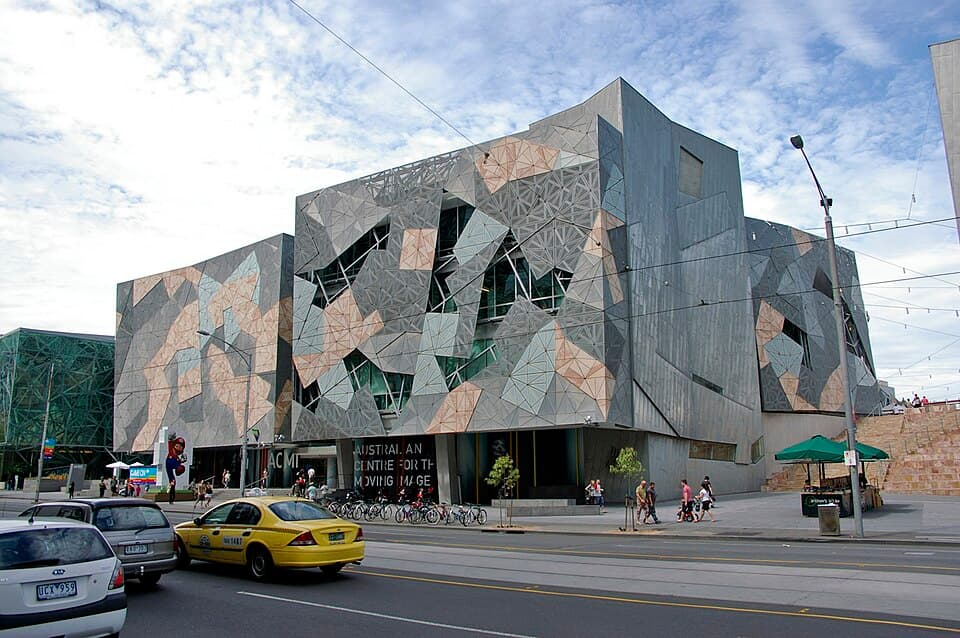
ACMI reopened and the new exhibition treats the screen as a surface worth touching
The renovation turned a film museum into a museum about looking, and the difference is worth noticing.
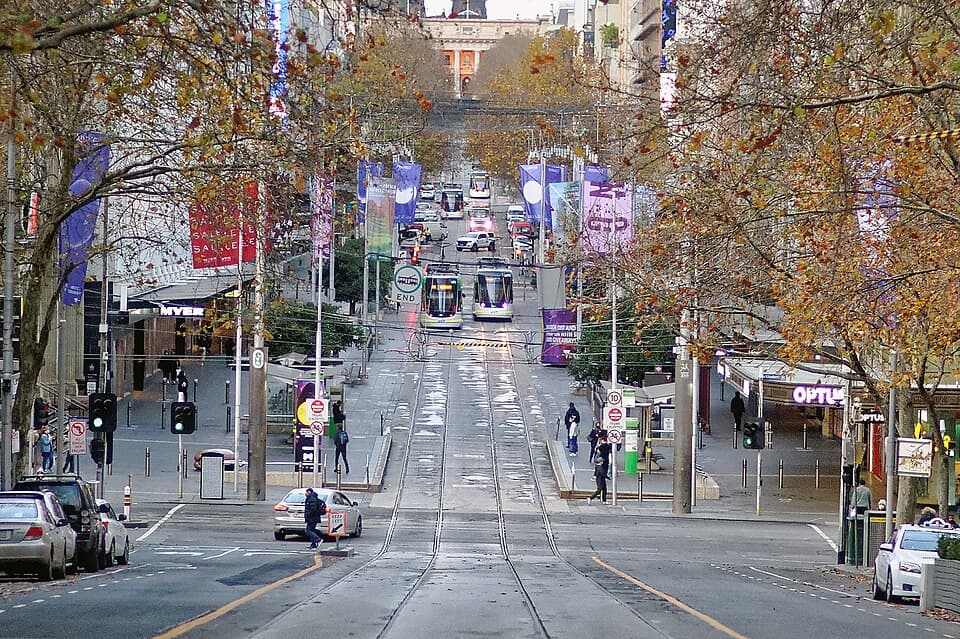
The empty cinema down the road
The Palace on Norton Street has its lights off, and I keep walking past it like it might change its mind.
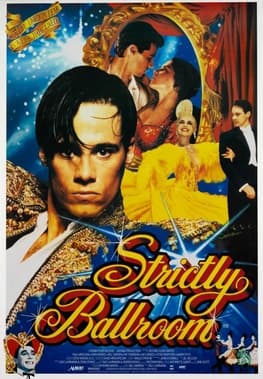
Strictly Ballroom is a film about who is allowed to teach the steps
Baz Luhrmann's 1992 comedy is sold as a story about dance. It is also a story about an Australian champion who has to be taught his own steps by a Spanish-Australian family in their own house.