The empty cinema down the road
The Palace on Norton Street has its lights off, and I keep walking past it like it might change its mind.
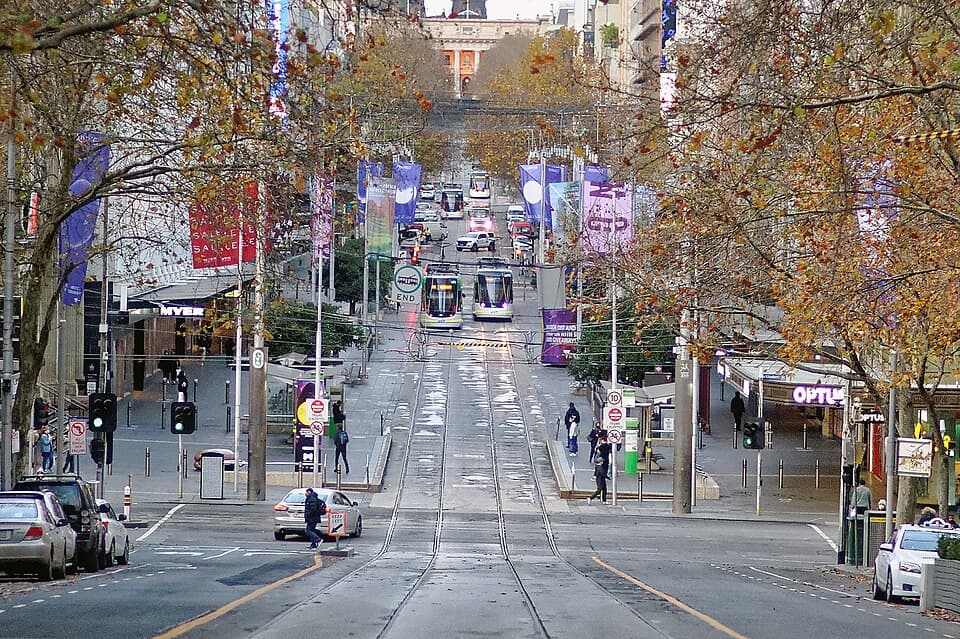
The Palace Cinema on Norton Street has its lights off. I know this because I walk past it every day, which is to say I walk past it on my one permitted outdoor exercise, which is to say I have restructured my entire daily movement around a building that is closed. The poster cases are still lit. They are showing Emma. and Onward and something with Gerard Butler, which I think came out in February but might have come out in a previous life. The posters have not changed in five weeks. Nobody is coming to change them.
I do not know why I keep walking past the cinema. Or rather, I do know, and the knowing is the embarrassing part. I walk past it because it is the closest thing I have to a ritual that involves leaving the house, and because some part of me, some not-small part, believes that if I just keep checking, the doors will be open and the lights will be on and a bored teenager will be tearing my ticket and I will walk down that carpeted corridor and sit in the dark and watch something, anything, even the Gerard Butler film, even a film I actively do not want to see, because the seeing is not the point. The going is the point.
The difference between watching and going
I want to say something precise here, so let me try. I have watched eleven films in the last three weeks. I watched them on my laptop, in bed, with the curtains drawn because the screen glare made the image unwatchable otherwise. I watched Portrait of a Lady on Fire and cried. I watched Parasite for the second time and noticed things I missed in the cinema. I watched a Claude Sautet film that a friend recommended and fell asleep twenty minutes in and woke up during the credits and felt guilty and watched it again the next day. I have not stopped watching films. Films are fine. Films are available. The infrastructure of watching has never been more accessible.
What I have lost is going to the pictures.
These are not the same activity, and I think the pandemic is going to make that distinction very clear, very quickly, to people who already knew it and to people who did not. Watching a film is a private act. You press play, you absorb the image, you pause when you need the bathroom, you check your phone during the slow parts (or you do not, but you could, and the option itself changes the contract). Watching a film at home is consumption. It is content delivery. It works.
Going to the pictures is something else. Going to the pictures is leaving the house with intention. It is buying a ticket, which is a small economic commitment that says: I have chosen this, I am here on purpose, the next two hours belong to this screen and not to my inbox. It is sitting in a room full of strangers who have made the same commitment. It is the particular silence of a cinema audience during a wide shot, which is not the silence of an empty room but the silence of a hundred people holding still at the same time. It is the shared flinch at a jump scare, the collective exhale after a long scene, the thing that happens when someone laughs and then someone else laughs and then suddenly the whole room is laughing and you are laughing too, not because the joke was that good but because laughter is contagious and a cinema is a petri dish for exactly that kind of contagion.
I am aware that “contagion” is the wrong word right now. I am using it anyway.
The body in the seat
My friend Lina, who is a psychologist and therefore someone I am leaning on more heavily than is probably fair, told me that what I am describing is “embodied ritual.” She said that the body remembers going to the cinema the way it remembers going to church or going to a grandparent’s house: as a sequence of physical actions (walk, queue, sit, look up) that produce a specific emotional state. The state is not available without the actions. You cannot shortcut it. You cannot replicate it by watching the same film on a different screen, just as you cannot replicate the feeling of church by reading the Bible in your kitchen.
I do not go to church. But I understand what she means.
The cinema is one of the last places where you sit in the dark with strangers and agree to feel something at the same time. Not a stadium, where the feeling is loud and performed and competitive. Not a restaurant, where the social unit is the table and the strangers are scenery. A cinema. Where the feeling is private but shared, internal but collective, where you cry and the person next to you does not see you cry but you both know that crying is allowed and is perhaps the point.
I miss that. I miss it the way you miss a person, which is to say I miss it in my body, in the specific muscles that know how to fold into a cinema seat and go slack.
What the closed door means
The Palace on Norton Street is not the best cinema in Melbourne. It is not even the best cinema on Norton Street (the Nova is better, technically, but the Nova is also closed, so the comparison is academic). The Palace has sticky floors and the sound bleeds between screens and the popcorn costs nine dollars for a small. I have seen mediocre films there. I have seen bad films there. I saw a film there once where the projector broke halfway through and they gave everyone a voucher and I went home and never used the voucher and I think it might still be in a drawer somewhere, expired.
None of that matters. What matters is the door, and the door is locked, and I keep walking past it.
I spoke to someone at the Palace’s parent company last week, for a piece I am not sure I will write (or this is the piece, maybe, the one I was not sure about). They said they did not know when cinemas would reopen. They said the phrase “when this is over” three times in twelve minutes. They said they were worried about the small independent cinemas that do not have the cash reserves to survive months of zero revenue. They said some of them would not come back.
The walk home
I walked past the Palace again this morning. The poster cases are still showing Emma. and Onward. A piece of paper taped to the glass says TEMPORARILY CLOSED in a font that is trying to be reassuring. Someone has drawn a small heart on the paper in blue pen. I do not know who drew it or when. It was not there last week.
I stood on the footpath for a minute, which is longer than you think when you are standing alone on a street in a pandemic looking at a closed building. A woman walked past with a dog and gave me a look that was either sympathetic or suspicious, and I realised I was just standing there, staring at a dark cinema, and that this was either a profound expression of grief or a very weird thing to do on a Tuesday morning.
I walked home. I made coffee. I opened my laptop. I did not watch a film. I looked at the ceiling for a while, and the ceiling looked back, the way ceilings do when you are alone and still and waiting for a door to open that is not going to open today.
Tomorrow I will walk past it again.

Mara writes essays. She came to film writing from a decade of literary criticism and still reaches, sometimes, for a novel before she reaches for a shot list. She lives in the inner north of Melbourne and does not explain which city that is.
MORE BY MARA DENG →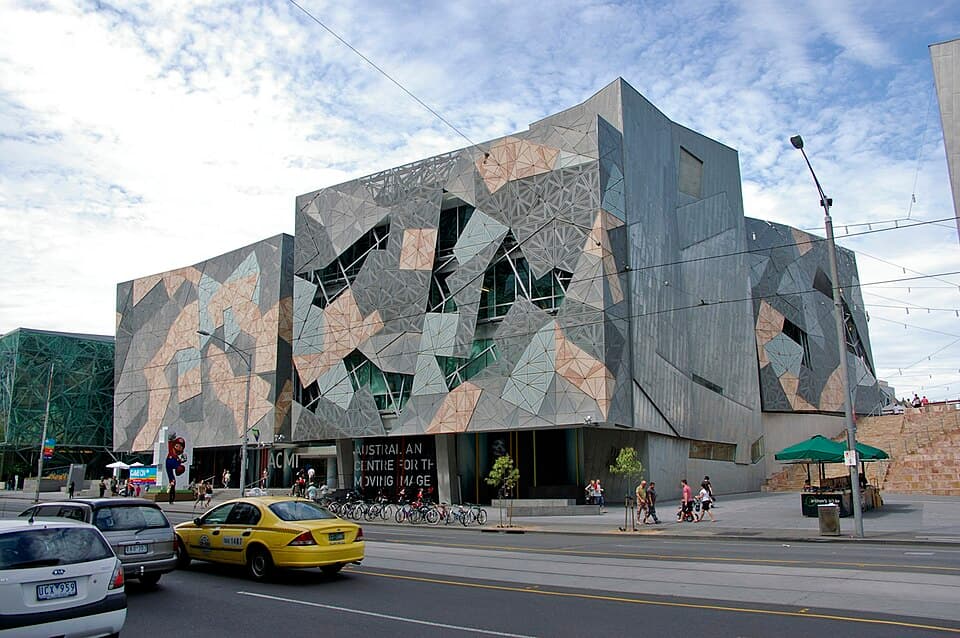
ACMI holds the memory that Australian cinema keeps forgetting to save
The museum on Fed Square is the only place in this country that treats Australian screen culture as something worth keeping, and the fact that it is the only one says everything.
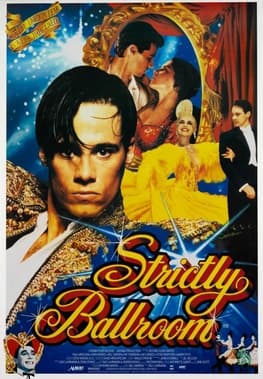
Strictly Ballroom is a film about who is allowed to teach the steps
Baz Luhrmann's 1992 comedy is sold as a story about dance. It is also a story about an Australian champion who has to be taught his own steps by a Spanish-Australian family in their own house.

Looking for Alibrandi was the first Australian story handed to me as mine
It was not my family's story. It was the shape of my family's story, put on a screen in a country that had never once bothered to hold it before.