The Plains watches a man drive home from work for three hours and earns every minute
David Easteal bolted a camera to a dashboard and recorded six months of a suburban commute, and the result is the most radical Australian film of the decade.
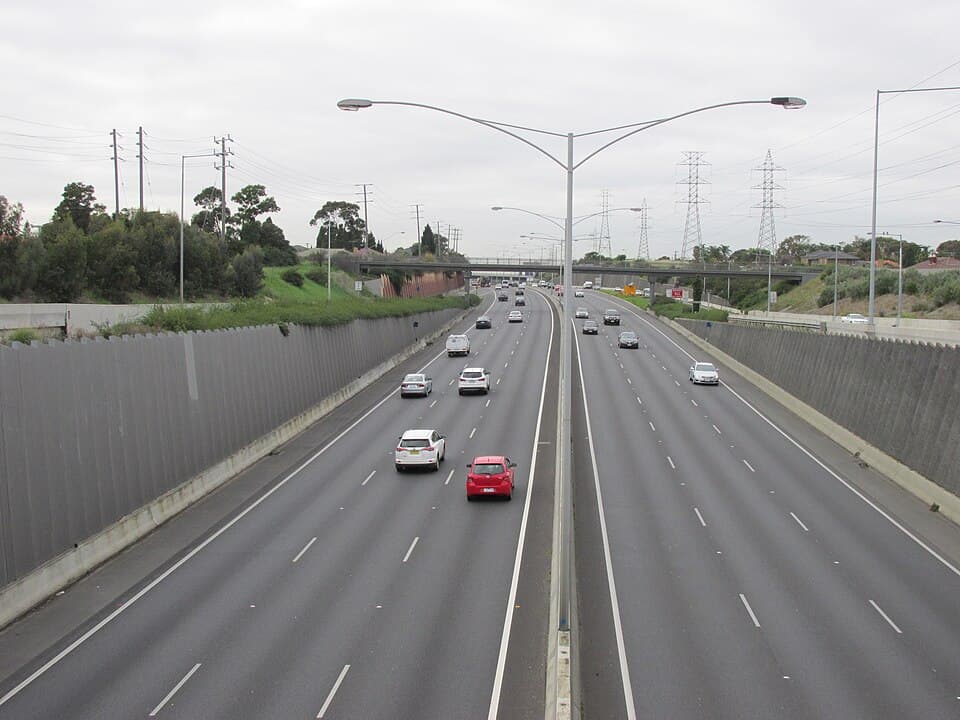
The first thing to say about The Plains is the number, because the number is doing a lot of the work before you have even pressed play. One hundred and eighty minutes. Three hours. A film that is three hours long about a man driving home from his office in suburban Melbourne, shot entirely from a camera mounted on the dashboard of his car. The natural response is to ask why. The second response, which arrives somewhere around the forty-minute mark if you let it, is to stop asking and start listening, because what David Easteal has built inside this fixed frame is not an endurance test but a portrait, assembled one commute at a time, of a life that would otherwise leave no record of itself.
Andrew Rakowski is a solicitor. He is in his fifties. He works in an office somewhere in the southeastern suburbs and he drives home along the same route each evening, through traffic, past shopping centres, beneath overpasses. He is playing himself, if “playing” is the right word; Easteal recorded these drives over approximately six months, and the resulting footage constitutes the entirety of the picture. The camera does not move. The windscreen fills the frame. Melbourne’s suburban landscape scrolls past in the background while Rakowski talks, or does not talk, or takes a phone call, or sits in silence at a red light with his hands on the wheel.
The dashboard as a confessional
What happens across three hours is cumulative rather than dramatic. Rakowski talks about his work, his mother, his past, his health, the weather, the traffic. He makes phone calls to his elderly mother, and these calls, overheard from one side, become the film’s emotional spine without Easteal ever treating them as such. You hear a son performing reassurance. You hear the same questions repeated across weeks, the gentle loops of care and obligation that structure a relationship between an ageing parent and an adult child. The calls are not staged; they are not scripted; they happen because the camera was running when the phone rang, and Easteal kept the footage because he understood that the ordinary contains everything if you record enough of it.
The dashboard-mounted camera creates a formal constraint that is both rigorous and, in its consequences, unexpectedly intimate. Because the camera cannot move, the audience’s relationship to the image is fixed; you are always in the passenger seat, always at the same angle, always seeing the same section of windscreen and the same slice of Rakowski’s profile. This fixity does something strange to attention. It narrows the visual field until you begin to notice things you would normally filter out: the way light changes across the drive as the seasons shift, the precise shade of the sky at 5:45 pm in June versus 5:45 pm in October, the rain on the glass, the headlights of oncoming cars reflected in the wet road. The picture teaches you how to watch it, and the lesson takes time, and the time is the point.
What Akerman understood and Easteal extends
The obvious comparison is Chantal Akerman, and specifically Jeanne Dielman, 23, quai du Commerce, 1080 Bruxelles (1975), another film that uses duration and domestic routine to build a portrait of a life that conventional cinema would consider uneventful. The comparison is fair but incomplete. Akerman’s film is a work of controlled choreography; every gesture is precise, every shot composed with a rigour that makes the eventual disruption devastating. The Plains operates in a different register. Easteal is not choreographing anything. He is collecting. The film is an accumulation of raw material that becomes a portrait through sheer volume, the way a geological formation becomes a landscape through time and pressure rather than design.
Frederick Wiseman is the closer analogue, particularly the late Wiseman of In Jackson Heights (2015) and City Hall (2020), films that build their understanding of a place through the patient layering of observed moments. But Wiseman works with institutions; his camera moves through buildings, across rooms, between speakers. Easteal’s camera does not move at all, and his subject is not an institution but a single person, caught in the one space where contemporary life is both most private and most routine. The car is a confessional and a cell; it is the space where Rakowski is alone, or alone with a voice on the phone, and where the performance of social selfhood drops away, not entirely, but enough for something else to become visible.
Melbourne as a film set that does not know it is one
The city is present throughout as a backdrop that never declares itself. There are no landmarks, no establishing shots, no skyline. The Melbourne of The Plains is the Melbourne that most Melburnians actually inhabit: arterial roads, traffic lights, the Monash Freeway, car parks, the grey-green blur of suburban eucalypts glimpsed through glass at sixty kilometres an hour. This is not the Melbourne of trams and laneways and architectural photography. It is the Melbourne of the commute, the city experienced as transit, as the space between the office and the house, and Easteal’s decision to film only this version of the city is a political choice as much as an aesthetic one. He is insisting that this is what the city looks like for most of the people who live in it, most of the time.
The seasons change. This is the film’s most quietly devastating structural element. The same drive, the same route, the same windscreen, but the sky is different. Early in the film the light is long and golden; later it is grey, the headlights come on earlier, the windscreen wipers appear. You are watching time pass at the speed of time, and because the frame is fixed, the passage is visible in a way it never is in daily life. We do not notice the days getting shorter. We do not notice the light shifting. We are too busy driving. The camera notices because noticing is all it does.
Why length is the instrument
There is no version of The Plains that works at ninety minutes. I want to be clear about this because the film’s duration is not a challenge to be endured but an instrument to be played. A shorter edit could present the same conversations, the same phone calls, the same suburban landscapes, but it could not produce the same experience, because the experience depends on accumulated time. You need to have been in that passenger seat long enough to develop your own relationship with the rhythm of the drive, the recurring landmarks, the particular quality of silence that fills the car when Rakowski is not speaking. You need to feel the repetition in your body, not just understand it intellectually, before the small variations within the repetition can register with their full weight.
This is what separates The Plains from the many documentary and experimental films that use long takes and fixed cameras as formal devices. Easteal is not demonstrating a technique. He is using duration as a way of gaining access to something that cannot be accessed any other way: the texture of a life lived at the pace of a life. The film does not dramatise. It does not condense. It does not select the interesting moments and discard the rest. It includes the rest, because the rest is where most of a life actually takes place, and Easteal’s radical proposition is that cinema should be able to hold that, should be willing to sit in the passenger seat for as long as it takes, watching the light change on the windscreen, listening to a man talk to his mother, saying nothing, going home.
Bronte writes long-form criticism of Australian cinema and the international art films that feed into it. She was on the ground at Cannes in 2019 and has not entirely forgiven the festival for 2020. Patient with slow films; impatient with tidy ones.
MORE BY BRONTE HAUGHEY →
MIFF 2024 programmed for argument and the audience showed up ready
The 2024 programme leaned harder into difficulty than any MIFF in recent memory, and the sessions were fuller for it.
MIFF went hybrid in 2021 and discovered what a festival cannot stream
The 2021 festival split itself between cinemas and living rooms, and the living rooms lost.
ACMI reopened and the new exhibition treats the screen as a surface worth touching
The renovation turned a film museum into a museum about looking, and the difference is worth noticing.