MIFF went hybrid in 2021 and discovered what a festival cannot stream
The 2021 festival split itself between cinemas and living rooms, and the living rooms lost.
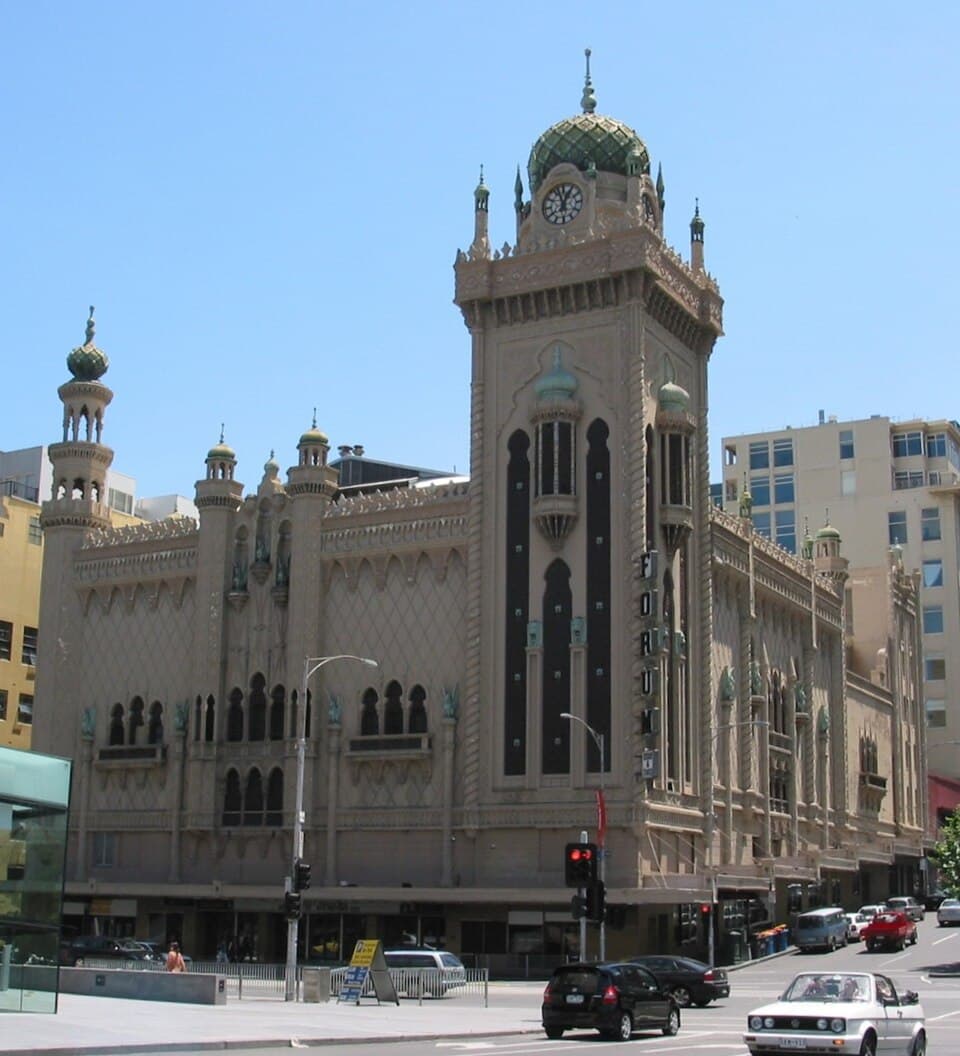
The 69th Melbourne International Film Festival opened on the 5th of August 2021 with a split personality. Half of it lived in cinemas: the Forum, ACMI, Hoyts Melbourne Central, the Capitol, all the usual rooms with their usual carpet smells and their usual queues of people holding tote bags and checking session times on their phones. The other half lived on MIFF Play, the festival’s streaming platform, where a curated selection of features and shorts could be rented for a window of 48 hours and watched in whatever domestic configuration the viewer happened to occupy. A couch. A bed. A kitchen table with a laptop propped against a fruit bowl. The festival called this the hybrid model. It was not the first festival to attempt it; COVID had forced the experiment globally in 2020, and by mid-2021 the hybrid format had acquired the sheen of inevitability, the sense that this was simply how things would be done from now on. MIFF’s version was well-executed, carefully considered, and it exposed a problem that no amount of careful consideration could solve: a film festival is not a catalogue.
I attended both versions. I watched films at ACMI and I watched films on my laptop, and the difference was not one of quality or convenience or even attention, though all three were factors. The difference was structural. At the cinema, a screening is an event with edges. You arrive, you sit, the lights go down, you watch, the lights come up, you leave. Between the watching and the leaving there is a period of a few minutes where you stand in the foyer or on the footpath and you do something that has no digital equivalent: you overhear. You hear the couple behind you arguing about the ending. You hear a stranger say something sharp and precise about a performance that you had not quite articulated for yourself. You hear laughter that is not yours but that confirms something you felt. This is not networking. It is not community-building in the programmatic sense that festivals like to invoke in their funding applications. It is ambient intelligence, the slow accumulation of other people’s responses layering over your own, and it is the thing that makes a festival a festival rather than a very good streaming service with a deadline.
The programme and its double life
The 2021 programme was strong, and the curatorial logic was visible in how films were distributed between cinema and streaming. The opening-night picture, Nitram, Justin Kurzel’s Tasmanian massacre film, screened exclusively in cinemas; the decision was both practical and symbolic, a statement that certain films demand the captive attention that only a dark room provides. Caleb Landry Jones won the Best Actor prize at Cannes for his performance, and watching it surrounded by a Melbourne audience that understood the history without needing it explained was a different experience from watching it alone. The room was quiet in a specific way. Not the quiet of concentration but the quiet of a shared knowledge that the picture was handling something that belonged to all of them.
On MIFF Play, the selection leaned toward documentaries, international features, and shorts programmes that benefited from the flexibility of home viewing. Paul Rankin’s Lone Wolf, a thriller about radicalisation and surveillance set in Adelaide, worked well enough on a laptop; it is a taut, contained film whose power is in its script rather than its visual scale. Sonia Kennebeck’s United States vs. Reality Winner had the intimacy of a podcast in visual form, and the streaming format suited its conversational register. But Anthony Chen’s Drift, a quiet, painterly film about two displaced women on a Greek island, suffered noticeably on a small screen. Its power lives in the negative space, in the long stretches of seascape and silence that a laptop compresses into something merely slow rather than deliberately still.
The geography of access
The strongest argument for the hybrid model was geographic. For the first time, viewers in regional Victoria, in other states, in places that MIFF had never practically reached, could watch festival programming without the cost and logistics of travelling to Melbourne. This was not trivial. Australian film culture is brutally centralised; it concentrates in Sydney and Melbourne and disperses outward in diminishing circles. A person in Mildura or Broken Hill or Launceston has, in most years, no access to the kind of programming that MIFF offers unless they make a trip of it. The streaming option removed that barrier, and the festival reported strong engagement from regional audiences. As an accessibility measure, it was unambiguously good.
But accessibility and experience are not the same thing, and the hybrid model surfaced the tension between them. The regional viewer watching Nitram on MIFF Play at 10pm on a Tuesday was watching the same film as the person who saw it at the Forum, frame for frame, cut for cut. They were not having the same experience. They were not part of the same event. They were consuming the same content, and the language shift matters: from attending to consuming, from event to content, from festival to platform. This is not snobbery, or not only snobbery. It is a recognition that the festival format does something that the platform format cannot replicate, and what it does is social, environmental, temporal. It puts bodies in rooms together and makes them share time.
What the foyer knew
There is a moment I keep returning to. After a screening of Camille de Chenay’s Blind Ambition, a documentary about Zimbabwean refugees who become competitive sommeliers, I stood in the ACMI foyer and listened to two women discuss the film’s treatment of its subjects. One of them said something I had not considered: that the film’s warmth was also its limitation, that by framing the story as triumph it avoided the systemic questions about who gets to succeed and on what terms. The other woman disagreed, firmly, specifically, citing a scene I had half-forgotten. The conversation lasted perhaps three minutes. I did not participate in it. I have never seen either woman again. But their disagreement changed how I thought about the film, and it changed it immediately, in the same building where I had watched it, while the picture was still warm.
This does not happen on a streaming platform. On MIFF Play, the film ends and you are alone with your opinion, which is either confirmed by a tweet or challenged by a review you read the next day, and neither of those interactions has the same quality. They are mediated, asynchronous, stripped of the body language and vocal register and shared physical context that make in-person disagreement productive rather than merely adversarial. The hybrid model gave people access to films. It did not give them access to the thing that happens between films, in the spaces the programme does not schedule, in the conversations nobody plans.
The experiment continues, quietly
MIFF has maintained elements of the hybrid model in subsequent years, scaling the streaming component up or down depending on circumstances and funding. The festival knows, as all festivals know, that the economics point toward digital; streaming is cheaper to deliver, broader in reach, and easier to measure. The cinemas, with their projectionists and their insurance and their limited seating, are the expensive part. They are also the irreplaceable part. The 2021 edition proved both things simultaneously, and the proof has not resolved into a clean lesson. It has resolved into a tension, which is perhaps the most honest outcome a festival can produce: the knowledge that what you are doing matters precisely because it is inefficient, precisely because it requires people to leave their houses and sit in the dark with strangers and overhear things they did not expect to hear. The living rooms had the films. The cinemas had the festival. The difference is everything.

Bronte writes long-form criticism of Australian cinema and the international art films that feed into it. She was on the ground at Cannes in 2019 and has not entirely forgiven the festival for 2020. Patient with slow films; impatient with tidy ones.
MORE BY BRONTE HAUGHEY →
MIFF 2024 programmed for argument and the audience showed up ready
The 2024 programme leaned harder into difficulty than any MIFF in recent memory, and the sessions were fuller for it.
The Plains watches a man drive home from work for three hours and earns every minute
David Easteal bolted a camera to a dashboard and recorded six months of a suburban commute, and the result is the most radical Australian film of the decade.
MIFF sold 148,000 tickets in 2023 and the margin was thinner than ever
The audience came back, the sponsorship did not, and the festival is running on volunteer labour and Creative Victoria grants.