The score for You Won't Be Alone sounds like soil remembering rain
The score breathes with the body-swapping rhythm of the film: slow inhalation, held silence, a different exhalation.

The first sound is not an instrument. It is air moving through a space that might be a room or might be a chest cavity, a long exhalation with enough texture in it to suggest reeds or wood or the inside of a throat. Then a string enters, a single bowed note so low it sits below melody, below harmony, in the register where sound becomes sensation. The note sustains. The air continues. Something that might be a voice or might be wind joins from a direction the stereo field does not quite locate. This is how the score for You Won’t Be Alone begins, and it is how the score behaves for the next hundred minutes: as an atmosphere rather than an accompaniment, something the film breathes rather than something it wears.
Mark Bradshaw composed the score for Goran Stolevski’s debut feature, and the challenge he faced was unlike most scoring assignments. The film follows a witch in 19th-century Macedonia who kills people and inhabits their bodies, living each stolen life until restlessness or violence drives her into the next one. The narrative structure is episodic, almost picaresque, moving through different bodies, different genders, different social positions. The visual language shifts with each body: the witch experiences the world as though for the first time in each new skin, and Stolevski shoots these passages with a Malick-like attention to light, texture, and the physical surfaces of the natural world. Hands in grain. Feet in mud. Sun through leaves. The camera stays close to the body, and the body is always new.
The score has to navigate this without providing the continuity that the narrative refuses to provide. If Bradshaw had written themes for characters, the themes would die with each body. If he had written themes for the witch herself, the witch’s identity is precisely what is in question, so a consistent musical signature would answer a question the film wants to leave open. What he does instead is score the environment. The music belongs to the landscape, not to the people moving through it. The soil, the trees, the weather, the quality of light in a Macedonian valley in a season the score does not name but makes you feel: these are the score’s subjects, and they persist across every body the witch inhabits.
Folk instruments and the question of authenticity
Bradshaw uses folk instruments, or instruments that evoke folk traditions, without committing to ethnographic accuracy. There are strings that sound like a gadulka but might be a processed violin. There are drones that suggest a gaida but could be synthetic. There are wooden percussion sounds that belong to no specific tradition but evoke the general acoustic territory of Eastern European folk music: dry, resonant, rhythmically irregular. The effect is of a score that knows where it is without insisting on documentary fidelity, and this imprecision is appropriate for a film that is itself imprecise about its historical and geographical coordinates. Stolevski shot in Serbia, set the film in Macedonia, and made it in Australia. The score occupies a similarly unresolved position: not quite folk, not quite ambient, not quite classical, hovering between categories in a way that mirrors the witch’s own hovering between bodies.
The body and the key
Each time the witch enters a new body, the score shifts. Not dramatically, not with a new theme or a new tonal centre, but subtly, in the way that the same room sounds different when you enter it from a different door. The register adjusts. The instrumental palette tilts. When the witch inhabits a young woman, the strings brighten slightly, the intervals widen, the breath in the mix becomes quicker. When she inhabits an older man, the frequencies lower, the textures thicken, the drones take on a rasp that suggests effort and weight.
These shifts are not programmatic. Bradshaw is not scoring gender or age. He is scoring the experience of being inside a particular body, the specific quality of sensory input that each body provides. The young woman’s body hears differently because it resonates differently. The old man’s body moves through acoustic space with a different momentum. The score tracks these differences with a sensitivity that is almost physiological, as though the microphones were placed inside the body rather than outside it.
The Malick comparison and its limits
Stolevski’s visual style invites comparison to Terrence Malick, and the comparison extends to the score. Malick’s films, particularly from The Tree of Life onwards, use music as a kind of cosmic accompaniment, a sonic environment that connects the human drama to larger natural and spiritual forces. Bradshaw’s score for You Won’t Be Alone does something adjacent but different. Where Malick’s scores tend towards the transcendent, reaching upward into orchestral grandeur or sacred choral music, Bradshaw’s score stays low, stays close to the ground. The spirituality here, if that is the right word, is not vertical but horizontal. It is the spirituality of the soil, of decomposition and germination, of things that die and become the material for other things to live.
This is exactly right for a film about a creature who kills in order to inhabit, who destroys one life to experience another. The score does not judge this cycle. It accompanies it with the patience of a natural process, and the overall effect is of a film whose music is not composed so much as cultivated, grown in the same soil that the camera keeps returning to, subject to the same weather, producing the same irregular, beautiful, morally indifferent fruit.
What the silence holds
The most effective passages in the score are the silences. Bradshaw uses silence not as absence but as a held note, a rest with weight in it. When the witch transitions between bodies, there are moments where the score drops away entirely and the film is left with only ambient sound: wind, insects, the distant complaint of livestock. These silences are not empty. They are loaded with the residue of what came before, the way a room holds the shape of a conversation after the speakers have left. When the score returns, it returns changed, tuned to the new body, and the silence between is the space where the transformation happens.
The score was recorded in Melbourne, which is worth noting only because it adds another layer to the film’s already complicated geography. Macedonian folk elements, Serbian locations, Australian production, and a score that sounds like none of these places and all of them. Bradshaw found something in the intersection: a music that belongs to the film’s emotional landscape rather than to any physical one, that sounds like soil remembering rain because that is what the film is about. Things that absorb and are changed by what they absorb. Bodies. Earth. Music.
Kieran writes about what films sound like. Played in a band that nearly got signed in 2012 and has been thinking about attack and decay ever since. Devoted to Warren Ellis, Amanda Brown, and the quiet work of sound editors nobody interviews.
MORE BY KIERAN BOUSTANY →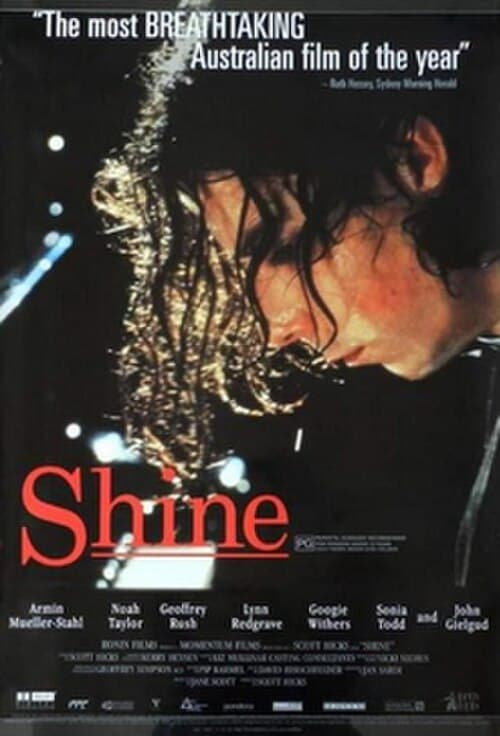
Shine and the score hiding under the Rachmaninoff
David Hirschfelder had to write original music that lives under the loudest warhorse in the piano repertoire, and the quiet writing is what carries the film.
Nigel Westlake smuggled a cathedral into a film about a pig
The score for Babe borrows its grandeur from a French organ symphony, and the trick tells you everything about how Nigel Westlake hears the relationship between small subjects and large feelings.
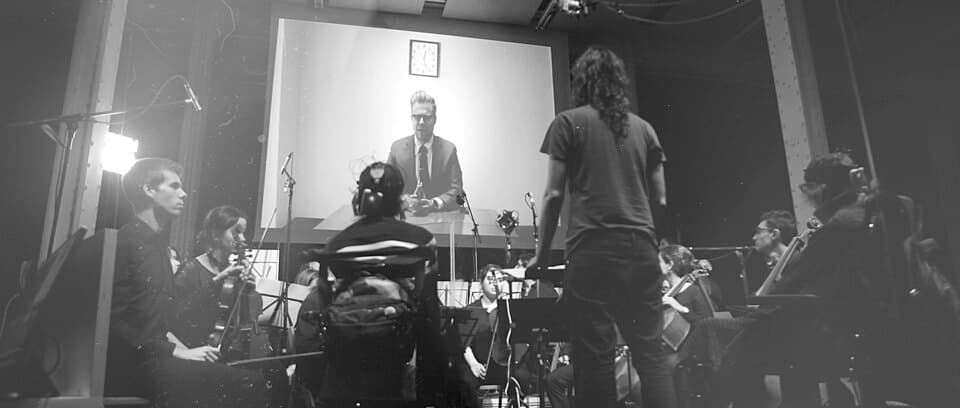
Every Australian film has a sound and most of them go unheard
This column has spent six years listening to what Australian cinema sounds like, and the answer keeps changing.