The score for Wyrmwood: Apocalypse treats the end of the world like a pub brawl
The scoring budget was nothing, the energy was everything, and the result sounds like a garage band surviving the apocalypse.
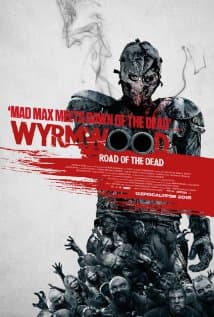
There is a particular sound that Australian genre films make when they have no money and refuse to care. It is a sound that lives in the lower frequencies, built from synthesisers that were not expensive when they were purchased and have not appreciated since, processed through effects chains that owe more to the operator’s willingness to break things than to any formal training in sound design. It is not a polished sound. It is not meant to be. It is the sound of a production that understood, correctly, that polish would be a betrayal of the material, that the appropriate sonic texture for a film about the zombie apocalypse in rural Australia is something that sounds like it was made in a shed, because the film itself was essentially made in a shed.
Wyrmwood: Apocalypse (Kiah Roache-Turner, 2022) is the sequel to Wyrmwood: Road of the Dead (2014), which was itself the product of a four-year guerrilla shoot financed by the Roache-Turner brothers’ personal savings and a small slice of crowdfunding. The first film cost approximately $160,000, which is not a film budget so much as a renovation budget, and it looked like what it was: a scrapheap construction held together by ingenuity and adrenaline and the conviction that if you move the camera fast enough, nobody will notice that the blood is the wrong colour.
The sequel has more money. Not a lot more. Enough to smooth some edges, hire a few more days of visual effects work, pay the cast a rate that might cover their petrol. But the ethos remains the same, and the score reflects that ethos with a fidelity that is both practical and philosophical.
Synths from the end of the world
The score is synth-driven, aggressive, rhythmically insistent, and almost entirely devoid of orchestral ambition. There are no strings. There are no woodwinds. There are no French horns swelling beneath the hero shots, because there are no hero shots in the conventional sense. What there are, instead, are sequences of extreme physical action scored with a pulsing, distorted electronic texture that sits somewhere between the industrial end of electronic music and the lo-fi end of horror scoring.
The rhythmic foundation is a kick drum and a bass synth, both pushed past the point of clean reproduction into a zone of deliberate distortion. The high end is occupied by arpeggiated synth lines that move fast, repeat without variation, and create a sense of mechanical urgency that mirrors the film’s own relentless forward motion. The scoring does not develop. It does not build to a climax in the way that orchestral scoring builds. It arrives at full intensity and stays there, modulating only in density, adding or removing layers without changing the fundamental tempo or energy level.
This is not lazy composition. It is a specific choice about what the music’s job is, and the job, as the score defines it, is propulsion. The score is not trying to convince the audience that the apocalypse is real. It is trying to convince them that the apocalypse is fun, that the correct response to the end of civilisation is to strap a weapon to your arm and drive very fast into the middle of it, and that the music accompanying this response should feel like the inside of a car going too fast with the stereo turned up too loud.
The Australian B-movie tradition
There is a lineage here that is worth tracing. Brian May’s score for the original Mad Max (George Miller, 1979) was made on a budget that, adjusted for inflation, is not dramatically larger than what the Roache-Turner brothers had to work with. May was a classically trained composer working with a small orchestra, and the result is one of the most effective action scores in Australian film history, not because of its resources but because of its intelligence: May understood that the film’s power came from velocity and violence, and he scored it with a directness that matched Miller’s camera work beat for beat. The score does not comment on the action. It is the action, translated into orchestral terms.
The Wyrmwood: Apocalypse score does the same thing in a different vocabulary. Where May had strings and brass, this score has oscillators and distortion pedals. Where May wrote themes that developed across the film’s running time, this score writes riffs that repeat across a scene’s running time. The scale is different, the idiom is different, but the principle is identical: the music should feel like the thing it accompanies, not like a description of the thing it accompanies. May’s score feels like a car chase. The Wyrmwood score feels like a fight in a car park. The difference in dignity is the point.
Zero orchestral pretension
I want to stay on this question of pretension, because it is the quality that separates the Wyrmwood scores from the majority of Australian genre film scoring. There is a tendency, in genre work with limited budgets, to reach for a sound that the budget cannot support. A horror film with a $200,000 budget will hire a string quartet and try to make it sound like a full orchestra. A science fiction film will use orchestral samples and try to make them sound real. The ambition is understandable but the result is almost always a score that sounds like what it is: an imitation of something more expensive, a performance of resources the production does not possess.
The Wyrmwood scores do not imitate anything. They sound like synths because they are synths. They sound like they were produced in a room with a computer and a set of speakers and a willingness to push every fader past the red line, because that is what happened. The authenticity of the sound is not an accident of limited resources. It is a creative position. The film is set in a world where civilisation has collapsed, where the infrastructure that supported cultural production has been destroyed, where the survivors are making do with whatever they can find. A score that sounded like it was recorded at Abbey Road would be a contradiction. A score that sounds like it was recorded in a garage is a statement of solidarity with the world the film depicts.
What scrappiness sounds like
There is a cue in the film’s second act, during a sequence involving a modified truck and an unreasonable number of zombies, where the score does something interesting. The synth line, which has been running at a consistent tempo for the preceding two minutes, drops out entirely for four beats. The silence is filled by the sound design: impacts, engine noise, a scream that might be human and might not. Then the synth returns, at the same tempo, as though nothing happened. The interruption is not dramatic. It is not scored as a moment of tension and release. It is scored as a glitch, a momentary failure in the machinery that produces the music, and it mirrors the film’s own aesthetic of things that work imperfectly but work nonetheless.
This is the scrappiness that defines the Wyrmwood project at every level. The films are not smooth. They are not slick. They do not flow in the way that a well-funded production flows, where every transition is planned and every cut is motivated and every element of the mise en scene has been approved by someone whose job title contains the word “supervisor.” They move in bursts, powered by enthusiasm and interrupted by the limitations of their own construction, and the scores move the same way: propulsive, rough-edged, occasionally brilliant, occasionally clumsy, always sincere.
The garage and the orchestra
Brian May died in 2020, and with him went a particular tradition of Australian film scoring: the classically trained composer who could make a small orchestra sound enormous through sheer compositional intelligence. The tradition that the Wyrmwood scores represent is different. It is the tradition of the person who cannot afford an orchestra and does not want one, who builds a score from electronic components the way the film’s characters build weapons from scrap metal, and whose work succeeds not despite its limitations but through a refusal to treat those limitations as problems to be solved rather than conditions to be embraced.
The score for Wyrmwood: Apocalypse will not win any awards. It will not be performed at a concert. It will not be studied in composition classes, and it does not need to be. What it will do is exactly what it was designed to do: make the end of the world sound like something you could survive with a mate, a modified vehicle, and the right playlist. The budget was nothing. The energy was everything. The gap between the two is where the music lives.
Kieran writes about what films sound like. Played in a band that nearly got signed in 2012 and has been thinking about attack and decay ever since. Devoted to Warren Ellis, Amanda Brown, and the quiet work of sound editors nobody interviews.
MORE BY KIERAN BOUSTANY →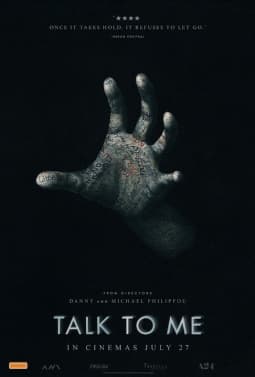
Cornel Wilczek scored Talk to Me like a party that will not let you leave
The score pushes forward with the momentum of a YouTube video you cannot close, and that restlessness is the whole engine.
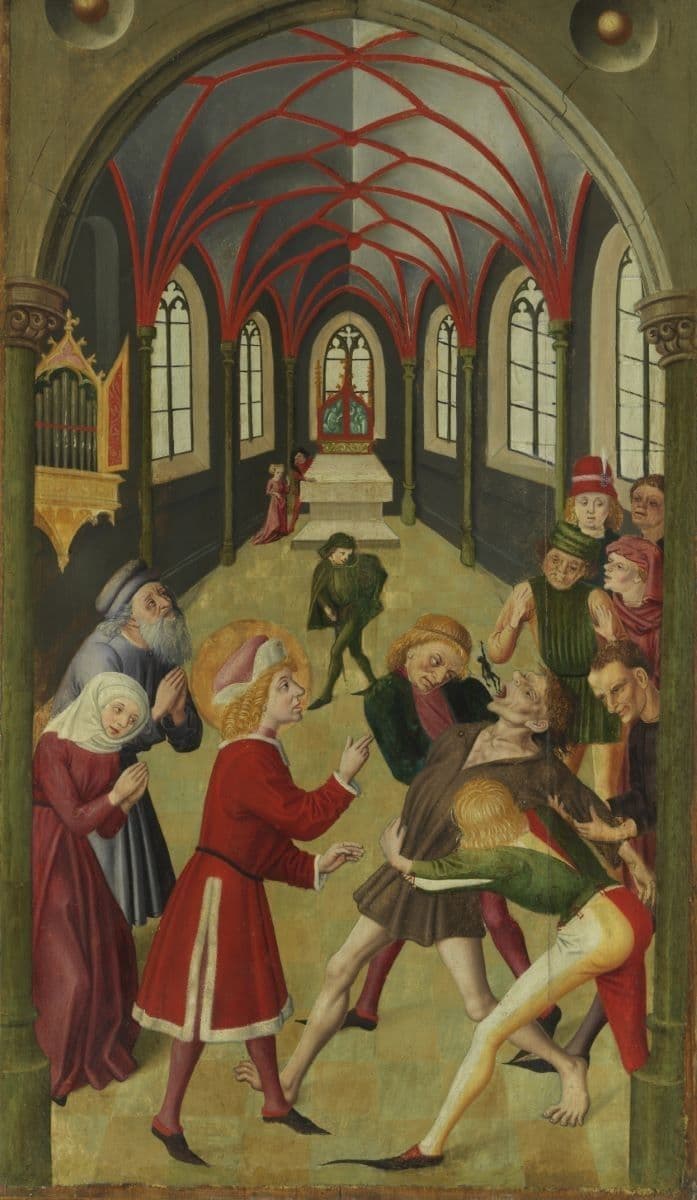
The score for Godless drags the exorcism through the dirt and leaves it there
The score treats the possession not as spectacle but as a domestic accident, and the flatness is where the horror lives.
Shine and the score hiding under the Rachmaninoff
David Hirschfelder had to write original music that lives under the loudest warhorse in the piano repertoire, and the quiet writing is what carries the film.